
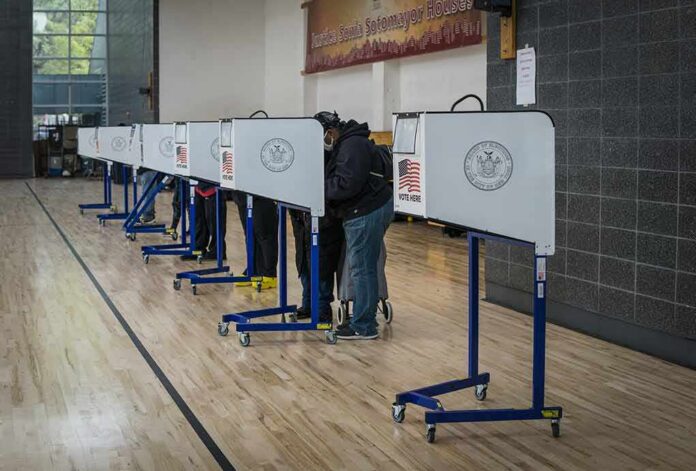
Early voting for the 2026 midterms is open in several states, but each state is running on its own clock.
Story Snapshot
- Georgia, Texas, South Carolina, Delaware, New York, and California have posted active early-voting windows.
- Dates and hours vary by state and, in some places, by county.
- Election Day is November 3, 2026, with some states ending early voting days before that.
- California’s earliest in-person centers opened in Voter’s Choice Act counties, expanding statewide by October 31.
What Is Happening: Early Voting Windows By State
Georgia opened early voting first among the listed states, running from October 13 through October 30, 2026, with weekday hours and voting on the second and third Saturdays before Election Day. Texas scheduled in-person early voting from October 19 to October 30, 2026, per the Texas Secretary of State’s calendar. South Carolina set its statewide general-election early voting from October 19 to October 31, 2026, with county centers open Monday through Saturday. These schedules confirm voting is underway across multiple states.
Delaware offered a split schedule across several blocks: October 22–24, October 26–27, and October 28–November 1, 2026, with posted daily hours and no early voting on October 25. New York listed early voting from October 24 through November 1, 2026, and noted that hours differ by county. These timelines show that early voting does not follow a single national start date. Instead, states choose windows that fit their own laws and operations.
How Access Differs: Locations, Hours, and County Choices
California reported that the first vote centers opened on October 24, 2026, in counties using the state’s Voter’s Choice Act model, with in-person early-voting locations open statewide by October 31. New York stated that early-voting hours vary by county, which affects when voters can cast ballots locally. South Carolina directed voters to county-established early-voting centers, which means exact sites are set at the county level. These differences reflect long-standing state control over election rules.
Such variation is normal in the United States and often leads to near-term questions about where to vote, weekend access, and closing times. The Federal Judicial Center’s records show that early voting has, in past cycles, drawn court fights over site numbers, weekend days, and ballot rules, even while voting proceeded on posted schedules. Today’s posted windows align with that pattern: states run elections, counties set many details, and voters must check local information for the final word.
Why It Matters: Clarity For Voters, Limits For Forecasts
Election Day is November 3, 2026, but many voters can cast ballots well before then under these state calendars. That can reduce lines on Election Day and give people more options. It can also create confusion if people expect one national plan. The safest move is simple: check your state and county pages for dates, hours, and locations before heading out. The official sites listed here provide those details clearly for their states.
America is voting today — and the balance of power in Washington is on the line. 🇺🇸
November 3 marks Election Day in the 2026 US midterm elections.
Voters are choosing all 435 members of the House of Representatives, 35 senators and governors in 36 states.
The stakes are…
— SSC (@ssc_globa1) November 3, 2026
Campaigns and commentators often treat early-vote figures as hints about final results. The state pages here confirm schedules, not outcomes. Past legal summaries show that disputes tend to focus on access and rules, not predictions. Voters should read early voting as a service window, not a scoreboard. The real scoreboard arrives after polls close and officials count and certify the results according to state law.
Sources:
youtube.com, scvotes.gov, sos.state.tx.us, georgia.gov, sec.state.ma.us, elections.delaware.gov, elections.ny.gov, sos.ca.gov, fjc.gov