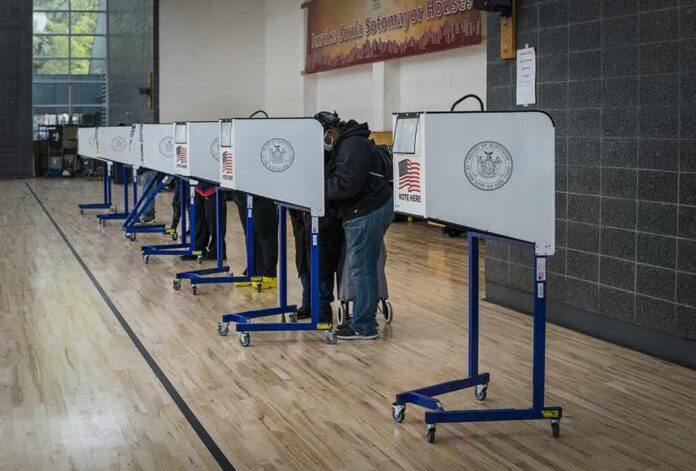
All 435 House seats and a large slate of Senate and governor races are on the ballot this November, putting control of Congress squarely in voters’ hands.
Story Snapshot
- Election Day is Tuesday, November 3, 2026, the nation’s next federal general election.
- Voters will choose every House member and about one-third of U.S. Senators.
- Dozens of governor races add state-level stakes to national control of Congress.
- Historic patterns often punish the president’s party in midterms, but outcomes vary.
What Is On The Ballot In 2026
Federal rules set Tuesday, November 3, 2026, as the next regularly scheduled general election date for national offices. Voters will elect all 435 members of the House of Representatives and a different one-third of the United States Senate, as happens every two years. CBS News reports that 36 governor races are also on ballots this year, adding state power to the night’s stakes. These contests together can shift Washington’s agenda fast.
State officials still run their own primary and runoff calendars, which can differ and shift, even as the federal general election date is set. That patchwork can affect who advances and when votes are counted. But the core structure is stable: the full House turns over every two years, and the Senate rotates by class. That steady design lets voters reset the balance of power without waiting for a presidential race.
Why Control Of Congress Could Change
Election outcomes decide which party writes bills, leads committees, and sets floor votes. If Republicans hold or expand their current majorities, President Trump could push more of his agenda. If Democrats gain ground, they could check or block parts of it. CBS News frames this midterm as a fight for control of Congress, with competitive races that could tip the balance. The result will steer budgets, investigations, and national policy priorities for the next two years.
History adds weight. Studies of past midterms show the president’s party often loses House seats, with long-run averages around two to four Senate seats also at risk. That pattern is not a rule, and some cycles break it. But it helps explain why both parties are focusing on a handful of close districts and purple states. Small shifts in turnout or independents can decide who runs the House gavel and the Senate calendar.
Money, Media, And The Map
Campaigns and allied groups are spending heavily to shape a few key races. Reporters and analysts highlight “battleground” contests because the national map is uneven, and many districts are safe for one party. That puts extra pressure on a limited set of competitive seats. Major outlets plan wall-to-wall coverage and real-time analysis, which can influence attention and donor energy, even if votes, not forecasts, choose the winners.
Voters across the spectrum bring deep worries into the booth. Many conservatives blame high prices, crime, and border failures on past policies. Many liberals point to rising inequality, cuts to social supports, and treatment of immigrants. A large middle in both camps sees a federal government that serves insiders first. This election offers a clear chance to reward or punish leaders, change committee chairs, and force action on basics like spending, energy, and the cost of living.
How To Prepare And What To Watch
Voters should confirm their registration, polling place, and identification rules through their state election office. Federal guidance explains that while Election Day is fixed, states manage how and when people vote, including early and absentee options. On election night, watch three things: who wins the closest House districts, which Senate battlegrounds break first, and whether governor results shift state policy on taxes, schools, and energy for years to come.
Sources:
cbsnews.com, fec.gov, paramountpressexpress.com, usa.gov