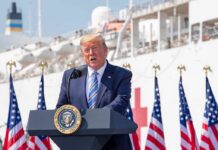

President Trump scrapped a Kansas rally without a stated reason, then hurled personal insults at a Reuters reporter who asked if travel fatigue was why.
Story Snapshot
- Trump canceled a planned Kansas rally one day before the event with no reason given.
- A Reuters reporter asked if the change was due to being sick of traveling; Trump denied it and insulted the reporter.
- Trump said Senator Roger Marshall was “doing very well” and a tele-rally would replace the stop.
- The clash spotlights a broader fight over press questions and government transparency during campaign season.
What Happened At The Tarmac Exchange
Reporters pressed President Trump after the last-minute cancellation of an in-person rally planned in Salina, Kansas. Reuters said the event was called off on October 29, one day before it was set to occur, and no reason was given at the time. A Reuters reporter asked if Trump skipped the trip because he was “sick of traveling.” Trump denied any health issue, said he felt “perfect,” and attacked the reporter’s appearance while blasting Reuters.
Trump also gave a political reason for the switch. He said Senator Roger Marshall was “doing very well” and that an in-person stop was not needed. He added that he would hold a tele-rally for Marshall and other Republicans instead. He also said he would travel to Florida the next day, signaling that his schedule would continue. These points formed the White House’s public line as coverage of the insult spread online.
Why The Question Was Fair To Ask
Campaign schedules often change, but a same-week cancellation raises valid questions. The Kansas rally was billed as one of the final planned in-person events before the election, during a heavy travel stretch. Reuters and other outlets described the cancellation as abrupt and unexplained at first, which made the “health or fatigue” question reasonable, even if unproven. The record shows no medical confirmation of illness, and Trump’s denial stands on the public record.
Local reporting later described the event as converted to a virtual format, and an airport official referenced a scheduling issue. That framed the decision as strategy and logistics rather than health. Still, the lack of a detailed, written rationale left room for public doubt and competing narratives. In that gap, viral clips highlighted the insults more than the facts about the schedule change or the stated political reasoning.
How The Clash Fits A Larger Pattern
U.S. leaders and reporters routinely collide when access, schedules, or explanations fall short. Research shows that governments sometimes attack journalists when the political heat is high, which can distract from the core issue and chill tough questions. Press freedom trackers have also logged many recent actions affecting access and reporting. These trends help explain why a basic question about a canceled stop quickly shifted to a fight over tone and respect.
🚨 HOLY SMOKES. Donald Trump just put this reporter IN HIS PLACE…
REPORTER: You're not going to Kansas does it have to do with you being sick?
TRUMP: YOU ARE SICK…put YOURSELF in SHAPE! YOU look like HELL!
🔥🔥🔥
"Who are you with?"
REPORTER: Reuters.
TRUMP. You are a…
— MR X (@TheMrXGuy1) October 29, 2026
Many Americans on the right and left see a bigger problem. They feel the government speaks at them, not to them. When leaders cancel events without clear reasons, people fill the gap with their own stories. When reporters get mocked for asking about the gap, trust drops further. The fix is simple in theory but hard in practice: clear explanations from officials, fair questions from the press, and less theater from both sides. Facts should beat insults, every time.
Sources:
youtube.com, rmb.reuters.com, reuters.com, huffpost.com, abc6onyourside.com, cnn.com