
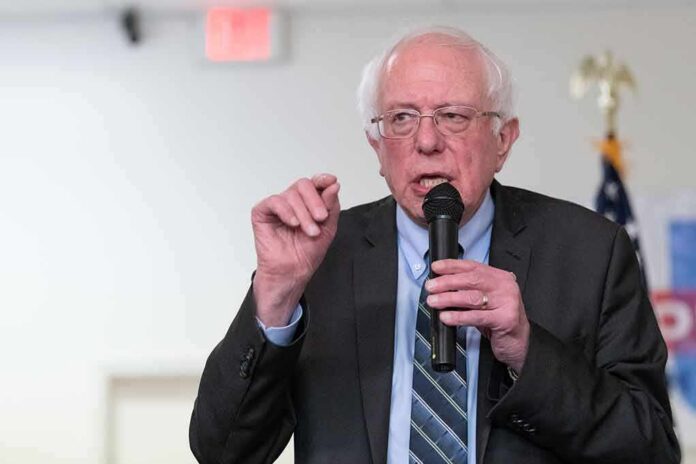
Bernie Sanders is barnstorming red and purple states to boost Democrats, drawing sizeable crowds and cash while his party argues over money and strategy.
Story Highlights
- Sanders is campaigning on the ground from Michigan to Texas, Florida, Wisconsin, and Maine.
- He drew about 700 people in a Michigan county that backed President Trump by nearly 29 points in 2024.
- Reports differ on how much money he steered to Abdul El-Sayed’s Senate bid, with figures from $250,000 to $1 million.
- Some Democrats welcome the help, while others skip his events and dispute funding priorities.
Sanders Takes His Message Into Conservative Terrain
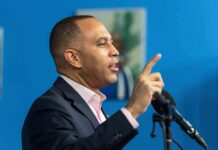
Reports from national and local outlets show Senator Bernie Sanders traveling well beyond blue enclaves to rally support for Democratic candidates. Coverage places him in Michigan, Texas, Florida, Wisconsin, and Maine in recent weeks, often appearing with or on behalf of down-ballot Democrats. In Texas, he headlined an event in El Paso with local Democratic officials. This approach reflects a push to energize allies wherever they live, even in areas that voted strongly for President Trump and Republicans.
Michigan has become a centerpiece of the push. Sanders toured the state to boost Abdul El-Sayed’s United States Senate campaign, with stops in Detroit, Lansing, Grand Rapids, and northern towns. A local report said Sanders and Representative Alexandria Ocasio-Cortez completed a two-day swing designed to build momentum before the primary. The tour showed a clear goal: pack rooms, raise money, and recruit volunteers in a state where close races can hinge on turnout in both cities and small towns.
Crowds, Cash, And Conflicting Numbers
Attendance figures suggest reach beyond the party base. In Alpena, a heavily Republican part of Michigan, Sanders drew about 700 people to the APlex while backing El-Sayed’s bid. Two years earlier, President Trump carried that county by nearly 29 percentage points, underscoring the event’s geographic stretch. Strong turnout does not by itself prove voter shifts, but it shows organization on the ground and an appetite to hear Democrats in places that normally see few progressive rallies.
Money is a key piece, and the exact total remains reported but not uniform. The Atlantic reported Sanders gave $1 million to help El-Sayed’s Senate run. CNN reported a $250,000 transfer and earlier fundraising of $595,000, citing a person familiar with the move for part of the figure. The difference highlights a common campaign-season challenge: numbers can flow through several channels, and public filings often lag news coverage.
Support Across States, But Not Universal Alignment
Sanders’ travel map extends beyond Michigan. CNN reported he appeared with Florida Senate candidate Angie Nixon and assisted El-Sayed. In Wisconsin, he rallied with Rebecca Cooke in a closely watched House race. Politico reported planned support for Maine’s Troy Jackson and said Sanders had held more than 60 rallies and endorsed over 90 candidates under his “Fighting Oligarchy” banner. That level of activity signals a broad attempt to shape the map, not just national talking points.
Not every Democrat is eager to share a stage. Fox News reported that Texas Senate candidate James Talarico skipped the Sanders rally in El Paso and campaigned elsewhere the same day. That choice shows how some candidates in tough states try to balance progressive energy with local dynamics. It also reflects a wider Democratic debate about message, money, and whether aligning with Sanders helps in moderate or conservative districts.
Inside The Democratic Tug-Of-War Over Resources
As Sanders raises his profile, Democrats are also fighting over where to send scarce cash. Yahoo News reported disputes inside the party about who should pay for progressive candidates and where to prioritize limited funds. The piece noted the Democratic Senatorial Campaign Committee had already spent $16 million in Michigan, underscoring how central the state is to the party’s plans. Sanders’ parallel push adds another bucket of resources, but also another voice in decisions that are always contested.
Political science suggests why this matters yet remains uncertain. Endorsements and rallies often boost motivation among people who already like the messenger. Shifting undecided or opposing voters is harder, and effects vary by place and timing. That pattern helps frame Sanders’ 2026 push: big rooms and fresh dollars can fuel field work and media, but proof of changed votes usually comes only after ballots are counted. The reporting here documents activity and stakes; it does not claim vote impact.
Sources:
theatlantic.com, washingtonexaminer.com, cnn.com, wwmt.com, foxnews.com, jsonline.com, midmichigannow.com, politico.com