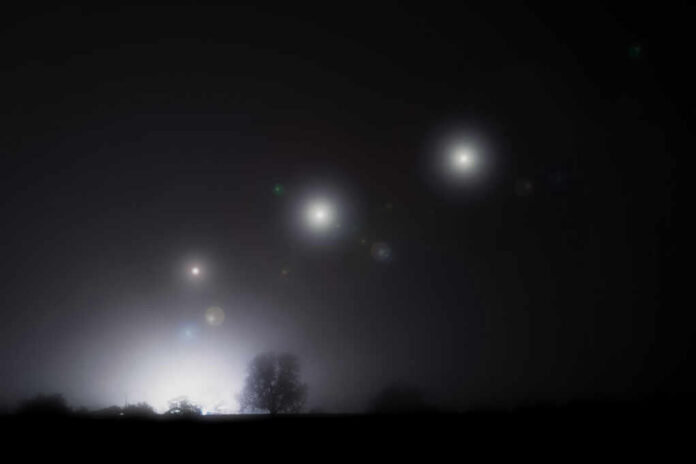
As Cuba’s grid collapses again and Havana sweats in the dark, millions of ordinary people are paying the price for years of failed leadership, aging infrastructure, and a deepening U.S. oil squeeze.
Story Snapshot
- Cuba’s national power grid collapsed again, leaving about 10 million people in darkness while only slow, partial restoration reached Havana.
- Local “microsystems” and emergency repairs brought power back to key hospitals and some neighborhoods, but most residents still face long blackouts and daily hardship.
- Havana’s struggle shows a bigger crisis: decades-old plants, chronic fuel shortages, and tight U.S. pressure have turned the entire grid into a fragile house of cards.
- Blame is flying in both directions — Cuba points to the U.S. “blockade,” while American officials and media highlight regime mismanagement — leaving ordinary Cubans trapped between failing states.
National Grid Collapse Leaves Havana in the Dark
Late Monday, Cuba’s national electric system suffered a “total disconnection,” plunging nearly the entire island into darkness and halting normal life for about 10 million people. The Ministry of Energy and Mines said a sudden failure at a major generation unit triggered the collapse, echoing earlier breakdowns at plants like Antonio Guiteras and Nuevitas that have repeatedly knocked the grid offline. In Havana, streets, homes, and public transport went dark, leaving residents to endure heat, uncertainty, and disrupted work, school, and medical care.
By early Sunday, officials reported that around 72,000 customers in Havana had power again, including several hospitals seen as vital for emergency care. Engineers set up small local power “microsystems” in Havana and other cities to feed electricity to key centers like clinics, water systems, and government offices while the main grid remained unstable. Even so, these steps barely scratched the surface for a capital of about 2 million people, showing how slow and limited the recovery has been for most households and small businesses.
Slow Restoration Exposes a Deep Energy Crisis
By Sunday afternoon, officials said nearly 55 percent of Havana had power back, including 43 hospitals, as more lines and plants were restarted. State media highlighted teams working around the clock to bring large thermoelectric stations back online, but admitted that full restoration would take more time and gave no clear deadline. This was at least the third nationwide blackout in six months, part of a broader pattern where repeated collapses, long rolling blackouts, and fuel shortages have become a grim normal for Cuban families.
Energy experts say the root problem is simple but severe: Cuba’s grid is old, overloaded, and under-funded, and many power plants date back to the Soviet era. Years of delayed maintenance, lack of spare parts, and limited cash to upgrade equipment mean that even small failures can spread quickly and knock out the whole system. Reports show that at peak times the country can generate barely two-thirds of the electricity it needs, forcing daily cuts that often last 16 to 18 hours and pushing people to store water, food, and medicine however they can.
Blame Game: Blockade vs. Mismanagement
Cuba’s government has repeatedly blamed the United States “blockade” and tighter oil sanctions for the crisis, saying foreign suppliers have sent no fuel for months and that American pressure scares off countries that might sell oil to the island. President Miguel Díaz-Canel and energy officials describe an “energy war” where fuel tankers avoid Cuba out of fear of U.S. tariffs and penalties, leaving power plants without enough oil to run. They argue that, without this external squeeze, the grid could be stabilized with repairs and planned upgrades instead of collapsing over and over.
🚨 BREAKING | 🇨🇺 CUBA
A nationwide blackout has hit Cuba after the country's national power grid collapsed, leaving millions without electricity.
⚡ Authorities are investigating the cause while restoration efforts are underway, with hospitals and other essential services being…
— THE INDIAN (@rapidNews_) July 7, 2026
Many U.S. voices strongly reject that view and point instead to 65 years of economic mismanagement, one-party control, and lack of investment. A fact-check by WRAL cites outside experts who say the main cause of the blackouts is a collapsed and obsolete grid, though they admit U.S. sanctions make an already bad situation worse. Former intelligence and policy officials interviewed on American networks argue that Havana chose to keep old oil-fired plants running while failing to diversify into modern, cleaner energy sources, leaving ordinary Cubans to suffer the consequences.
Ordinary Cubans Caught Between Distant Elites
While leaders in Washington and Havana trade blame, people on the streets of Havana stand in line for water, cook over charcoal, and sleep without fans or air conditioning during hot nights. Protests and small gatherings have appeared in several neighborhoods, where residents demand clear answers and a real plan instead of repeated promises that “power will be back tomorrow.” Their frustration will sound familiar to many Americans who feel that distant elites talk about policy and geopolitics while real families, whether in Cuba or the United States, struggle with rising costs and failing systems.
Cuba’s blackouts also echo deeper worries about how modern societies depend on fragile networks they barely understand. When a single plant or line fails, millions lose not just light, but water pressure, internet access, refrigeration, and sometimes hospital care. In Cuba, the crisis mixes domestic failures and foreign pressure in a way that makes simple partisan talking points feel hollow. This story is a reminder that when infrastructure is neglected and politics becomes a power game, regular people – not the elites – are the ones left sitting in the dark.
Sources:
youtube.com, eenews.net, cbsnews.com, nbcnews.com, reuters.com, wsj.com, facebook.com, foxnews.com, cnn.com, sites.uab.edu, weareceda.org