A young intern inside NATO’s top European command is now at the center of an international spy case that raises fresh doubts about who is really guarding the guards.
Story Snapshot
- Belgian prosecutors arrested a Canadian intern at NATO’s main European headquarters on espionage charges.
- The woman, of Chinese origin, is accused of spying for an unnamed “third country” and ties to a criminal group.
- NATO’s own security team reportedly flagged her first, then alerted Belgian military intelligence.
- Authorities searched her home and office at SHAPE, but have not revealed her name or the supposed foreign power.
What Belgian authorities say happened inside NATO HQ
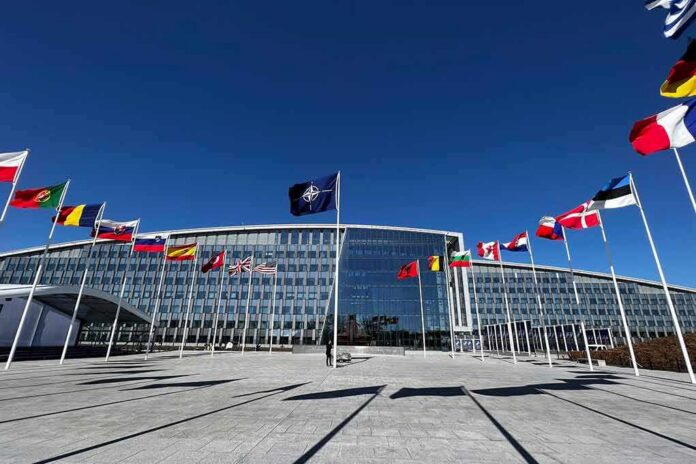
Belgian federal prosecutors announced that a Canadian woman of Chinese origin was arrested on spying charges after working as an intern at NATO’s Supreme Headquarters Allied Powers Europe, known as SHAPE, in Mons, Belgium. Prosecutors say she is suspected of spying “on behalf of a third country” and of being a member of a criminal organization, a serious accusation usually reserved for major security threats, not short-term interns. She was placed under arrest on Friday after an initial sweep by investigators.
Reports say her arrest followed searches at both her home and her workplace inside the SHAPE compound, NATO’s main operational command center in Europe. Those searches suggest this is being treated as a full-scale national security case, not just a workplace problem or paperwork issue. Belgian media also report that she has been remanded in custody as the investigation continues under federal oversight, which means judges and federal police are now fully involved in the case.
How NATO’s own security services triggered the investigation
Prosecutors say the case started when NATO’s security services at SHAPE “came to the attention” of the intern and then tipped off Belgian military intelligence. That means the first alarm did not come from an outside whistleblower or a foreign tip, but from within the alliance’s own security structure, which is supposed to screen everyone who gets near sensitive systems. Belgian authorities then opened a formal espionage probe, which led to searches, the arrest, and now pre-trial detention while evidence is reviewed by an investigating judge in Mons.
Officials have not said how long the intern worked at SHAPE, what office she served in, or what level of access she had to classified material. They also have not said whether any restricted files, devices, or communications were actually seized, or if the case is based mainly on suspicious contacts, patterns, or digital traces still under review. NATO representatives have stressed in some reports that operations and readiness have not been affected, an important message for allies who depend on SHAPE to manage everything from deterrence in Europe to responses to emerging threats.
What we still do not know — and why that worries many citizens
Key facts remain hidden from the public: prosecutors have not named the “third country” that allegedly received the spying, they have not identified any criminal organization, and they have not released the woman’s name. That secrecy is common in espionage cases to protect sources and ongoing work, but it leaves citizens with only one side of the story, shaped almost fully by government statements rather than tested evidence. No indictment details or declassified court filings have been made public yet.
This lack of detail hits a nerve that people on both the right and the left know well: powerful security institutions asking for trust while keeping most of the facts behind closed doors. Conservatives who worry about weak borders, globalist institutions, and foreign influence see a potential failure of basic vetting at the heart of the Western military alliance. Liberals who fear secretive “deep state” decisions and unchecked security powers see another case built on hidden intelligence they cannot independently review.
Why an intern-level case still matters for NATO security and democratic trust
Espionage experts note that many damaging spy cases do not start with senior generals or cabinet officials, but with lower-level staff or interns who have simple, routine access to systems and people. Even limited access can be enough to map networks, copy unclassified but sensitive data, or spot weaknesses for later attacks. In this case, the suspect’s presence inside SHAPE alone raises questions about how NATO screens interns and contractors, and whether allied governments have let their guard down in the name of convenience.
Thriller at NATO Headquarters in Europe (SHAPE): Canadian national of Chinese origin arrested, intern – Accused of espionage for a third country intern at SHAPE, an arrest warrant was issued on Friday, July 24, 2026. There are suspicions that he was spying for a third country and…
— Ε🇬🇷Λ🇬🇷Λ🇬🇷Α🇬🇷Σ (@GRHellasGR) July 26, 2026
For ordinary citizens in North America and Europe, the story lands in a wider climate of mistrust. People see rising tensions with China, Russia, and other rivals, while feeling that their own leaders are distracted by career games, party fights, and culture wars. A spy scare involving a Canadian of Chinese origin inside NATO feeds fears of foreign penetration. But the silence about evidence also deepens doubts about whether national security claims are being used as a shield for government mistakes, secrecy, or quiet deals the public never gets to judge for themselves.
Sources:
thegatewaypundit.com, reuters.com, straitstimes.com, bloomberg.com, brusselstimes.com, thedefensepost.com, thehindu.com