Measles has roared back to a 34-year high in the United States, exposing how government inaction and mistrust are letting an old, preventable disease spread again.
Story Snapshot
- Measles cases in 2026 are already near or above last year’s record, the highest since the early 1990s.
- More than 9 in 10 infections are in people who are unvaccinated or whose vaccination status is unknown.
- National measles, mumps, and rubella (MMR) coverage has slipped below the level needed for strong herd immunity.
- Experts warn the U.S. is on track to lose its “elimination” status for measles for the first time in over 20 years.
Record measles surge breaks a decades-long safety milestone
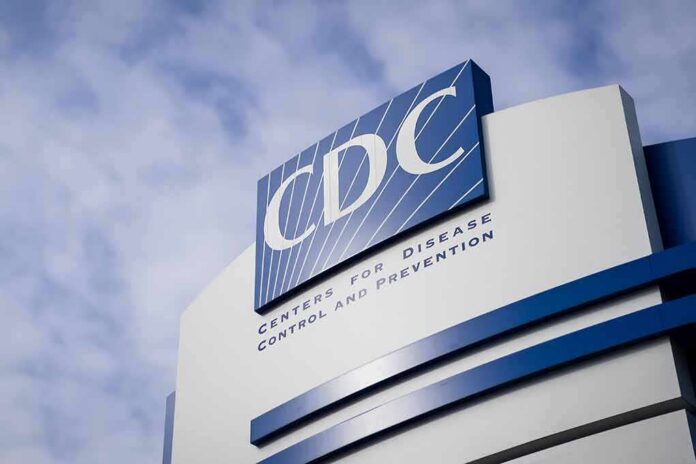
Public health data show that 2025 and 2026 brought the highest measles case counts since the early 1990s, breaking more than three decades of relative safety. In 2025, the United States recorded over 2,200 confirmed cases, the most in any year since the disease was declared eliminated in 2000. By July 2026, the Centers for Disease Control and Prevention reported 2,231 cases, almost matching the entire 2025 total with months still left in the year. This sharp rise marks a clear break from the low numbers seen for many years after elimination.
News reports and expert reviews link this surge to a mix of factors: lower vaccination rates, clusters of unvaccinated people, and imported cases that ignite spread inside the country. Measles was declared eliminated in 2000 after years of high measles, mumps, and rubella vaccine coverage and strong surveillance, meaning no continuous homegrown spread for at least 12 months. That “eliminated” label never meant measles was gone forever; it meant the system was strong enough to stop chains of transmission before they lasted a full year.
Falling vaccination and pockets of low immunity drive the comeback
Experts say the core problem is uneven immunity across the country, not one single bad outbreak. National measles, mumps, and rubella coverage among kindergartners dropped from over 95% in 2019–2020 to about 92.5% in the 2024–2025 school year, below the federal goal. Measles is one of the most contagious viruses known, so even small drops in coverage leave room for rapid spread. Reviews of the 2025 and 2026 outbreaks show that more than 90% of cases have been in people who were unvaccinated or had unknown vaccination status.
Detailed outbreak studies highlight how these gaps show up on the ground. In the 2025 crises, over 90% of patients were either unvaccinated or of unknown status, and most were children and teenagers. In 2026, media reports citing Centers for Disease Control and Prevention data say 93% or more of cases involve unvaccinated people, and most infections are in those under 20. That pattern fits a larger research record: measles tends to return to “post-elimination” countries when local pockets of low vaccine use form, even if national averages look decent.
From isolated outbreaks to risk of losing measles elimination status
For many years after 2000, the United States saw small outbreaks tied to travel, but strong local public health teams kept them short and contained. More recent analyses describe a change: larger, longer outbreaks in under-immunized communities are testing the limits of the system. In 2025, there were dozens of separate outbreaks and several states with large clusters, including a Western Texas outbreak that infected more than 620 people and caused child deaths. A South Carolina outbreak that spanned 2025–2026 became the largest single measles outbreak since elimination.
Because measles elimination status depends on avoiding 12 straight months of ongoing spread, this sustained transmission now threatens that label. The Pan American Health Organization, which reviews countries’ status, is expected to consider the recent numbers and transmission patterns in its next assessment. Analysts at universities and think tanks warn the United States is “highly likely” to lose its elimination status if long chains of cases are not interrupted soon. That would be a symbolic sign that the country has let basic public health protections slip.
How mistrust, disinformation, and strained systems fuel the danger
Research on the measles resurgence points to more than just personal choice; it describes a wider breakdown in trust and systems. Vaccine-hesitant movements grew over the past two decades, often spreading fears about measles, mumps, and rubella shots and childhood conditions like autism, despite strong evidence the vaccine is safe and effective. At the same time, the COVID-19 pandemic disrupted routine childhood vaccination visits and strained local health departments, leaving many children behind on their shots.
Updated Post: Starmer warns public health isnt a culture war after measles outbreak |… | Latest Lifestyle News
Sir Keir Starmer has warned "public health isn't a culture war" and urged parents to check their children are up to date with vaccinations after a measles… pic.twitter.com/o8zmzaPZxS
— Jake Reed (@JohnHor76068488) July 21, 2026
Analysts also note that public health infrastructure has come under pressure from budget cuts, political fights, and growing anger at “elites,” which can make it harder to run steady outreach and rapid response. Imported measles cases from other countries still matter, but they become large outbreaks only when they land in communities with low trust in health advice and poor access to basic care. In that sense, the current measles wave looks less like a random event and more like a warning sign that core systems meant to protect ordinary families are no longer working as they should.
Sources:
sciencenews.org, tandfonline.com, pmc.ncbi.nlm.nih.gov, publichealthcollaborative.org, cnn.com, scientificamerican.com, cidrap.umn.edu, abcnews.com, kff.org, youtube.com, publichealth.jhu.edu, pubmed.ncbi.nlm.nih.gov, innovapath.us, milbank.org, cfr.org, cdc.gov, historyofvaccines.org, health.harvard.edu, med.stanford.edu