President Trump’s vow to bomb Iranian bridges and power plants for every ship attacked in the Strait of Hormuz pushes America deeper into a dangerous war where civilian infrastructure becomes a battlefield and ordinary people pay the price.
Story Snapshot
- Trump threatens tit-for-tat strikes on Iranian bridges and power plants for each ship Iran targets in the Strait of Hormuz.
- Legal experts and human rights groups warn these civilian‑infrastructure strikes could amount to war crimes under international law.
- Iran responds with its own threats to hit regional energy and water systems, raising the risk of a wider regional disaster.
- Both sides claim to defend security and commerce, yet millions of civilians could face blackouts, broken roads, and economic collapse.
Trump’s Tit‑for‑Tat Pledge: One Ship, One Power Plant
President Trump has drawn a stark line: if Iran shoots at a ship in the Strait of Hormuz, the United States will bomb and destroy one Iranian bridge or power plant. He has repeated this formula in posts on Truth Social and in television interviews, tying the promise directly to missile, rocket, or drone attacks on commercial vessels. The White House presents this as a clear deterrent policy meant to protect freedom of navigation in one of the world’s most important energy routes. For frustrated Americans who feel globalism and chaos abroad drive prices and insecurity at home, this tit‑for‑tat message sounds tough and simple — but it also moves civilian infrastructure into the crosshairs.
The threats do not stop at single sites. Trump has also warned that if Iran does not fully reopen the Strait of Hormuz within tight deadlines, the United States could “obliterate” Iranian power plants, starting with the biggest one first. In one interview he said Iran could “forfeit every power plant and all other facilities throughout the entire country” if it chose to keep the strait closed. This means the stakes are not only about a few military targets but the electrical grid that keeps hospitals running, families warm or cool, and businesses alive. For many on both the right and the left, this looks less like smart defense and more like a high‑risk gamble with ordinary lives.
Is Bombing Power Plants a War Crime?
Human rights advocates and law‑of‑war experts are sounding alarms. Amnesty International called Trump’s warning to obliterate Iranian power plants a “threat to commit war crimes,” pointing out that these sites mainly serve civilians and that turning off a country’s electricity can cause massive suffering, especially for the sick, the elderly, and children. Reporters have noted that military law specialists say attacking bridges and power facilities that are not clearly being used for combat may violate the rules that protect civilian objects in war. Even some United States‑based legal scholars who see narrow legal grounds for hitting parts of an electrical grid stress that using it to make “a whole civilization die” crosses any acceptable line. For many Americans already skeptical that “the deep state” respects law or morality, the idea that Washington might flirt with war crimes deepens distrust of both parties and the permanent national security bureaucracy.
The Trump administration, however, publicly insists it will “always” follow international law. Supporters argue that Iran uses its economy and infrastructure to fund attacks across the region, from missile strikes to support for armed groups. In that view, facilities that feed Iran’s war machine become fair targets if they help sustain hostile operations. Yet there is a wide gulf between carefully chosen dual‑use sites linked to clear military activity and broad threats to demolish bridges and “every power plant” in a nation of 90 million people. That gap is exactly where many experts say the policy risks sliding from tough defense into collective punishment.
Iran’s Counter‑Threats and the Risk of Total Regional Breakdown
Iran has not taken these threats quietly. Iranian officials warn that if the United States attacks their power plants, they will retaliate against regional energy and water infrastructure that supports United States bases and interests. They have spoken of targeting power plants and economic and industrial sites in Gulf countries, as well as trying to halt all oil flow from the region if civilian targets are hit. This means that Trump’s tit‑for‑tat plan could trigger a chain reaction where not only Iran, but key United States partners, see their grids, pipelines, and desalination plants under threat. For a region already shaken by war and sanctions, that would put daily life and basic services at risk for millions of people.
US and UK Plan International Conference on the Strait of Hormuz
Key Developments
International Summit: The US and UK are planning to host a high-level meeting in London next week to discuss a potential international coalition aimed at protecting maritime activities in the Strait… pic.twitter.com/8IBMZ52JgH— Celal Kemal Balkar (@balkar_77) July 24, 2026
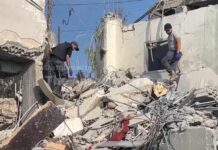
United States strikes have already begun to widen. Reports from Iranian state media and international outlets say American forces have hit bridges and energy infrastructure inside Iran, while United States Central Command claims its latest waves of strikes focus on air defense, missile sites, and logistics that support attacks on shipping. Washington frames these operations as needed to “degrade Iran’s ability to threaten civilian mariners and commercial vessels” and to restore safe passage through the Strait of Hormuz. Yet the on‑the‑ground effect is that roads, power lines, and key industrial links are being destroyed in a country where ordinary families have little say in the decisions of their rulers or of foreign powers.
What This Means for Americans Who Feel the System Is Broken
This crisis touches many of the core frustrations shared across the United States political spectrum. Older conservatives who backed “America First” are tired of seeing tax dollars and American lives tied up in far‑away wars, even when they agree that Iran’s attacks on ships and allies must be checked. Older liberals, meanwhile, see another example of powerful leaders choosing hard‑line moves that risk punishing civilians instead of investing in diplomacy, aid, or rebuilding at home. Both sides suspect elites — from defense contractors to foreign policy insiders — profit from endless conflict while working families face high energy costs, inflation, and dwindling chances at the American Dream.
Trump’s vow to bomb bridges and power plants every time a ship is attacked captures this tension in one sentence. On its face, it promises quick, certain punishment for a hostile act and claims to protect trade routes that underpin the global economy. But in practice, it ties the fate of millions of Iranian civilians, and potentially millions more across the Gulf, to every drone or rocket fired in a narrow waterway. It also locks the United States into an open‑ended confrontation where each strike invites a new response from Tehran. For Americans who worry that the federal government now answers complex problems mainly with threats and force, this policy looks like one more sign that the system is chasing short‑term “strength” at the cost of long‑term stability, law, and basic human values.
Sources:
insiderpaper.com, wsj.com, reuters.com, pbs.org, washingtonpost.com, youtube.com, newsnationnow.com, aljazeera.com, bbc.com, theguardian.com, wsvn.com, sites.duke.edu