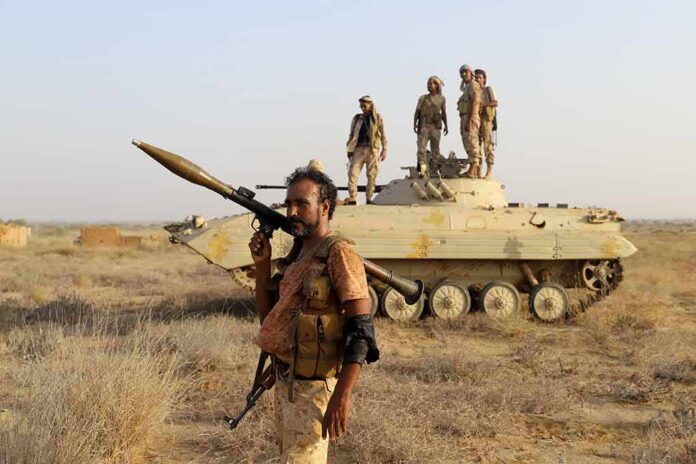
The Houthis have turned the Red Sea into a pressure point that can rattle oil flows, force ship turns, and test a stretched United States military.
Quick Take
- The Houthis said they would not allow ships to load or unload at Saudi ports.
- Reuters reported the warning could threaten Saudi oil exports and affect about 7% of global oil supply.
- Ship tracking showed several tankers turned away after the announcement.
- United States and allied officials warned the group to stop attacking Red Sea shipping or face consequences.
Saudi Ports Become the New Flash Point
Yemen’s Iran-aligned Houthi movement said this week that ships would not be allowed to load or unload at Saudi ports. Reuters reported that the warning could block Saudi oil exports and choke off an extra 7% of global oil supply. The move matters because Saudi oil has long used Red Sea routes to avoid the Strait of Hormuz. That gives the Houthis a new way to pressure energy markets without needing a formal war at sea.
The announcement also revived fears that a regional dispute can spill into global trade fast. The Strait of Bab el Mandeb sits at the southern edge of the Red Sea, where ships move between Asia and Europe. When that lane looks unsafe, shipping firms often reroute before any attack lands. That pattern has repeated across the Houthi campaign, which has already pushed many carriers away from the area and raised costs across supply chains.
Ships Moved Before the Threat Was Fully Enforced
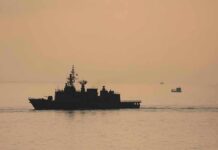
Ship tracking showed an immediate reaction after the Houthi warning. BBC reporting cited at least seven oil tankers that altered course near Yemen after the embargo announcement. That kind of fast retreat matters because it shows how threats alone can change behavior. Shipping firms do not wait for certainty when a narrow sea lane is involved. They move first, then sort out the cost later, which is one reason these warnings can have real market power.
The broader record makes that reaction easier to understand. Since late 2023, Houthi attacks and threats have driven large shifts in Red Sea traffic, with some estimates showing more than one hundred attacks and major rerouting around Africa. Other reports say traffic through the Suez Canal fell sharply during the crisis. Even when attacks pause, the route does not quickly return to normal because insurers, captains, and cargo owners remember the risk.
United States Forces Face a Harder Job
The new threat lands at a bad time for Washington. Reuters said the Houthi move would challenge a stretched United States military, and United States officials have already warned the group to stop targeting Red Sea shipping or face action. The Wall Street Journal reported that the United States, the United Kingdom, and other allies issued a firm warning on Wednesday, calling the attacks unlawful and destabilizing. That language shows how quickly the issue has moved from a shipping problem to a security test.
OPERATION LOWCOUNTRY WILDFIRE INTELLIGENCE
INTEL BRIEFING
22 July 2026
Wando River Fixed Perch
Cainhoy Peninsula South CarolinaSUBJECT
Houthi Claims of Strikes on Saudi Oil Tankers in the Red SeaEXECUTIVE SUMMARY
Yemen’s Houthis claim they struck two Saudi oil…— Operation LowcountryWildfire (@OpLowcountry) July 22, 2026
Analysts have long argued that there is no easy military fix for this problem. The United States can intercept missiles, support escorts, and strike launch sites. But it cannot fully remove the risk as long as the Houthis keep their ability to threaten vessels from Yemen. That leaves officials with a familiar choice: spend more to defend a key waterway, or accept that a small armed group can keep forcing global trade to pay a hidden tax.
Why This Story Reaches Beyond the Red Sea
This is not just a Middle East story. It is also a reminder of how fragile modern trade has become. A threat from a nonstate group in Yemen can affect Saudi oil, shipping insurance, delivery times, and fuel prices far from the region. For Americans already frustrated by high costs, that is the point. Weak state control, long supply lines, and slow government responses can turn a local crisis into a wider economic hit with very little warning.
The new embargo language also fits a larger pattern of power politics by disruption. The Houthis have repeatedly used threats, attacks, and pauses to shape shipping behavior and public fear. That makes each new warning less like a one-off statement and more like part of a tested playbook. For Washington, that means the challenge is not only military. It is also about whether the United States can keep global trade open without letting a small armed group set the rules.
Sources:
19fortyfive.com, news.az, news.usni.org, bbc.com, washingtoninstitute.org