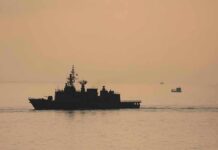
The Red Sea crisis shows how a relatively localized maritime threat can rewire global trade routes almost overnight, turning a narrow chokepoint into a worldwide cost and capacity shock whose effects linger long after the shooting starts.
Key Points
- Houthi attacks on commercial vessels have triggered a large-scale diversion of ships away from the Red Sea and Suez Canal, with thousands of voyages rerouted around the Cape of Good Hope.
- These diversions add roughly 10–14 days to Asia–Europe sailings and millions of dollars in fuel and charter costs per round trip, effectively shrinking global shipping capacity and driving up freight rates.
- Traffic through the Suez Canal fell by about half during the height of the crisis, and container flows through the Red Sea corridor dropped sharply, producing measurable declines in global trade volumes.
- The economic impact is real in shipping and logistics; broader macroeconomic damage—including sustained inflation or an enduring oil shock—is more modest and harder to attribute cleanly to the Red Sea alone.
The Red Sea as a Global Trade Artery
To understand why attacks confined to a single maritime corridor reverberate worldwide, you have to start with geography. The Red Sea–Bab al-Mandeb–Suez Canal axis is the shortest deep‑water route linking Asia to Europe and the Eastern Mediterranean. Roughly 10–15 percent of global maritime trade volume typically passes through this corridor, including containerized manufactured goods and significant flows of crude oil and refined products. For many east–west services, using Suez is not a convenience; it is baked into network design, sailing schedules, and port infrastructure.
When that artery is threatened, the alternative is stark. Ships can either accept elevated war‑risk exposure and insurance premiums to transit the Red Sea, or lengthen voyages by some 4,000–5,000 miles around the Cape of Good Hope. That detour reshapes voyage economics, slot availability, and schedule reliability for carriers across multiple trades, not just those physically transiting the Red Sea.
From Sporadic Attacks to Systemic Disruption
The crisis was not triggered by a single dramatic incident but by the accumulation of attacks that turned a security problem into a systemic shock. Since November 2023, Houthi forces based in Yemen have carried out scores—by some counts over one hundred—attacks on commercial ships and warships in the Red Sea and Gulf of Aden, targeting vessels they associate with Israel and its partners. These operations have used missiles, drones, and other weapons to harass or strike ships, damaging several dozen hulls and even sinking at least two vessels according to incident tallies compiled by maritime analytics firms.
Once it became clear that attacks were not isolated and that targeting criteria were broad and sometimes confused, major carriers reacted quickly. By mid‑December 2023, at least thirteen of the world’s largest shipping operators had announced suspensions of Red Sea transits or of sailings to Israeli ports. Container giants such as MSC and Maersk publicly redirected their fleets away from the Suez route “for the foreseeable future,” rerouting around the Cape of Good Hope instead. Similar diversions followed for energy cargoes, with companies like BP pausing shipments and grain traders shifting wheat and other bulk commodities onto longer Africa routes.
How Rerouting Changes Time, Cost, and Capacity
Detouring around Africa is not a marginal tweak. For an Asia–Northern Europe service, bypassing Suez can add 7–14 days to each leg of the voyage, depending on speed and port rotation; New York Times and industry analyses describe hundreds of ships making an extra 4,000‑mile detour, adding 10 days or more in each direction. Shipping consultancies estimate that the longer route can add between $1 million and more than $3 million in fuel and charter costs per round trip, especially for large container vessels, which quickly compounds across an operator’s weekly string of services.
The time penalty has a second‑order effect: ships spend more time at sea, which means fewer voyages per year. Analysts at Xeneta and others have estimated that diversions absorbed millions of TEU (twenty‑foot equivalent units) of effective container capacity and shrank global shipping capacity by mid‑single to low‑double‑digit percentages at the height of the crisis. In practical terms, that capacity loss translated into higher spot freight rates on key Asia–Europe, Asia–Mediterranean, and Asia–US East Coast routes, as carriers imposed surcharges and prioritized cargoes that could support the higher cost base.
Measured Effects on Trade Flows
Unlike many security shocks, the Red Sea disruption can be traced in hard trade and traffic data rather than anecdotes alone. The International Monetary Fund reports that in the first two months of 2024, trade through the Suez Canal dropped by about 50 percent compared with the previous year, as attacks pushed ships onto longer routes around Africa. A German economic institute cited by The Guardian found that daily container flows through the affected area fell sharply, at one point by around 60 percent relative to baseline.
By March 2024, synthesis of official and industry data notes that more than 2,000 ships had diverted away from the Red Sea, causing a 90 percent reduction in container shipping through the corridor during specific periods. The US Defense Intelligence Agency likewise describes a clear pattern: attacks endangered crews, increased transit times, and impeded humanitarian shipments, all while raising the cost of commercial shipping through the region. These figures confirm that the Red Sea crisis was not a minor blip; for a time, it effectively throttled one of the world’s busiest trade arteries.
Oil Markets and the Limits of the Shock
Energy flows through the Red Sea and Suez are significant but not singular; roughly half of southbound oil transit through Suez was displaced or deferred during the most intense phase of the crisis, falling from around 7.9 million barrels per day to about 3.9 million. This mattered to tanker operators and refiners, and there were periods in which crude benchmarks like Brent approached or briefly touched $100 per barrel amid heightened concern over Middle Eastern supply risks.
Yet the broader oil market response was more muted than some headline coverage implied. Analysts and institutions—ranging from CSIS to specialist outlets like 360info—emphasize that the disruptions did not plunge the global economy into an energy crisis; alternative routes and spare capacity allowed companies to limit price rises to moderate levels compared with what they might have been in a true supply crunch. In other words, the Red Sea attacks priced in as a risk premium layered over an already complex geopolitical and market backdrop, not as a singular shock that redefined oil fundamentals.
🚨 UPDATE: SAUDI-LED COALITION CONFIRMS HODEIDAH STRIKES, DENIES HITTING THE PORT
The mystery did not last long.
🇸🇦 The Saudi-led coalition has now officially confirmed that it carried out a military response against Houthi targets in Yemen’s Hodeidah Governorate.
According to… pic.twitter.com/xu1ZL4Ge5q
— Gunnys Adventures (@DerrickSalas9) July 24, 2026
From Shipping Shock to Economic Impact
Where the evidence is strongest is on shipping itself: longer voyages, higher freight rates, and reduced capacity. Multiple analyses agree that, at least for several quarters, the Red Sea crisis produced the largest disruption to global trade since the COVID‑19 pandemic in terms of rerouted tonnage and delayed cargo flows. That does not automatically translate into a severe macroeconomic downturn. The link from shipping shocks to consumer prices depends on timing, inventory buffers, contract structures, and how quickly carriers and shippers can adjust.
The IMF and other institutions note that the combination of Red Sea attacks and simultaneous problems at the Panama Canal distorted trade statistics and complicated inflation readings, but they stop short of attributing a major global inflation surge solely to the Houthi campaign. In many sectors, companies front‑loaded shipments, absorbed surcharges, or drew down inventories to smooth the impact. Some manufacturers, particularly in Europe, faced tighter margins and delays, yet the feared cascade into widespread shortages and runaway prices did not fully materialize.
Adaptation, Partial Normalization, and Continuing Risk
One reason the crisis did not become existential for global trade is that the system adapted. Some carriers, notably Maersk and Hapag‑Lloyd, cautiously resumed partial Red Sea transits once naval protection operations—such as Operation Prosperity Guardian—were in place, even while keeping contingency routing via the Cape of Good Hope. Over time, operators learned to differentiate risk by vessel, cargo, and flag, and insurance markets adjusted premiums accordingly.
That said, traffic has not simply snapped back to pre‑crisis normal. Analysts warn that as of 2026, hopes for a large‑scale return of container shipping to the Red Sea remain constrained by periodic escalations and new threats, including bans announced by the Houthis on specific national or corporate operators. Even during stand‑downs, the memory of prior attacks and the potential for renewed strikes keeps war‑risk pricing and contingency plans in place. The result is a semi‑normalized regime: more ships transit under protection, but a meaningful share of global capacity continues to route around Africa, with all the attendant cost and time implications.
What This Episode Tells Us About Chokepoint Risk
The Red Sea crisis has become a case study in chokepoint vulnerability. Small groups with relatively modest maritime strike capabilities can impose outsized costs on the global system if they operate at a geographic bottleneck that trade architectures cannot easily bypass. The Houthis did not need to sink dozens of ships or close the sea entirely; attacking “scores of vessels” and sustaining a credible threat was enough to persuade risk‑averse carriers and insurers to reconfigure routes.
This pattern will recur elsewhere. The same structural logic applies to the Strait of Hormuz, the Malacca Strait, and other narrow passages where regional conflicts intersect with global flows. What the Red Sea episode adds is empirical detail: we now have real‑world data on how quickly traffic can drop by half, how many ships will divert, how much capacity is lost, and how freight markets respond. Policymakers and industry leaders who treat maritime security as purely local now have a concrete demonstration that a concentrated series of attacks can ripple through global trade statistics, logistics budgets, and, at the margins, consumer prices worldwide.
Sources:
reason.com, cfr.org, itf-oecd.org, atlasinstitute.org, project44.com, aljazeera.com, nytimes.com, theguardian.com, csis.org, unav.edu, reuters.com, arabcenterdc.org, freightwaves.com, pbs.org, washingtoninstitute.org, dia.mil, 360info.org