
Tens of thousands in Yemen rallied against Saudi Arabia while pledging solidarity with Palestinians, signaling fresh regional strain that could affect vital shipping lanes and U.S. interests.
Story Highlights
- Large rallies filled Sana’a and other cities, tying support for Palestine to opposition to Saudi actions.
- Protest organizers issued statements backing Palestinians and rejecting Saudi claims over holy sites.
- Reports cite “thousands” to “tens of thousands,” with no shared counting method across outlets.
- Most documented rallies occurred in areas under Houthi control, not across all of Yemen.
Mass Protests Link Palestinian Solidarity to Anti-Saudi Messaging
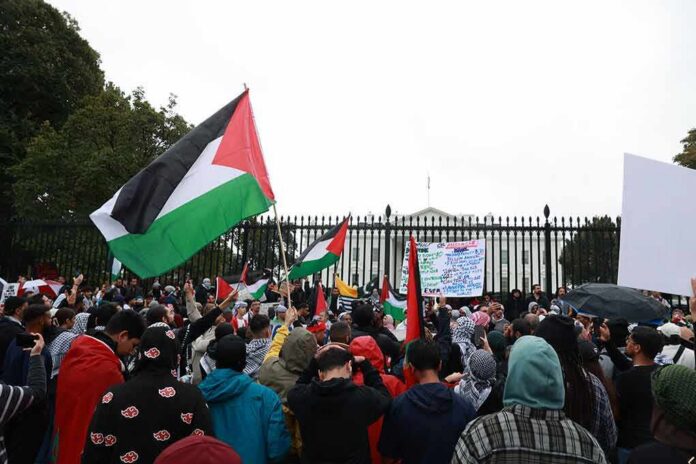
Associated Press video shows large crowds in Sana’a and other Yemeni cities marching against Saudi Arabia and for Palestinians. Footage captured Yemeni, Iranian, Lebanese, and Palestinian flags as demonstrators packed central streets and squares. Reuters video earlier documented thousands in Sana’a saying United States strikes would not weaken their support for Palestinians. Reports from Turkish and regional outlets list several cities where crowds gathered. The events combined anti-Saudi slogans with pledges to continue backing people in Gaza.
Coverage from Yemen’s official news channel and allied outlets described rallies in Sana’a, Al-Jawf, Hajjah, Hudaydah, Ibb, and other areas, where participants chanted for Palestine and criticized Saudi military action and the blockade. A rally statement reported by Iranian media said participants opposed the “Saudi enemy,” rejected claims tied to attacks on holy sites, and demanded an end to the blockade. While numbers varied by outlet, the shared message united Palestinian solidarity with resistance to Saudi policies.
Turnout Claims Vary Widely Across Media
Attendance estimates ranged from “thousands” to “tens of thousands,” while some partisan or aligned outlets claimed “millions.” None of the reports presented a transparent crowd-count method, independent police estimates, or satellite-based analysis to verify totals. The lack of a common method makes raw figures hard to compare across cities. Still, consistent video from respected wire services confirmed large, organized mobilization in Yemen’s capital and other Houthi-held areas, with clear slogans and coordinated visuals.
Reports placed most events inside territory controlled by the Houthi movement, known formally as Ansarullah. Available evidence did not establish parallel turnout in cities under the internationally recognized government. That gap limits any claim that the rallies represented the entire country, rather than populations in Houthi-run regions. Outlets sympathetic to the movement amplified scale and resolve. International coverage highlighted both the civilian solidarity themes and possible ties to military mobilization rhetoric.
Why This Matters to American Readers
Shipping lanes near Yemen, including the Bab al-Mandab strait, carry energy and trade that American families rely on. Protests that fold Palestinian solidarity into anti-Saudi messaging can spill into pressure on waterways and regional partners. Rally statements referenced mobilization and resistance themes that often pair with threats to blockades or strategic choke points. When tensions rise there, energy costs and insurance rates can climb here at home, squeezing budgets already hit by years of inflationary shocks.
President Trump’s team has worked to steady energy markets and protect shipping, but unrest in Yemen challenges those goals. Clear, credible reporting helps cut through noise. The most reliable evidence shows large crowds, united slogans, and gatherings centered in Houthi-held areas. The turnout is real, the messaging is pointed, and the stakes link to both Israel’s war context and Saudi security concerns. That mix can draw American forces and allies into rapid, costly responses if waters turn unsafe.
Key Limits and What We Can Say with Confidence
The strongest facts come from on-the-ground video and wire reports confirming large crowds and message themes. Those sources support claims of robust protests and a clear link to opposition against Saudi Arabia and support for Palestinians. Attendance numbers differ across outlets, and none share a common counting method. Most documented rallies occurred in Houthi-controlled areas, not nationwide. These facts define the floor of what happened and the likely impact on regional risk and American interests.
Sources:
youtube.com, socialnews.xyz, reuters.com, evrensel.net, livetube.tv