A masked arson attempt tied to anti-ICE frenzy fizzled in Kansas City—but the political temperature that sparked it is still burning.
Quick Take
- Surveillance video shows an unknown woman trying to ignite a warehouse in south Kansas City on Feb. 12, 2026; the fire was put out before it spread.
- The building had been toured by DHS/ICE in January as a potential detention site, but the owner said the same day it would not sell to the federal government.
- Kansas City police confirmed the incident was intentional arson; as of mid-February, no arrest had been announced.
- Local officials pushed moratoriums to block detention facilities, while rhetoric around “cages” fueled a national narrative fight over enforcement.
What Happened at the Botts Road Warehouse
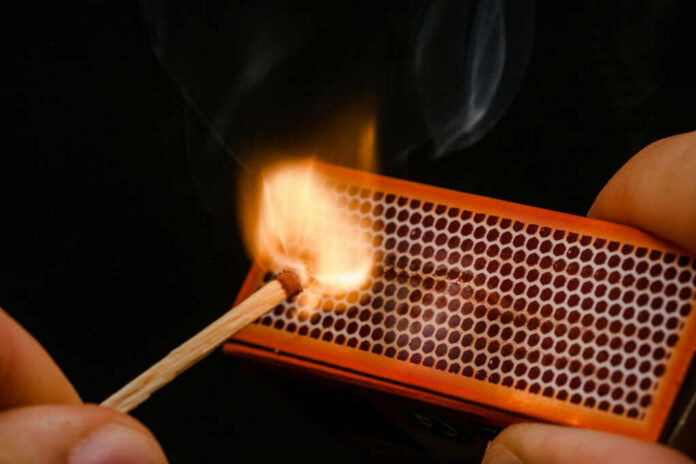
Kansas City police and fire crews responded around 6 p.m. on Feb. 12 to a small blaze at a warehouse at 14901 Botts Road in south Kansas City, Missouri. Investigators said surveillance video captured a woman approaching the building, attempting to ignite flames, then returning with what witnesses described as an accelerant—often reported as lighter fluid—before fleeing. Kansas City Fire Department crews extinguished the fire quickly, and officials reported no injuries.
Authorities routed the case to the Kansas City Police Department’s Bomb and Arson Unit, which publicly characterized the fire as intentional. The suspect remained unidentified in the immediate reporting window, and no custody announcement had been made as the footage circulated online. The most important immediate fact is also the simplest: the attempt failed. A much bigger catastrophe—damage to nearby property, injuries to first responders, or worse—was avoided only because the fire never caught.
Why ICE Was in the Story Even After the Deal Collapsed
The warehouse became politically charged because Department of Homeland Security agents toured the property on Jan. 15 as a potential Immigration and Customs Enforcement detention facility. That single tour ignited weeks of rumors and organizing. When the arson attempt happened, the owner—Platform Ventures—announced it would not proceed with any sale tied to federal detention use, citing fiduciary responsibilities. In other words, the target was already off the table when the suspect struck.
That timing matters for anyone trying to understand the motive claims floating around social media. Public reporting has not established a confirmed political motive for the arson attempt, and investigators have not announced a cause beyond intentional ignition. Still, the broader context is unavoidable: local opposition had already been mobilized around the idea of blocking ICE infrastructure. When activism turns into property destruction, it tests the boundaries between lawful protest and criminal intimidation.
Local Moratoriums, Federal Authority, and the Rule-of-Law Clash
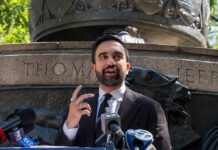
Kansas City politics had already moved toward a hard stop on detention expansion. Reports described the Kansas City Council approving a five-year moratorium on detention centers, and nearby Wyandotte County officials considered a separate moratorium vote. Mayor Quinton Lucas publicly opposed detention facilities, using language that framed them as offensive to human dignity. County legislator Manny Abarca condemned the arson attempt while also pointing to community frustration.
Those positions create a familiar friction point: local governments trying to block or delay federal enforcement infrastructure, and federal agencies arguing they need capacity to execute immigration law. Conservatives don’t need a conspiracy theory to see the problem. When elected leaders amplify inflammatory labels like “cages,” it can poison the civic environment even if they also say they oppose violence. The Constitution protects speech and protest—not arson, sabotage, or threats against public safety.
A Viral Video With National Echoes—and an Unresolved Investigation
The case exploded beyond Kansas City because the surveillance footage was clear and dramatic, spreading rapidly across major accounts and even international media. Conservative commentators highlighted the irony of an attack connected to a facility that was no longer moving forward. Meanwhile, police focused on the basics: identifying the suspect and closing a case that, on its facts, was an attempted property crime with obvious public-safety stakes. As of the latest reports, the suspect was still at large.
A prior incident in Yakima, Washington—described as vandalism and a small brush fire near an ICE field office—shows why officials treat these events as more than local news. Even when flames are contained, the intent to attack law enforcement facilities raises the same uncomfortable question: will political demonization of immigration enforcement continue to normalize “direct action” that crosses into criminality? With the arson investigation ongoing, the only responsible conclusion is narrow but urgent—public officials should lower the temperature, and prosecutors should enforce the law evenly.
Sources:
Arson at Kansas City Warehouse Once Proposed as ICE Detention Center Earns Global Headlines
Arsonist targets ICE office in Yakima
Police seek woman recorded committing arson after potential ICE transaction canceled
Arson Kansas City warehouse linked immigration detention
Property owner not sell building