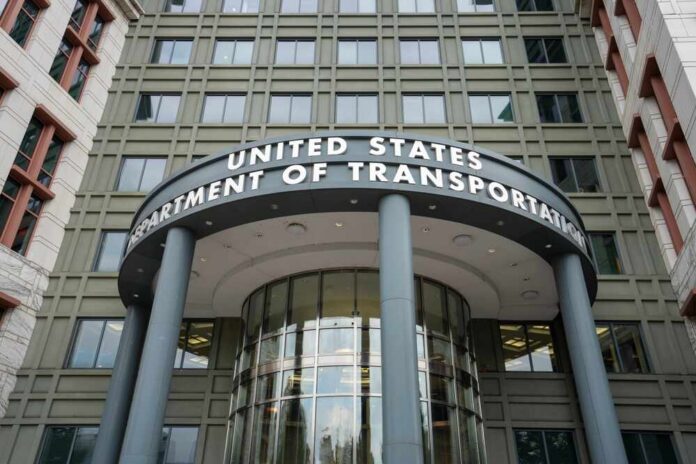
New York just lost $73.5 million in federal highway money after a federal audit found the state wouldn’t clean up illegal commercial driver’s license practices tied to non-domiciled foreign drivers.
Quick Take
- Transportation Secretary Sean Duffy announced FMCSA is withholding $73,502,543 in highway funds from New York over unresolved CDL and learner-permit compliance failures.
- A federal audit cited a 53% failure rate in sampled New York non-domiciled CDL records, triggering a “substantial noncompliance” finding.
- The withheld amount equals about 4% of New York’s National Highway Performance Program and Surface Transportation Program Block Grant funding.
- The administration says other states could face similar penalties as a nationwide CDL audit expands.
Why the Trump administration is using funding as leverage
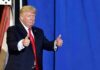
Transportation Secretary Sean Duffy said the Federal Motor Carrier Safety Administration is withholding $73.5 million in federal highway funding from New York after the state failed to revoke thousands of commercial driver’s licenses and learner’s permits deemed improperly issued to non-domiciled drivers. FMCSA Administrator Derek Barrs framed the move as a safety action: federal dollars, he argued, should not support licensing systems that fall short of federal requirements.
SEAN DUFFY TO JACK POSOBIEC: We’re pulling funding from states that refuse to fix illegal CDL practiceshttps://t.co/jHl2DEhTpo
— Human Events (@HumanEvents) April 21, 2026
The enforcement model matters because it reflects a broader Washington trend: agencies using grant conditions to force state-level compliance. Conservatives tend to support strict enforcement when it targets public safety failures and weak border-era vetting, but the same tool can also be used by future administrations to push unrelated ideological priorities. In this case, the facts provided point to a narrowly defined compliance dispute—license issuance, documentation, and corrective actions—rather than a policy fight over general transportation funding.
What the audit found, and what remains unclear
FMCSA’s compliance push traces back to a nationwide audit completed on December 12, 2025, which found New York’s Department of Motor Vehicles had a 53% failure rate in a sample of records tied to non-domiciled CDL issuance. The New York systems defaulted to issuing eight-year licenses to foreign drivers regardless of when legal status expired, raising questions about whether authorization dates were properly tracked at issuance.
The timeline includes a March 13, 2026 FMCSA response disputing New York’s claims of compliance and stating the state still had not completed required corrective actions. No New York’s detailed rebuttal, the number of licenses affected, or a publicly described remediation timetable. Without that, it is difficult to assess whether the state’s noncompliance was due to policy choices, bureaucratic breakdowns, or technical system limitations.
How this fits a wider crackdown across multiple states
New York is not presented as the only state in the crosshairs. The research cites other states—California, Washington, Oregon, and New Mexico—as also being identified for noncompliant practices, alongside reporting that Duffy announced a federal audit of CDL licensing nationwide. That broader context suggests the administration is treating CDL oversight as a national infrastructure-and-safety issue, not a single-state dispute, and using penalties to reset incentives.
The same reporting also points to concerns beyond paperwork. One cited account describes a commercial driving school in Washington and Oregon allegedly bribing independent testers to secure passing grades for failing students. If accurate, that allegation underscores why CDL integrity is more than an immigration argument: commercial vehicles are high-risk equipment, and weak testing regimes can endanger families regardless of politics. Still, the research does not quantify how widespread bribery is nationwide.
The political fault line: safety enforcement versus trust in government
Duffy’s statements describe the New York dispute in sharp political terms, criticizing state leadership and arguing the federal government should not fund “dangerous” policies. For conservatives frustrated with years of lax enforcement, the move will read as a rare example of Washington applying consequences instead of issuing warnings. For liberals skeptical of Trump-era agencies, it can look like the federal government weaponizing funds to pressure blue states.
What both sides increasingly share is a deeper doubt that institutions are being managed for ordinary citizens. Even when voters agree on “safety first,” they often disagree on whether agencies enforce rules evenly, transparently, and without political favoritism. The current reporting supports the existence of an audit and a penalty, but it leaves unanswered questions about consistent standards across states, due process for affected drivers, and how quickly New York can regain withheld funds.