
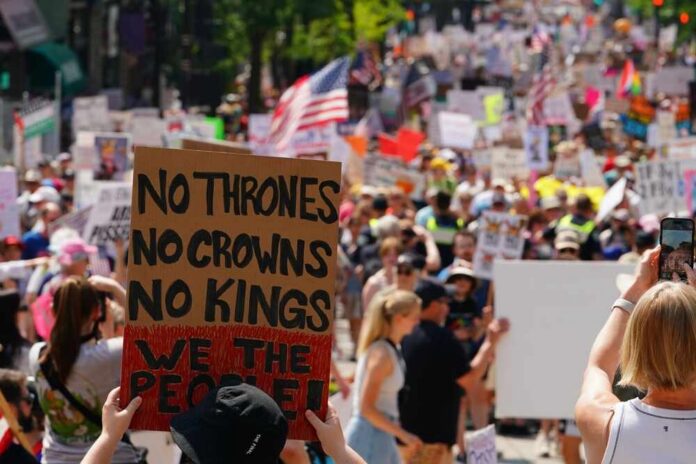
Protesters tried to turn the White House Correspondents’ Dinner red carpet into a televised “arrest” demand for a sitting Cabinet official—and were removed as President Trump made his first appearance at the event as president.
Quick Take
- Anti-war group CODEPINK and allies staged a protest outside the Washington Hilton during the White House Correspondents’ Dinner.
- Demonstrators demanded the arrest of Secretary Pete Hegseth over allegations tied to a U.S. strike in Minab, Iran that they say hit a school.
- Live video showed chanting and red-carpet disruption, followed by protesters being pushed back or removed from the immediate arrival area.
- The episode renewed a long-running fight over whether the WHCD blurs the line between journalism, celebrity, and political power.
Red-carpet disruption collides with Trump’s high-profile WHCD return
Organizers with CODEPINK promoted a late-April protest timed to the White House Correspondents’ Dinner, a Washington gala that places senior officials, corporate media figures, and celebrities in the same room. Live coverage from outside the Washington Hilton showed demonstrators chanting “Arrest Hegseth!” near the arrivals area as guests moved along the red carpet. Reports indicated protesters were removed from the red-carpet area while the event continued inside.
President Donald Trump’s attendance added extra heat. After years of tension between Trump and legacy outlets, the 2026 dinner became a test of whether the press corps’ signature night still functions as a civic tradition—or as a status event that rewards access. For conservative viewers skeptical of elite institutions, the optics matter: a protest outside, champagne inside, and a media industry that still depends on proximity to power for scoops and influence.
What CODEPINK is alleging—and what remains unverified from the record provided
CODEPINK’s press material framed the protest as an “Arrest Hegseth” campaign, accusing the secretary of responsibility for a U.S. bombing in Minab, Iran that the group claims struck a school and killed nearly 200 children. The same materials say Hegseth refused to answer congressional questions about that incident. The detailed casualty claim is presented primarily through activist statements rather than independently documented, on-the-record government findings.
That distinction matters in a country exhausted by information warfare. Conservatives who distrust activist messaging and liberals who distrust the national-security state often arrive at the same demand: show the evidence, publish the timeline, and answer questions under oath. If members of Congress have unresolved questions, the accountability mechanism is oversight—hearings, subpoenas, and documented findings—not slogan-driven “citizen arrest” theatrics on a red carpet that was built for cameras, not due process.
The dinner’s deeper problem: access journalism vs. adversarial journalism
Critics of the WHCD argue the event muddies journalism’s role by turning reporters into guests of the same political class they cover. In this case, protest messaging also targeted media outlets for hosting administration officials at their tables. Separate commentary highlighted backlash over invitations involving Trump administration figures, reinforcing the perception that large media organizations can criticize officials on air while cultivating relationships off camera. That tension is exactly what fuels public cynicism.
Why it resonates across the right—and parts of the left
The removal of protesters from the red-carpet area will be read differently depending on politics. Many conservatives will see a predictable attempt to hijack a public event and a reasonable effort to maintain order. Many liberals sympathetic to anti-war activism will see suppression of dissent. Yet both camps share a broader frustration: institutions appear to protect themselves first. When government, media, and advocacy groups all perform for the same cameras, ordinary Americans are left wondering who is actually accountable.
For now, the most concrete, verifiable takeaway from the available material is the public spectacle itself: an organized protest, a clear demand, live footage of disruption, and a quick removal from the arrival zone. The larger allegations—about Minab, Iran, and responsibility—will require documentation beyond press releases and viral clips to persuade a public that has learned, the hard way, to distrust narratives that arrive fully formed and perfectly packaged for TV.
Sources:
Trump white house correspondents dinner live updates