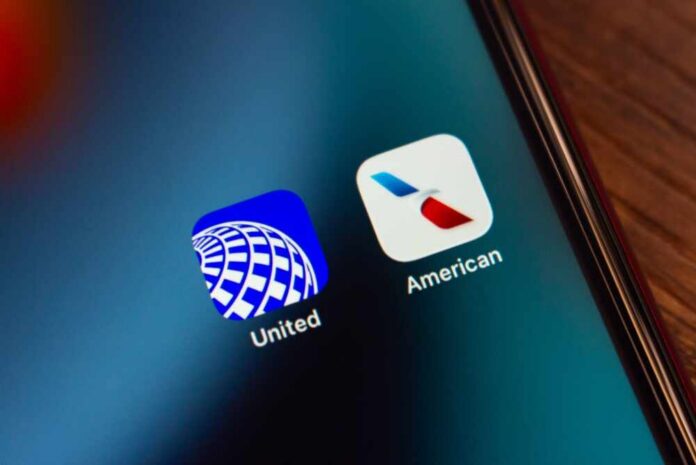
Even in a pro-business Washington, a mega-merger between two of America’s biggest airlines hit a hard stop—because one CEO flatly refused to play along.
Quick Take
- United CEO Scott Kirby confirmed he approached American Airlines about a potential merger, then publicly ended the effort after American declined.
- Kirby said a deal this large can’t happen “without a willing partner,” signaling the idea is off the table for the foreseeable future.
- American CEO Robert Isom argued a merger would be bad for competition and consumers, underscoring how politically and legally risky airline consolidation remains.
- The episode spotlights a broader tension in 2026: voters want functional, affordable travel, while regulators and politicians still weigh “big business” fears against global competition.
Kirby Confirms the Outreach—and Ends It
United Airlines CEO Scott Kirby said on April 27, 2026, that he personally approached American Airlines about merging the two companies, then backed away after American declined to engage. Kirby’s statement landed after days of reporting and public back-and-forth, and it framed the outcome as straightforward: without American’s buy-in, the concept cannot move forward. United now says it will stick to its existing strategy instead of pursuing a blockbuster tie-up.
American’s rejection was not subtle. American CEO Robert Isom publicly dismissed the idea in late April, arguing it would be bad for competition and consumers. That matters because airline mergers aren’t just boardroom math; they touch routes, hubs, prices, and service quality for millions of travelers. Once American signaled a firm “no,” Kirby’s public confirmation effectively closed the loop—ending speculation that secret negotiations were advancing behind the scenes.
Why the Trump Administration Was Part of the Conversation
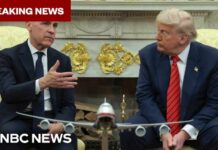
Kirby’s outreach wasn’t limited to American. He also raised the merger concept with President Donald Trump and administration officials in February 2026, with subsequent coverage describing Transportation Secretary Sean Duffy as sounding open to the idea. No official talks were confirmed, and early reporting emphasized the idea was far from formal. Still, the administration’s inclusion shows how major U.S. industries increasingly route big strategic moves through Washington first.
For conservatives who spent years watching regulators expand their reach, the political subtext cuts both ways. A GOP-led government is generally expected to be friendlier to business growth, yet large mergers can collide with a different conservative priority: market competition that protects consumers without constant federal micromanagement. This episode shows that “deregulation” does not automatically translate into “anything goes,” especially in sectors where a few giant players already dominate.
The Real Barrier: Antitrust Risk and Hub Dominance
The United-American idea immediately raised practical antitrust questions because it would combine two of the largest U.S. carriers, potentially creating the world’s largest airline by passengers. Critics worry mega-mergers can reduce choices and raise fares—especially at fortress hubs where one airline already wields outsized influence. Chicago O’Hare as one focal point for monopoly fears, and similar concerns would likely surface across overlapping route networks if a deal progressed.
Recent precedent adds weight to that caution. The U.S. airline industry already consolidated heavily after the 2008 recession, shrinking from nine major carriers to four through mergers like Delta-Northwest, United-Continental, and American-US Airways. Under the Biden-era enforcement posture, further consolidation faced tougher scrutiny, and the blocked JetBlue-Spirit effort set a modern benchmark for how aggressively regulators can challenge deals. Kirby may have hoped a Trump-era posture would be more flexible, but American’s refusal kept the government from even reaching the hardest legal questions.
What This Means for Travelers and for “Government That Works”
In the short term, passengers should not expect immediate fare shifts or route disruptions from a deal that never entered formal negotiations. United says it will proceed with its existing “winning strategy,” while American remains focused on independence. For travelers, that means the current four-major structure holds—at least for now—while low-cost carriers and international rivals keep pressuring the market from different angles.
Politically, the moment feeds a broader frustration shared by many Americans across the spectrum: people want affordable, reliable services, but they also distrust big institutions—corporations and government alike. A mega-merger can look like elite dealmaking, yet heavy-handed antitrust enforcement can also feel like bureaucrats deciding outcomes from Washington. With limited public detail beyond CEO statements and early reporting, the clearest takeaway is narrow but important: corporate consolidation is still constrained not just by regulators, but by competitive rivals who refuse to cooperate.
United Airlines CEO confirms he approached American about potential merger, but was rebuffed @WashTimes https://t.co/t8kz7GShfe
— Washington Times Local (@WashTimesLocal) April 28, 2026
For now, the United-American merger story ends as a case study in how modern power works: CEOs test ideas, the administration becomes an early sounding board, and public messaging arrives quickly once the other side says no. If airline costs, service reliability, and labor constraints continue to strain the system in 2026, the pressure for structural change will remain. But this shows that even under a pro-business White House, the politics of size and competition still force big ideas back to earth.
Sources:
United Airlines drops merger pursuit with American, CEO Kirby details why
United CEO confirms American merger idea is off the table after rejection