Israeli forces killed Lebanese journalist Amal Khalil in a drone strike during a fragile ceasefire, raising alarms about press freedom and potential war crimes that challenge commitments to protecting civilians and media worldwide.
Story Highlights
- Amal Khalil, 43, died in a “double tap” Israeli drone strike in southern Lebanon despite wearing protective gear and a recent ceasefire.
- Rescuers faced gunfire and delays of 4-6 hours, preventing aid to Khalil trapped under rubble, as her colleague Zeinab Faraj was saved.
- Lebanese PM Nawaf Salam condemned the attack as a war crime; IDF denies targeting journalists, citing threats from Hezbollah-linked sites.
- Ninth journalist killed in Lebanon this year, amid over 260 media deaths since 2023, fueling impunity concerns.
Incident Details in Al-Tayri
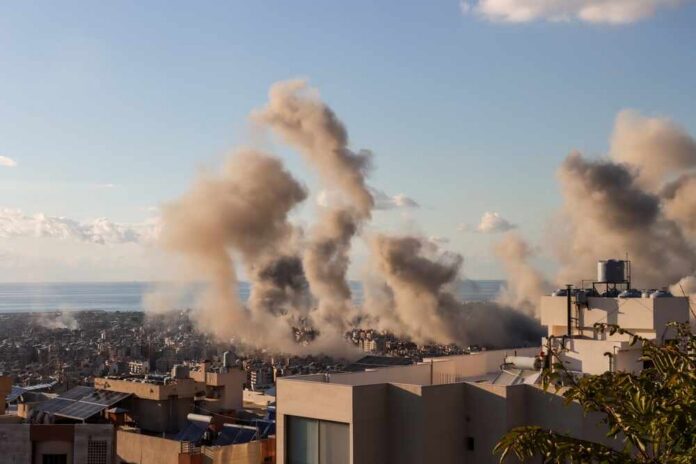
Amal Khalil, a 20-year veteran correspondent for Al-Akhbar newspaper, and photographer Zeinab Faraj reported from Al-Tayri village in southern Lebanon on Wednesday, April 23, 2026. An Israeli drone struck a nearby car, killing two civilians. The journalists, wearing flak jackets and helmets, sheltered in a building. A second strike hit that structure in a double-tap tactic. Faraj survived with wounds; Khalil remained trapped. Rescuers from Lebanese Red Cross and Civil Defense arrived but encountered Israeli gunfire and stun grenades, delaying operations for 4-6 hours. Khalil’s body was recovered later that day, contributing to a death toll of five.
Ceasefire Violations and Prior Threats
The strike occurred days after a 10-day Israel-Hezbollah ceasefire began on April 16, 2026, set to expire Sunday. Wednesday proved the deadliest since, with five fatalities. Khalil had faced Israeli WhatsApp threats in 2024, including warnings to stop southern coverage or face beheading, which she publicized in a viral video. This marks the ninth Lebanese journalist killed this year, or fourth since March, following precedents like last month’s strike on three Al-Manar reporters labeled terrorists by the IDF. Over 260 media workers have died from Israeli forces since October 2023, mostly in Gaza.
Stakeholder Reactions and Denials
Lebanese Prime Minister Nawaf Salam labeled the strikes a blatant war crime and crime against humanity, accusing Israel of systematically targeting media to conceal aggression. The Lebanese Union of Journalists and Health Ministry called it a double violation. Al-Akhbar confirmed Khalil’s death and blamed Israel. At her Thursday funeral in Baysariyah, reporter Ibrahim Dawi recounted learning of her death at 11 p.m. via army contacts. The IDF denies targeting journalists or obstructing rescues, stating strikes hit Hezbollah-linked vehicles posing threats. They claim efforts to mitigate civilian harm.
Power dynamics show IDF aerial superiority enforcing the ceasefire through preemptive actions, while Lebanon highlights patterns of media targeting in Hezbollah-adjacent areas. Journalists’ unions appeal internationally, noting no independent verification of vehicle threats or gunfire claims.
Lebanese journalist recounts Israel strike that killed her colleague https://t.co/HgFlgt6ZUq via @YouTube
— Lena (@Lena67721810) April 25, 2026
Implications for Press Freedom and Stability
The incident strains the ceasefire’s fragility, risking escalation as it nears expiration. It also bolsters war crime accusations and Committee to Protect Journalists tallies of media deaths, promoting self-censorship in conflict zones. Funeral protests in Baysariyah symbolized risks, with Khalil’s coffin bearing her flak jacket and helmet. Both conservatives valuing limited foreign entanglements and liberals decrying elite-driven wars see this as government overreach eroding founding principles of free speech and civilian protections. Americans across divides question endless Middle East conflicts draining resources from domestic priorities like border security and economic relief under President Trump’s second term.
Sources:
Lebanon accuses Israel of war crime after drone strike kills journalist