The most important fact is not the number alone, but that U.S. and Turks and Caicos authorities described a crowded vessel as unsafe enough to trigger a coordinated maritime interception.
Quick Take
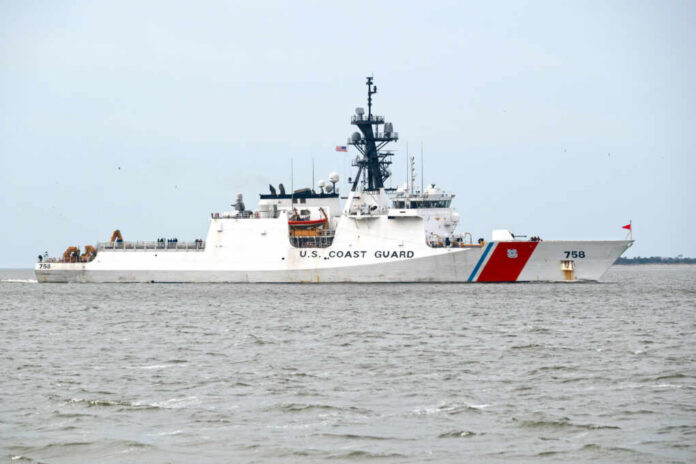
- Authorities said a vessel carrying 240 people was intercepted near Turks and Caicos during a joint operation involving the United States Coast Guard, Customs and Border Protection Air and Marine Operations, and local authorities.[1]
- Officials described the boat as overcrowded, taking on water, and at risk of sinking, which is why the event was framed as a safety response as well as an interdiction.[1][2]
- The public record shown here does not independently prove the passengers were trying to enter the United States illegally; it shows an interdiction near Turks and Caicos and transfer to local custody.[1][2]
- The episode highlights a recurring problem in maritime migration cases: agencies emphasize rescue and enforcement, while critics demand fuller proof before accepting official narratives.[1][2]
What the authorities say happened
The U.S. Coast Guard said the operation was a joint effort with Customs and Border Protection Air and Marine Operations and the Royal Turks and Caicos Islands Police Force, and Fox News reported that the vessel carried 240 people and was taking on water.[1] The Coast Guard’s account also said authorities responded after receiving notice of “an unlawful migrant voyage” south of the islands, which suggests the operation began as both a maritime safety and border-enforcement event.[1]
The Turks and Caicos Islands Police Force said the vessel was tracked and then intercepted, while the Turks and Caicos government described a “tactical interception” and “immediate stabilization” of the boat.[2] Those phrases matter because they show how local officials wanted the public to understand the incident: not as a routine stop, but as a fast-moving maritime emergency with law-enforcement coordination at the center.[2]
Why the wording matters
The labels used in the reporting are not minor editorial choices. The same event is described as involving “migrants,” “illegal vessel,” “aliens,” and “irregular migrants,” and those terms shape whether readers see rescue, deterrence, or border control first.[1][2] In a polarized political climate, that wording can become the story before the facts are fully established.
That is especially true here because the available materials do not include passenger statements, route documents, or sworn testimony showing where the boat was headed or what the people aboard said their destination was.[1][2] The record supports an interception near Turks and Caicos, but it does not by itself prove a completed attempt to enter the United States illegally.[1][2]
What is still missing
The biggest gap is the absence of a full incident file. The sources provided do not include cutter logs, radio traffic, radar or automatic identification system tracks, medical triage sheets, or a detailed legal explanation for the stop.[1][2] Without those records, the public is left with agency summaries and short video reports rather than the underlying evidence that would show exactly how dangerous the vessel was and why each agency acted.
US Coast Guard intercepts vessel with 240 migrants near Turks and Caicos Islands https://t.co/zwUaaSjEfL
— MixVale (@Mixvale) June 5, 2026
That gap leaves room for competing interpretations. Supporters of strong maritime enforcement will see a successful rescue and interdiction that likely prevented a disaster, while skeptics will focus on the lack of documented intent to enter the United States and on the possibility that the passengers were in transit rather than targeting U.S. territory.[1][2] Both reactions are understandable, but only the full record can settle the question.
Broader significance
This incident fits a broader pattern in migration politics: early reporting often relies on government statements, while the public debate quickly becomes a fight over language, intent, and legitimacy.[1][2] For readers frustrated by a government that seems reactive instead of transparent, the deeper issue is not just one overcrowded boat. It is whether federal and local agencies will release enough evidence to prove that their actions were necessary, lawful, and proportionate.
Sources:
[1] Web – Coast Guard Stops 240 Illegal Immigrants on Overcrowded Vessel
[2] Web – Overcrowded boat carrying 240 Haitian migrants interdicted near …