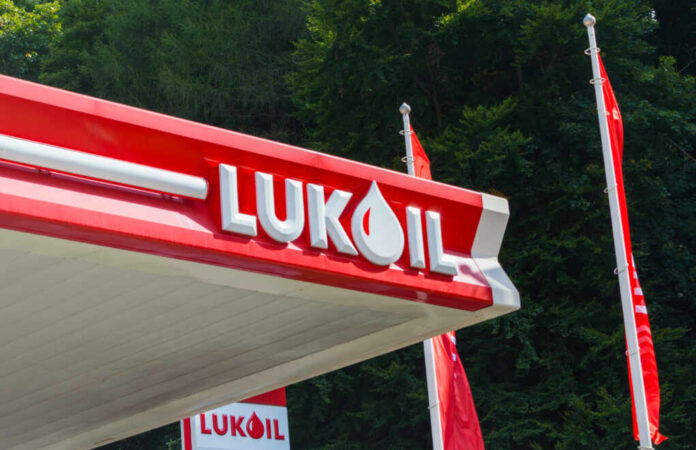
A U.S. private-equity giant is moving to take control of major Russian-linked oil assets abroad—but only if Washington’s sanctions gatekeepers sign off.
Story Snapshot
- Lukoil says it signed a non-exclusive agreement to sell LUKOIL International GmbH to the Carlyle Group, covering most of Lukoil’s international assets while excluding Kazakhstan.
- The transaction hinges on regulatory approvals, including the U.S. Treasury’s Office of Foreign Assets Control (OFAC), because Lukoil remains under Western sanctions tied to Russia’s war in Ukraine.
- Lukoil faces a stated deadline of Feb. 28, 2026, and the deal structure leaves room for other bidders while Carlyle conducts due diligence.
- The assets include upstream, midstream, and downstream holdings, including refineries and thousands of retail stations that matter to host countries’ energy security.
What Lukoil and Carlyle Actually Announced
On Jan. 29, 2026, Russia’s Lukoil announced it had signed a non-exclusive agreement with the Carlyle Group to sell LUKOIL International GmbH, the vehicle holding most of Lukoil’s international upstream, midstream, and downstream assets. Lukoil emphasized that the perimeter excludes Kazakhstan-related holdings. Carlyle, for its part, framed the move as a continuity transaction focused on keeping operations stable and complying fully with U.S. rules.
The key word is “non-exclusive.” Lukoil said talks with other potential buyers are still ongoing, meaning Carlyle is not the only lane on the road. That matters because price, timing, and political risk are all in play at once. Carlyle’s statement also highlighted commitments around jobs and reinvestment—language that typically signals an attempt to reassure regulators, employees, and host-country governments that fuel supply and industrial operations won’t be disrupted.
Private equity firm Carlyle Group has agreed to buy most of Lukoil's foreign assets, initially valued at $22 billion by analysts, which Russia's second-largest oil company must sell because of US sanctions https://t.co/AIgbcEAKGX pic.twitter.com/JHzDUb6dSb
— Reuters Business (@ReutersBiz) January 29, 2026
OFAC Holds the Real Veto Power
The deal’s biggest hurdle is not engineering or logistics—it’s regulatory approval. Because Western sanctions were imposed amid the war in Ukraine, any major transfer of control involving sanctioned Russian-linked energy assets can trigger U.S. Treasury oversight through OFAC. In practical terms, that means even a well-financed American buyer can’t simply “close the deal” based on commercial terms alone. Washington can approve, condition, or effectively block the transaction.
Prior attempts show how unforgiving that process can be. Research cited a previous bid involving Gunvor that fell apart after the U.S. Treasury denied a license, underscoring that political risk is not theoretical. That history also explains why Carlyle’s messaging stresses compliance and stewardship. For conservative readers who are tired of opaque bureaucracy, this is a reminder that sanctions policy functions as a powerful lever of executive authority with real-world impacts on markets, contracts, and foreign energy infrastructure.
What’s in the Portfolio—and Why Kazakhstan Is Carved Out
Lukoil’s international footprint was built over decades and spans upstream projects and downstream infrastructure. The portfolio referenced includes stakes and operations linked to multiple regions—along with European refining capacity (including facilities in Bulgaria, Romania, and the Netherlands) and roughly 2,000 retail stations in Central and Eastern Europe. These are not paper assets; they’re the kinds of physical systems that keep transportation, heating, and manufacturing running across entire countries.
Kazakhstan’s exclusion is a central detail because it shows how geopolitics shapes the boundaries of corporate transactions. The research indicates Kazakhstan’s energy minister submitted a request to the U.S. Treasury connected to a potential buyout of Lukoil’s Kazakh assets, and Lukoil’s announced perimeter explicitly keeps those holdings outside the Carlyle package. The carve-out also highlights how governments in the region are actively managing exposure, seeking to protect national energy interests while navigating sanctions pressure.
Market Impact: Continuity Now, Strategy Later
In the short term, the research suggests minimal impact to production, but potential shifts in trade flows and refining margins. In other words, barrels may still move, but the routes, counterparties, and economics can change—especially if a sanctioned seller is replaced by a U.S.-aligned owner subject to strict compliance requirements. For consumers, the effects often show up indirectly through spreads, availability of refined products, and how quickly supply chains adjust to new ownership.
Longer term, the outlook depends on who ends up owning the assets and what capital they deploy. Estimates cited in the research project Lukoil’s foreign production rising from roughly 329,000 boe/d in 2025 to 448,000 boe/d by 2030, indicating the assets have growth potential if they remain operationally stable. Carlyle also reportedly held talks involving potential UAE partners, reinforcing that global capital is circling these assets—but under conditions set by U.S. regulators.
Sources:
https://www.spglobal.com/energy/en/news-research/latest-news/crude-oil/012926-lukoil-agrees-to-sell-most-international-assets-to-carlyle
https://www.lukoil.com/PressCenter/Pressreleases/Pressrelease/lukoil-agrees-with-carlyle-on-sale-of
https://kfgo.com/2026/01/30/exclusive-carlyle-in-talks-with-potential-uae-partners-on-lukoil-assets-sources-say/