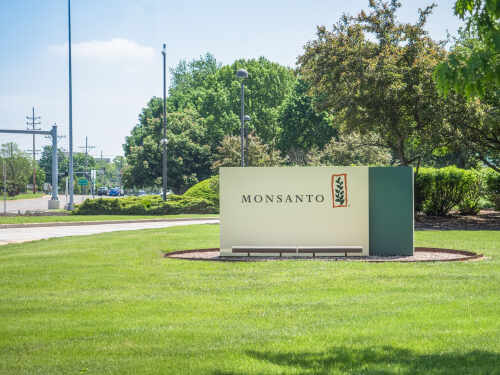
The Supreme Court is poised to grant chemical giant Bayer sweeping immunity from billions in cancer lawsuits despite a jury verdict and the World Health Organization’s warning that Roundup is “probably carcinogenic”—a ruling that could shut the courthouse door on over 100,000 Americans alleging the weedkiller destroyed their health.
Story Snapshot
- Supreme Court heard arguments April 27, 2026, on whether federal pesticide law blocks state lawsuits against Monsanto over Roundup’s alleged cancer risks
- Bayer faces over 100,000 claims and has reserved $16 billion for settlements after juries awarded plaintiffs millions in damages
- Trump administration reversed Biden-era position to back Monsanto, arguing EPA label approval overrides state consumer protection laws
- Missouri resident John Durnell won $1.25 million in 2023 after developing non-Hodgkin lymphoma from decades of Roundup use
- Ruling for Monsanto would establish precedent shielding pesticide manufacturers from state tort claims nationwide
Corporate Shield or Public Safety Threat
Monsanto Company v. Durnell centers on a straightforward question with enormous implications: Can federal pesticide labeling laws preempt state failure-to-warn claims against manufacturers whose products allegedly cause cancer? John Durnell used Roundup for neighborhood maintenance for decades before developing non-Hodgkin lymphoma. A Missouri jury awarded him $1.25 million in 2023, finding Monsanto failed to warn consumers of cancer risks. Now Bayer, which purchased Monsanto in 2018 for $63 billion, asks the Supreme Court to overturn that verdict and block tens of thousands of similar lawsuits by declaring the Federal Insecticide, Fungicide, and Rodenticide Act bars state courts from second-guessing EPA-approved labels.
Federal Authority Versus State Protections
The Trump administration’s Department of Justice filed a brief supporting Bayer, arguing that allowing state tort lawsuits undermines federal pesticide regulation. This position reverses the Biden administration’s stance, illustrating how corporate interests often find allies in federal agencies regardless of which party controls Washington. The EPA has consistently maintained that glyphosate, Roundup’s active ingredient, does not cause cancer. Yet the World Health Organization’s International Agency for Research on Cancer classified glyphosate as “probably carcinogenic to humans” in 2015. This scientific contradiction sits at the heart of the case—should federal bureaucrats have final say over cancer warnings, or can state juries protect consumers when evidence suggests harm?
Billions at Stake for Bayer and Victims
Bayer has reserved $16 billion to address Roundup litigation, settling tens of thousands of claims since acquiring Monsanto. The company phased out glyphosate in U.S. residential Roundup products but continues selling it for agricultural use, warning it may exit that market entirely if lawsuits persist. Monsanto’s attorney Paul Clement told justices that state failure-to-warn claims impose “crippling liability” that federal law never intended. Meanwhile, over 100,000 plaintiffs—cancer victims who trusted a product approved by their government—wait to see if the Court will slam shut their avenue for justice. A favorable ruling for Bayer would likely end this wave of litigation, leaving victims with no recourse despite jury findings that Monsanto knew or should have known about cancer risks.
Divided Justices and Political Reversals
Oral arguments on April 27, 2026, revealed a Court grappling with complex federalism questions. Some justices appeared sympathetic to Monsanto’s preemption argument, questioning whether evolving scientific research should allow states to override EPA decisions. Others pressed on whether federal law truly intended to shield manufacturers from all state-based consumer protections. Senator Cory Booker filed an amicus brief supporting plaintiffs, emphasizing consumer safety over corporate immunity—a position at odds with the Trump administration’s DOJ. Activists rallied outside the Court under the banner “People vs. Poison,” underscoring public frustration with a system many perceive as rigged to favor wealthy corporations over ordinary citizens harmed by products the government approved.
Trump-packed Supreme Court is about to take your rights away in the name of corporate profits.
US supreme court weighs blocking lawsuits against Roundup makers alleging weedkiller causes cancer | US supreme court | The Guardian https://t.co/n3JRKsax0z
— Chris Burgess (@cburgess129) April 27, 2026
Implications for Corporate Accountability
The Durnell decision will reverberate far beyond Roundup. If the Court rules for Bayer, chemical and pesticide manufacturers will gain near-total immunity from state tort claims as long as the EPA approves their labels, regardless of emerging evidence of harm. This precedent would undermine states’ traditional authority to protect their citizens through common-law remedies—a cornerstone of American federalism. Conversely, ruling for Durnell preserves the jury system’s role in holding corporations accountable when they fail to warn consumers of serious risks. The case exemplifies a recurring pattern: federal agencies often align with industry, leaving state courts as the last line of defense for Americans harmed by products bearing government seals of approval. A decision is expected by summer 2026.
Sources:
CBS News – Roundup cancer lawsuits Supreme Court
Inside Climate News – Roundup Supreme Court glyphosate cancer case
WTOP – Supreme Court grapples with multibillion-dollar wave of lawsuits over Roundup cancer claims
Bayer – Managing the Roundup litigation