
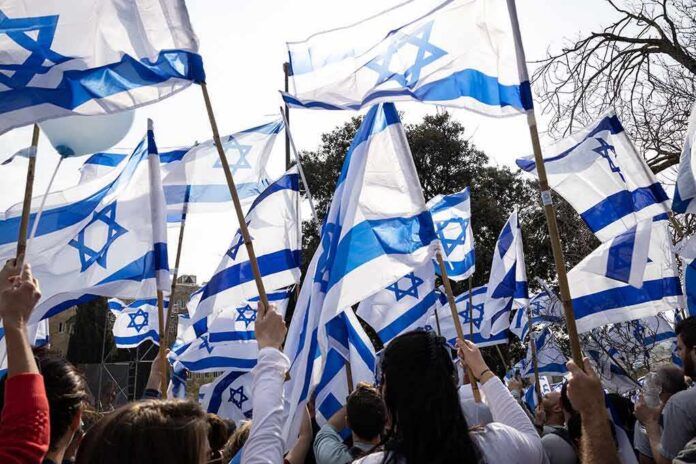
Israelis voted in the first national election since the October 7, 2023 attack, choosing all 120 members of the Knesset on October 27, 2026.
Story Highlights
- Israel held a nationwide Knesset election on October 27, 2026.
- All 120 seats were up for election under proportional representation.
- The vote was widely seen as a referendum on Prime Minister Benjamin Netanyahu.
- More than seven million citizens were eligible to vote.
What Happened on Election Day
Israel conducted a full national vote for the 26th Knesset on Tuesday, October 27, 2026. Voters chose party lists to fill all 120 seats in the country’s parliament. Major outlets described this as the first parliamentary election since the October 7, 2023 attack and the war that followed. Broadcasters planned exit polls for election night, while official results would follow after counting and validation by authorities, as is standard practice in Israel.
Turnout drew from an electorate of more than seven million eligible voters, according to Jewish Telegraphic Agency reporting ahead of the vote. Polling stations operated across the country under rules set by the Central Elections Committee, which oversees procedures and counting. While local elections occurred earlier in 2024 after wartime delays, this contest decided national power and control of the next government in Jerusalem.
How Israel’s Voting System Shapes the Result
Israel uses nationwide proportional representation. Voters pick a party list, not a single candidate. Parties that pass the legal threshold convert votes into Knesset seats. Because no party has come close to a solo majority, parties usually bargain after the vote to assemble a bloc with at least 61 of 120 seats to form a government. This system makes election night a starting point, since coalition talks often determine who becomes prime minister and which policies advance.
The 61-seat hurdle matters for stability and policy. Parties that agree on security or religious issues may still split over budgets, courts, or settlements. Smaller parties can become kingmakers, trading support for policy promises or cabinet posts. International partners watch these deals because they shape war policy, ties with neighbors, and energy and trade choices that touch the United States and Europe. In short, votes set the map; negotiations draw the borders of power.
Why This Vote Was Framed as a Referendum on Netanyahu
News organizations widely portrayed the election as a test of Prime Minister Benjamin Netanyahu’s leadership during war and crisis. The Associated Press said many voters saw the ballot as a referendum on Netanyahu, while the Council on Foreign Relations said the outcome could decide whether he remains in power. That framing reflects years of repeat elections, legal battles, and hard questions about security, cost of living, and the direction of the courts and media.
📌 Israeli Elections: Key Parties and Political Alliances
♦️ Israelis headed to the polls on Tuesday in the first general election since the October 7, 2023, attack, amid a contest to form the next government. Around 7.3 million people are eligible to vote.
📌 Key Parties and… pic.twitter.com/GZUPRNiKTr
— Al Majalla (@AlMajallaEN) October 27, 2026
For American readers, this mirrors a concern that crosses left and right: when government feels distant, voters punish leaders. In Israel, families weigh safety after cross-border attacks, economic strain from mobilization, and trust in institutions. Many Americans see the same pattern at home: elites seem insulated while regular people pay the price. Israelis voted to choose who will answer for war decisions, spending, and a path back to normal life.
What to Watch Next: Coalitions, Policy, and Timelines
After ballots are counted, party leaders meet the president, who tasks one of them with forming a government. Talks can run weeks, sometimes longer. Watch three things. First, who controls 61 seats or more. Second, which ministries go to which partners, since that signals policy direction. Third, whether any party holds a veto over war policy or reforms, which can slow action or force early elections if deals collapse.
If no bloc can reach 61, Israel could face extended talks or even another vote. That outcome would keep policy in a holding pattern and raise public frustration with politics. If a stable coalition emerges, expect quick moves on security, budgets, and courts, since new governments try to lock in early wins. Either way, the October 27 vote sets the choices leaders must make under pressure at home and from allies abroad.
Sources:
israelielection.org, israel.com, jta.org, bbc.com, apnews.com