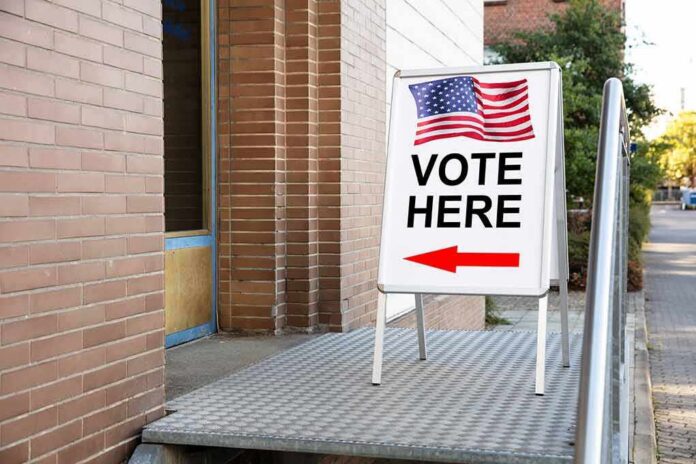
The Supreme Court let New Hampshire block student IDs at the polls for November, even as the legal fight continues.
Story Snapshot
- The Court stayed a lower-court order, allowing the student ID restriction for November.
- New Hampshire’s law removed student IDs from acceptable documents to get a ballot.
- A judge said student IDs could still help verify identity under a fallback process.
- State guidance points students to licenses, passports, or military IDs instead.
What the Supreme Court’s Stay Actually Does
The Supreme Court granted New Hampshire’s emergency request to pause a lower-court ruling. That pause lets the state bar student IDs for getting a ballot in the November election while the appeal goes on. The order did not decide who is right under the law. It focused on election timing and stability, often called the Purcell principle. The stay reinstated the state’s stricter policy for this election window, pending full review later.
Justice Ketanji Brown Jackson dissented. The state had argued that late changes would confuse voters and poll workers. The lower court’s order, issued weeks earlier, would have allowed election officials to consider student IDs as one piece of evidence to verify identity if a voter lacked qualifying identification. The Supreme Court’s intervention restored the harder line for November. The core legal fight now shifts to whether the law and guidance match the statute and Constitution.
What New Hampshire’s Law Changes for Voters
House Bill 323 removed student IDs from the list of photo IDs that qualify a voter to obtain a ballot. The law kept a “safety valve” for voters without qualifying ID to prove identity through other means. A district judge later read that safety valve to allow student IDs as supporting evidence, even if not enough by themselves. The state’s guidance, however, treated student IDs as off-limits in practice. That clash sparked the legal battle.
The Secretary of State issued instructions explaining what students can use instead. Students may present a driver’s license from any state, a passport, or a military ID. For proof of residency, students may show mail such as a utility bill or a bank statement. The guidance told students how to meet the rules but also made clear that school IDs were out. Critics said many students do not have these other documents on hand.
Why Timing and Process Drove the Court’s Action
New Hampshire warned that changing rules close to Election Day would disrupt training and confuse voters. The state leaned on the Supreme Court’s election-timing doctrine to argue for a stay. The justices agreed to pause the lower-court order for now. That means poll workers will follow the state’s stricter instructions in November, even though the appeals court has not ruled on the merits yet. The temporary order does not settle the long-term policy.
Advocacy groups argued the late shift would itself confuse voters in college towns. They also said there was no evidence that student IDs had caused fraud. The record provided so far contains no statewide study or documented fraud cases tied to student IDs. That leaves the state’s defense based more on legal structure than on data. The Court’s brief order did not weigh in on those claims; it focused on near-term administration.
What This Means for Young Voters and Trust
For November, students cannot use a campus ID to get a ballot. They must bring another accepted ID or plan to use the fallback identity process as allowed by current guidance. Confusion may persist because a judge said student IDs could support identity checks, while the state told clerks not to consider them. The Supreme Court’s stay puts the state’s position in effect now, even as the legal question about the safety valve remains open.
Supreme Court lets New Hampshire enforce student ID voting ban pic.twitter.com/YCquRLqOfG
— NEK News (@NEKNews01) October 23, 2026
The fight also reflects a national pattern. Courts allow states to seek election integrity, but fraud in in-person voting is rare, and studies show mixed effects of ID laws on turnout. The heart of this case is narrow but important: not only whether student IDs count alone, but whether officials may consider them with other evidence when a voter lacks a preferred ID. That technical line matters when rules change late and trust in government is already thin.
Sources:
cbsnews.com, nhd.uscourts.gov, scotusblog.com, nbcboston.com, nhpr.org