

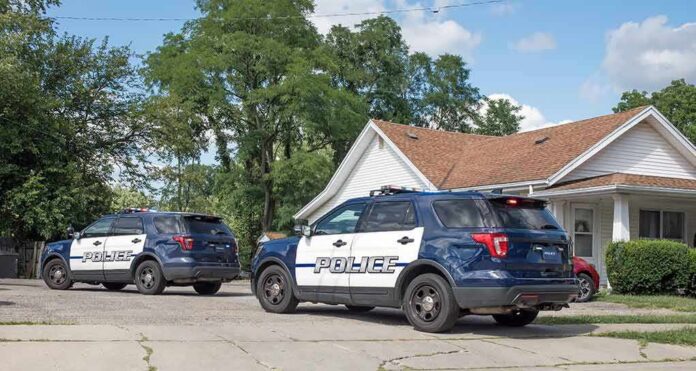
Body-camera video released by Charleston County shows deputies repeatedly checking a Ladson home in the weeks before two toddlers were later found dead from starvation and dehydration.
Story Highlights
- Deputies and a state case worker found the children during a welfare check on September 29.
- Body-camera clips show earlier visits where deputies saw the children with their mother.
- The coroner said the girls died from starvation and dehydration several days before discovery.
- Conflicting counts of prior checks and a halted-checks decision fuel accountability questions.
What Deputies Documented Before the Children’s Deaths
Charleston County Sheriff’s Office said deputies responded to multiple calls at a Pinewood Drive residence from August through late September. On September 29, shortly after 12:30 p.m., deputies and the family’s Department of Social Services case worker conducted a welfare check and found the bodies of two young girls inside the home. The agency also released body-camera footage from earlier visits that showed contact with the children and their mother during late August and mid-September.
Sheriff Carl Ritchie said deputies saw the children with their mother on six dates. Reporting describes August 30 video showing the mother holding one child while a state worker looked around the home. Additional outlets listed body-camera dates of August 25, August 26, September 8, September 11, and September 12. The videos give a partial window into what deputies observed, but they do not show every room or every step taken on each visit.
How the Timeline Aligns With Medical Findings
The Charleston County coroner concluded the children died from starvation and dehydration due to neglect. A forensic autopsy estimated the deaths occurred three to five days before the September 29 welfare check. That means the girls likely died in the days leading up to the final visit. The timeline supports the sheriff’s account that deputies saw the children alive earlier in September, yet it also shows that visual contact did not reveal the deadly decline that followed.
Officials and reporters agree on the core sequence: repeated welfare checks, a final joint check with a state case worker, and a discovery that turned the case into a homicide investigation. Where the public record is less clear is how each agency assessed risk across the weeks. The available video and statements do not provide a full list of questions asked, rooms entered, or food and hydration checks performed during each visit. That gap limits what outsiders can say about case-by-case decisions.
Disputed Visit Counts and a Paused-Checks Decision
Public reporting cites different totals for prior visits. One count describes 13 welfare checks within weeks, while another lists ten separate contacts involving the mother and children between August 25 and September 20. The available materials do not settle the discrepancy. Reporting also says an on-duty supervisor decided on September 22 to stop additional welfare checks, though a deputy later went to the home despite that direction. The record does not show the exact wording or reason for the pause.
Family members condemned the sheriff’s handling and asked for a review by the South Carolina Law Enforcement Division. Their statements amplified calls to examine how the sheriff’s office, the Department of Social Services, and a mobile crisis program worked the case together. The request points to a common goal across the political spectrum: find out where the system failed and fix it so children are safer the next time.
Why This Case Resonates Beyond South Carolina
Child-welfare fatality reviews often find that tragic outcomes rise from many small misses, not one dramatic error. Brief visual checks can confirm presence but miss slow harm from lack of food, water, or medical care over time. National reviews and safety-science approaches aim to map information gaps, workload pressures, and handoff failures, then harden policies to prevent repeats. That lens fits this case, where earlier contacts did not prevent a fatal decline days later.
What Records Could Clarify Accountability
Key records could answer pressing questions without guesswork. Full body-camera archives, dispatch logs, and incident reports would show who went, what was asked, and what was seen on each date. Written directives about the September 22 pause would show who decided, why, and under what policy. Shared notes from the sheriff’s office, the Department of Social Services, and mobile crisis responders could reveal whether risk cues were flagged or lost across agencies.
Sources:
nypost.com, charlestoncounty.gov, people.com, wect.com, postandcourier.com, wistv.com, newsweek.com