
President Trump’s arrival in Manila for the 49th ASEAN Summit puts U.S. priorities on the table as regional leaders weigh conflicts, trade, and China’s reach.
Story Snapshot
- Trump departed Washington for Manila to join ASEAN-related meetings and talks.
- Leaders in Manila are addressing conflicts, trade ties, and maritime security.
- U.S. participation signals ongoing attention to Southeast Asia’s balance of power.
- Scheduling suggests Trump’s role centers on ASEAN-U.S. and related sessions.
What Happened: Trump Heads to Manila for Summit Week
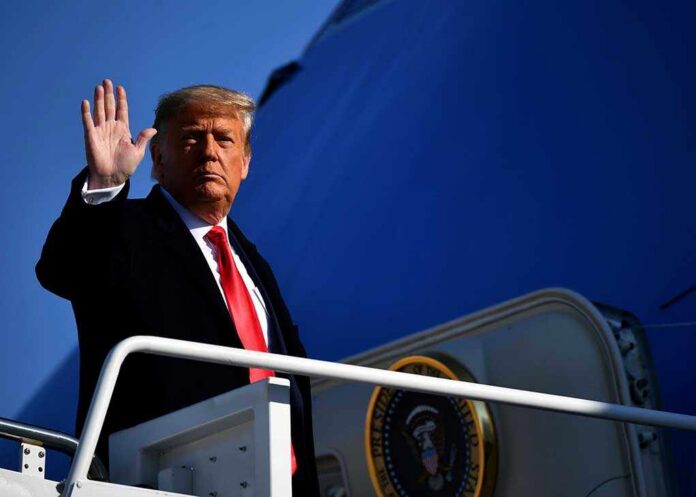
GMA News reported that President Donald Trump left Washington on November 16, 2026, aboard Air Force One for Manila, Philippines, to take part in ASEAN-related meetings during summit week and then continue on to China. The Associated Press said Southeast Asian leaders gathered in Manila with plans to discuss major conflicts and regional security, with Trump expected to join the meetings. Local coverage anticipated a late arrival but no delay to the closing ceremony.
Public radio updates said leaders were already in Manila and expected Trump to arrive as the summit events progressed. The focus in Manila included talks among Southeast Asian heads of government and dialogue partners, where the United States often takes part in separate sessions with ASEAN leaders. Reports tied Trump’s trip to the broader set of events commonly called “ASEAN summits,” which bundle several distinct meetings into one high-profile week.
Why It Matters: Security, Trade, and China Drive the Agenda
The Associated Press said the agenda featured some of the world’s most difficult conflicts, including tensions that affect sea lanes and energy routes vital to global trade. United States engagement at these meetings often covers maritime security, economic ties, and supply chains. American presidents sometimes use the ASEAN-U.S. leaders’ session to restate commitments and outline cooperation on technology, disaster response, and defense coordination, which previous summit chair statements have recorded in detail.
Past ASEAN-U.S. summits show a pattern: ASEAN holds its own formal sessions, and then meets major partners like the United States in separate, time-bound dialogues. Those records show the United States leveraging these meetings to affirm shared rules, back peaceful dispute resolution, and expand trade and investment channels. That structure helps explain why coverage can say “attend the ASEAN summit” while officials track distinct sessions under the same summit week umbrella.
Timing and Optics: Participation Within a Packed Summit Week
Philippine press signaled that Trump’s late arrival would not push back the scheduled closing ceremony, which suggests his core role would center on the ASEAN-U.S. meeting and related engagements rather than the earliest internal ASEAN sessions. That timing aligns with prior years when U.S. leaders joined the partner-track meetings rather than every ASEAN-only gathering. For allies and competitors, the key signal is attendance and the messages delivered, not whether every block on the week’s grid is covered.
For readers frustrated by drift in U.S. foreign policy, this visit is a reminder that large forces shape daily costs and security at home. Shipping lanes in Asia affect prices on store shelves. Tech and energy supply chains run through this region. When the United States shows up, it can press for fair rules and safe seas. When it is absent, others set the terms. Many Americans worry that elites take care of themselves first; accountability comes from clear goals and results we can measure at home.
Sources:
youtube.com, gmanetwork.com, wcmu.org, washingtonpost.com, delawarepublic.org, philstar.com, tpr.org, abcnews.com