A wave of fake bomb threats shut down flights, scrambled fighter jets, and emptied newsrooms across Europe this week, and nobody knows who sent them.
Quick Take
- Anonymous calls and emails targeted dozens of European flights starting November 2, forcing diversions, emergency landings, and fighter-jet escorts.
- The threats spread beyond aviation to hit newsrooms at Sky News, Bulgaria’s Nova TV, and Ireland’s RTÉ, which evacuated staff and paused programming.
- Spain’s foreign minister called the campaign “hybrid aggression and psychological warfare,” but no country or group has claimed responsibility.
- Searches found no bombs or explosives anywhere, meaning the entire campaign ran on fear rather than real weapons.
- The European Commission says it’s too early to say if the incidents are even connected to each other.
Threats Hit Flights Across Several Countries
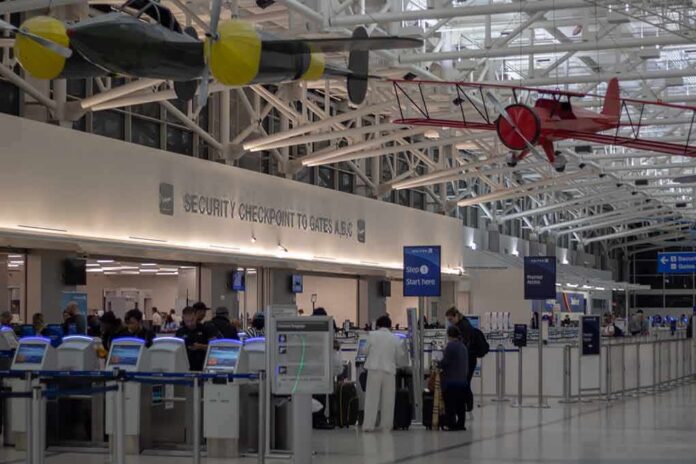
Anonymous callers and emailers began targeting European flights on November 2, and the threats kept coming almost daily for over a week. Five flights were diverted and others searched on the ground. Fighter jets scrambled to escort passenger planes in multiple countries after warnings came in mid-flight. Airports from Copenhagen to Madrid dealt with runway lockdowns and emergency sweeps.
Aviation risk analysts at Osprey Flight Solutions called the pattern “likely” to be a coordinated campaign aimed at disrupting flight operations, even though they stopped short of naming a culprit. Every search came up empty. No explosives were found on any targeted aircraft, and officials in the United Kingdom labeled the incidents “malicious hoax threats.” The disruption was real. The bombs never were.
Newsrooms Become New Targets
After days of hitting airlines, the threats expanded to news organizations. Sky News, Bulgaria’s Nova TV, and Ireland’s RTÉ all received bomb warnings, forcing evacuations and, at RTÉ, a halt to live programming. Reuters reported the messages arrived under the heading “Message to the West,” a label suggesting the sender wanted attention far beyond any single newsroom. The shift from planes to broadcasters widened who felt at risk, not just travelers but anyone working in media.
Some of the newsroom emails were signed with the name “Mikhail Andropov.” Reporting has not confirmed whether that identity is real or tied to any government. A senior European official went further than most in naming a motive. Spanish Foreign Minister José Manuel Albares said “the most reasonable assumption is that we are facing an attempt at hybrid aggression and a form of psychological warfare.”
No Claim, No Culprit, No Confirmed Link
Despite the scale of disruption, no country or group has claimed responsibility for any of it. Authorities have not confirmed whether the flight threats and the newsroom threats are part of the same operation. The European Commission has publicly said it is too soon to determine if the incidents are linked at all, a caution that limits how far officials can go in calling this one coordinated attack.
Security experts have floated other explanations too. Copycat pranksters or individuals acting out of personal grievance remain possible, separate from any state-backed plot. This is not the first time Europe has dealt with a bomb hoax wave. A similar string of threats in 2004 forced at least six emergency landings in about ten days, with no bomb ever found, showing that false alarms on this scale have happened before without a foreign power behind them.
What makes this moment land differently is the audience. Years of warnings about Russian-linked sabotage and hybrid operations across Europe have primed officials and the public to read new unexplained incidents through that lens, even without hard proof. That environment helps explain why a hoax with no casualties and no bomb has still triggered talk of psychological warfare at the highest levels of European government.
For now, the facts stand on their own. Dozens of flights were disrupted. Newsrooms went dark. Jets scrambled. Passengers were searched and delayed. And after more than a week of it, the people responsible remain unknown, leaving governments, airlines, and broadcasters to defend against a threat they still cannot name.
Sources:
time.com, abc.net.au, businessinsider.com, bostonglobe.com, vaticannews.va