
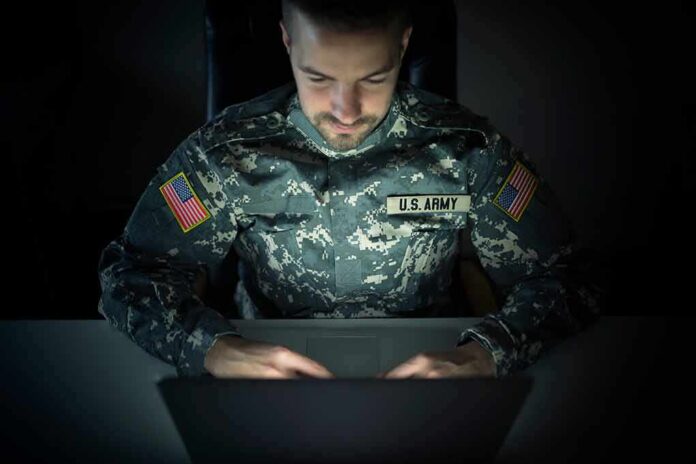
British counterterrorism police arrested a 41-year-old U.S. Army officer in England on suspicion of trying to steal NATO secrets for Russia, after a joint probe with American authorities and the Federal Bureau of Investigation (FBI).
Story Snapshot
- British police detained a U.S. Army officer near Gloucester on suspicion of Russia-linked espionage.
- U.S. Army officials confirmed the arrest followed a joint investigation with the FBI and U.K. partners.
- Reports say the case involves an alleged attempt to take protected NATO information from a U.K. site.
- The incident fits a known pattern of insider threats exploited by Russian intelligence, the FBI says.
What authorities say happened
British counterterrorism officers detained the U.S. Army officer on suspicion of espionage tied to Russia, following coordination with U.S. agencies and the U.S. military, according to official statements. Police arrested the 41-year-old near Gloucester in southwest England. U.S. Army officials said the arrest was part of a Counter Terrorism Policing investigation that worked closely with American partners, including the FBI. The suspect has not been named. Authorities have not released charging documents yet.
News reports citing British police describe an alleged effort to acquire or remove protected material from a North Atlantic Treaty Organization site on U.K. soil, with the intent to pass it to Russia. Outlets said the officer was based at or connected to operations near NATO facilities, including Imjin Barracks, which hosts allied commands. Officials have not detailed what information, if any, was actually obtained. The investigation continues under the United Kingdom’s national security laws.
Why this case matters for NATO security
NATO depends on secure information sharing among allies. An insider at a headquarters or support hub can, in theory, expose plans, communications, or force readiness data. That risk grows when partners exchange data across systems and borders. British and American agencies have invested in joint vetting, network monitoring, and rapid response drills to limit damage if a breach occurs. This arrest shows those ties are active and can move fast when a threat appears.
The United States and United Kingdom both treat insider threats as a top concern. Security teams train service members to report odd behavior, sudden access changes, and unexplained data pulls. Technical tools flag large downloads, unusual logins, and attempts to bypass controls. When alerts trip across allied networks, joint teams can act under standing agreements. That cooperation likely shaped the swift joint action described by both governments in this case.
How the allegation fits a broader espionage pattern
Federal Bureau of Investigation assessments say Russian intelligence services often target trusted insiders. Past U.S. cases involved service members and officials who had access to sensitive data or networks. Some were recruited through personal ties, ideology, or money. Others stumbled into contact and then crossed legal lines. This pattern underscores why allied commands push constant training and background checks to spot early warning signs.
Historical cases help frame the risk. Former Army Green Beret Peter Debbins admitted working with Russian intelligence and was sentenced for conspiracy, which highlighted how personal links and career moves can hide compromise for years. Analysts note that arrests do not prove that secrets were delivered, but they do show how quickly authorities now act to blunt potential harm. That shift aims to stop leaks before they spread across allied systems.
What both sides of U.S. politics see in this story
Conservatives who worry about weak security and global threats may view this as proof that rivals still target the West and that strong counterintelligence is vital. Liberals who focus on rule of law and oversight may see value in transparent investigations that defend civil liberties while protecting national security. Both groups share a core concern: institutions must be competent, honest, and fast when the stakes involve war, peace, and taxpayer-funded defense.
A senior U.S. Army soldier was arrested on Tuesday in England for allegedly spying for Russia. The unnamed 41-year-old man was arrested after a joint investigation was conducted by the FBI, U.S. military intelligence, and Britain's counterterrorism police,… w-j.co/s/7b97e pic.twitter.com/TbfNy63PVu
— The Western Journal (@WesternJournalX) November 11, 2026
Americans across the spectrum also react to the insider angle. Many feel big systems are run by elites who are not held to account. Cases like this cut both ways. They raise fears about who gets access to secrets. They also show agencies can work together and act decisively. Trust grows when officials share clear facts, set fair processes, and show results. More details from charging papers and court hearings will shape the public view of this arrest.
What to watch next
Watch for formal charges under the United Kingdom’s State Threats framework and any U.S. actions if American laws apply. Look for clarity on the alleged target information, the suspect’s role, and the security controls involved. Expect reviews of access logs, device forensics, and contact histories. NATO partners will likely audit related networks and update safeguards. Officials will brief lawmakers and allies as facts emerge, while the court process sets out the tested evidence.
Sources:
military.com, cnn.com, army.mil, biz.heraldcorp.com, washingtonpost.com