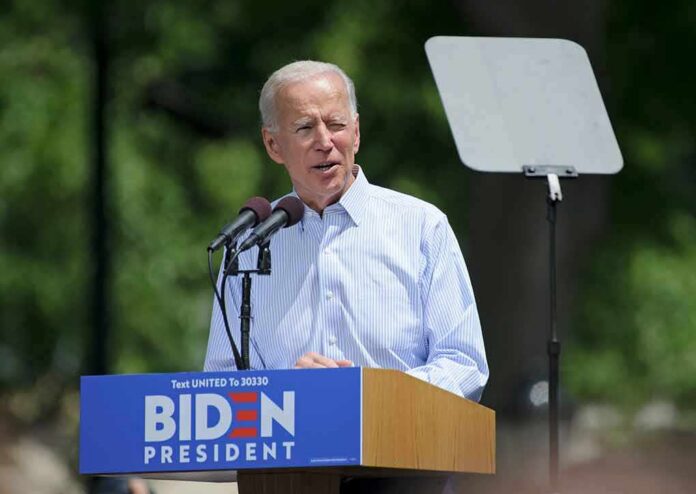
Joe Biden said he would have resigned as president if he had known his symptoms were from cancer, rejecting claims he hid a diagnosis while in office.
Story Snapshot
- Biden says he did not know he had cancer while serving as president and did not hide a diagnosis.
- He says he would have stepped down if he had known his symptoms were due to cancer.
- Public reports say his prostate cancer was first shared after he left the White House.
- The debate renews old questions about how and when presidents disclose serious illness.
Biden’s On-Record Denial and Resignation Claim
Former President Joe Biden said he did not conceal a cancer diagnosis while he was in office. In a published interview, he stated that he only learned he had cancer after leaving the White House. He said, “We let the public know when I found out.” He added that he would have resigned if he had known his symptoms were from cancer while serving as president. These comments were reported on November 11, 2026.
Reports earlier this year described Biden’s illness as an aggressive form of prostate cancer. Those reports also said the disease had spread to his bones and was announced publicly in May 2025. Biden later addressed the diagnosis in public remarks. These details set the timeline that Biden now points to as proof he did not hide a known condition while he was in office.
What the Public Has Been Told About the Diagnosis
Coverage since 2025 has said Biden’s team shared the diagnosis months after he left office. His son, Hunter Biden, told the British Broadcasting Corporation that the cancer had spread “further,” and called it “very debilitating.” That interview reinforced that the family was dealing with a serious disease well after the presidency. These updates sketch a picture of a late diagnosis that became clearer over time, not a hidden one during his term.
Medical explainers have described Biden’s prostate cancer as “more aggressive,” with references to staging and scores that mark higher risk. Standard care for high-risk or advanced prostate cancer includes scans to check for spread to bones and other areas. Medical guidelines recommend imaging such as bone scans or prostate-specific membrane antigen scans for staging and follow-up in advanced cases. These practices match how doctors track disease like Biden’s.
Capacity, Disclosure, and Trust in the Modern Presidency
Biden’s statement lands in a long debate about how leaders share health information. In the past, presidents sometimes kept serious illness quiet. Woodrow Wilson’s stroke was hidden from the public. Later, Dwight Eisenhower’s heart attack marked a shift toward more open updates. The record shows a move from secrecy to selective disclosure, but no settled rule that prevents controversy when illness meets high office.
Today’s rules still leave gray areas. The Constitution sets out who takes over, but it does not spell out exactly when a president must share details about health. That gap fuels arguments from both the right and the left about truth, timing, and trust. When health news breaks late, people ask who knew, when they knew, and whether the public was served well. Those questions flare regardless of which party is in charge.
Why This Matters for Both Parties
Biden’s vow that he would have stepped down if he had known he had cancer speaks to a core concern: capacity to do the job. Voters across parties want clear lines about who is fit to lead. Some Republicans have argued that any serious condition raises doubts about duty performance. Some Democrats have stressed humane privacy but still want assurance of honest updates. Both sides worry that elites may guard information for political gain, leaving citizens in the dark.
The current government, led by President Trump and a Republican Congress, faces the same duty to keep health disclosures credible. Clear timelines, named doctors, and prompt updates can help. Publishing results, not summaries, can build trust. When leaders follow well-known medical guidance for diagnosis and monitoring, and share key facts fast, it reduces suspicion. It also shows respect for the public’s right to know when a president’s health could affect national decisions.
Bottom Line and What to Watch Next
Biden says he did not know he had cancer while he led the nation and would have resigned if he had known. Public reports place his cancer disclosure after he left office, with later updates on spread and care. The facts center on timing and openness, not only medicine. Watch for future calls from both parties for standard health disclosure rules that reduce guesswork and restore confidence in how the White House handles serious illness.
Sources:
time.com, people.com, nationalsecurityjournal.org