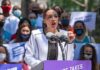

Robert Garcia vowed four sweeping House investigations and told Trump-world to “lawyer up,” but he did not name a specific crime tied to Stephen Miller on air.
Story Snapshot
- Garcia listed four targets: Trump associates, corporate corruption, immigration enforcement abuses, and Epstein records.
- A CNN segment showed Garcia citing actions “possibly illegal,” without a named statute against Miller.
- PJ Media said Garcia’s warning lacked a clear criminal allegation, calling the case “empty”.
- Research shows opposition-led oversight often surges for policy and partisan reasons alike.
What Garcia Announced And Why It Matters
Rep. Robert Garcia, the incoming House Oversight leader for Democrats, announced four planned investigations. He named probes into Trump affiliates, corporate corruption, alleged abuses by the Department of Homeland Security and Immigration and Customs Enforcement, and the handling of Jeffrey Epstein records. He punctuated the announcement with “Lawyer up.” These are broad categories, not case files. They signal a push to examine power and money inside and around the Trump administration’s policy orbit.
Garcia’s list drew instant national attention because it touched hot-button issues. Immigration enforcement policy, the Trump family’s business sphere, and the Epstein records each carry strong public emotions. Many Americans suspect the powerful play by special rules. Many also worry that Congress chases cameras instead of facts. Garcia’s words spoke to both hopes and fears: big promises to check the powerful, but few details on what, exactly, will be proved.
The Stephen Miller Focus And The Evidence Gap
Garcia said Democrats would investigate Stephen Miller’s role in immigration policy. He said some actions were “unconstitutional, unjust, and possibly illegal.” A CNN clip captured that language. But the segment did not show Garcia naming a specific law or incident that would anchor a clear charge. That leaves a gap between warning and proof. It frames an inquiry into policy conduct, not yet an allegation of a defined crime against Miller.
Critics seized on that gap. PJ Media argued Garcia told Miller to “lawyer up” without naming a crime on live television, calling the case “empty.” That framing hits a nerve across the spectrum. People on the right see political theater. People on the left fear strong claims without receipts will backfire. Fair process means facts first, then conclusions. The public will look for documents, sworn testimony, and specific statutes as these inquiries unfold.
Timing, Politics, And The Oversight Playbook
News reports said Democrats moved on the agenda within hours of election results, and positioned the probes as putting Republicans on notice while looking toward the next campaign cycle. That fast timing makes many voters suspect politics is leading the way. Still, elections set agendas, and oversight is a standard power of Congress. Speed may reflect message control as much as facts already in hand, which is common in modern Washington.
Scholarly work shows a consistent pattern: When one party opposes the White House, oversight activity grows. Committees use investigations to gather information and to signal values to voters. That dual role does not prove bad faith; it explains behavior we see often in divided government. The key test is whether hearings produce verified information that changes policy or exposes real abuse. That is what earns public trust over time.
What To Watch Next And Why It Matters To You
Watch for subpoenas, interview transcripts, and clear document trails. Look for named statutes, dates, and decisions tied to specific officials. Broad claims should narrow into elements a court would recognize. For immigration, that could mean memos, emails, and directives that show how policies were designed and carried out. For Epstein records, that could mean custody logs, chain-of-command choices, and any gaps that block sunlight.
Also watch how Republicans respond from their majority perch. Expect hearings of their own, counter-subpoenas, and public claims that Democrats are criminalizing policy differences. Voters across the spectrum want something simpler: facts that stand up, fixes that last, and officials who answer questions without hiding behind talking points. If Congress delivers verified findings and real reforms, trust grows. If not, most Americans will see more noise from the same old playbook.
Sources:
oversightdemocrats.house.gov, nbcsandiego.com