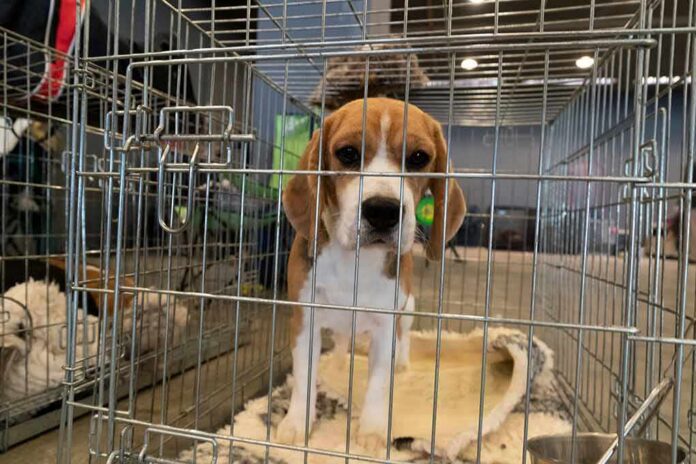
After new records showed more than 1,500 dogs shipped to labs, Congresswoman Nancy Mace moved to shut the pipeline down with a national ban.
Story Snapshot
- Rep. Nancy Mace introduced the PUPPS Act to ban breeding and selling dogs for research labs.
- White Coat Waste says records show 1,518 dogs shipped to labs since 2025, fueling outrage.
- Mace says federal grants still fund painful dog and cat experiments despite past pledges.
- Advocates claim more than $225 million in new federal funds since 2025 went to such studies.
What Mace’s Bill Aims To Do
Rep. Nancy Mace says her bill would close “America’s puppy pipeline” to research labs and protect dogs already in the system. Her office framed the PUPPS Act as a national stop to the commercial supply chain that sends dogs into experiments. The bill was filed and sent to the House Agriculture Committee on September 21, 2026, which begins the formal review process. The committee will decide whether to hold hearings, add changes, or advance it to a floor vote.
Mace’s January 2026 letter to the Health and Human Services Secretary argued that federal grants kept flowing to painful dog and cat tests. She cited examples that included inducing strokes in puppies and breeding dogs to go blind. She said these uses kept going even after federal leaders signaled they would reduce or end such work. Her push now seeks a clearer, binding stop through law rather than agency guidance alone.
The Numbers Driving The Backlash
Advocacy group White Coat Waste says its public records requests found that a breeder, Oak Hill Genetics, shipped 1,518 hound-mix dogs to laboratories from January 2025 to June 2026. The group says some destination labs had federal grant support. A separate analysis from the same group claims more than $225 million in new National Institutes of Health grants since February 2025 funded dog and cat experiments. These figures helped drive the “puppy pipeline” label now used by sponsors.
Congressional material from Rep. Greg Steube’s prior testimony described the National Institutes of Health spending “tens of millions of dollars annually” on dog research. That record also described breeding programs for puppies with bleeding and genetic disorders. While not the same bill, that filing adds detail to how federal funds have historically intersected with dog studies. It provides a backdrop for the current push to restrict breeding for labs through statute.
Limits, Unknowns, And What Comes Next
The public record here does not include the full text of the PUPPS Act. That means open questions remain about definitions, any phase-in periods, and enforcement. The strongest shipment and funding numbers come from an advocacy group’s summaries of public records rather than a consolidated federal ledger. That gap matters for skeptics who want to see raw files, grant numbers, and transport logs tied line by line to taxpayer dollars before judging scope.
Supporters say the debate is simple: stop breeding dogs to suffer and stop paying for it. Opponents could argue that some studies are narrow, regulated, and aimed at human or animal health. Past National Institutes of Health guidance has allowed in-house canine breeding if research needs justify it. That line shows how agencies often frame this issue: restrict sources and improve oversight, but do not impose a blanket ban without a scientific review process.
Why This Fight Resonates Across Party Lines
Taxpayer funding is the pressure point uniting many conservatives and liberals on this story. People see a system that pays private vendors while animals suffer behind closed doors. They doubt the oversight and suspect that insiders protect contracts more than values. Lawmakers know these feelings are real. By pushing a clear statutory ban, sponsors are betting that public anger over secretive spending and treatment of dogs will outweigh arguments for current research practices.
NEW: A bill introduced in Congress would ban breeding and selling dogs for use in research labs.@RepNancyMace (R-SC) introduced the Prohibiting Unethical Procedures on Pets in Science (PUPPS) Act, which would amend the Animal Welfare Act to:
🔹 Ban breeding dogs specifically… pic.twitter.com/dukvWALKfR
— Scott Taylor (@ScottTaylorTV) September 22, 2026
If the House Agriculture Committee advances the bill, it will face cost estimates, stakeholder pushback, and likely amendments. Research groups may urge carve-outs for limited cases, or a longer phase-out. Advocates will press for a firm end date and strong enforcement. The core question remains simple enough for voters: should taxpayer money help breed and ship puppies to labs? Congress now has to take a recorded stand on that question.
Sources:
thegatewaypundit.com, breitbart.com, ground.news, mace.house.gov, congress.gov, thecooldown.com