Iran has weaponized the world’s most critical oil chokepoint, shutting down the Strait of Hormuz and holding global energy markets hostage in an unprecedented crisis that exposes the dangerous consequences of Middle Eastern instability and America’s vulnerability to foreign dictatorships controlling our energy supply.
Story Highlights
- Iran closed the Strait of Hormuz in March 2026, cutting off 20% of global oil supply and triggering the largest energy disruption in IEA history
- Over 10 million barrels per day of oil production shut down, sending prices to multiyear highs and threatening American consumers with inflation
- Iran’s new supreme leader vowed to keep the strait closed indefinitely, using energy as a weapon while threatening retaliation against Gulf infrastructure
- Limited bypass options leave the world dependent on reopening Hormuz, with US military escorts planned but alternative pipelines unable to handle the volume
Iran Exploits Strategic Chokepoint During Middle East War
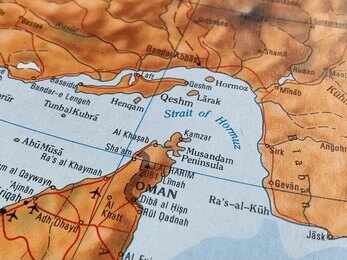
Iran closed the Strait of Hormuz in early March 2026 during an escalating Middle East conflict, weaponizing the narrow 21-mile-wide waterway that carries approximately 18-20 million barrels per day of non-Iranian Gulf oil exports. Supreme Leader Mojtaba Khamenei publicly committed to maintaining the closure while Iran’s Revolutionary Guard Corps threatened strikes on regional oil infrastructure if attacked. The strait’s shipping lanes narrow to just two miles at the chokepoint, giving Iran asymmetric leverage to control traffic through mining, missile strikes, or vessel seizures despite its modest 4% share of global oil production.
Global Supply Collapses as Gulf Exports Plummet
Persian Gulf crude and condensate exports crashed from 17 million barrels per day to just 6.28 million barrels per day by March 11, with total production cuts reaching 10 million barrels per day including 8 million in crude and 2 million in condensates. Iraq suspended operations at its South Rumaila and Basrah facilities following attacks, while global supply fell to four-year lows at 98.8 million barrels per day. Refineries contracted throughput by 3 million barrels per day as Asian facilities faced severe supply crunches, and LNG shipments from Qatar—a critical supplier—were disrupted alongside 1.5 million barrels per day of liquefied petroleum gas exports from the Gulf.
Bypass Infrastructure Proves Woefully Inadequate
Saudi Arabia diverted oil through its East-West pipeline to Yanbu, increasing flows from 800,000 barrels per day to 2 million, while the UAE rerouted supplies via the Abu Dhabi pipeline to Fujairah, but these alternatives left a staggering 12 million barrel per day deficit. Iraq, Kuwait, Bahrain, and Qatar have no viable bypass routes for their combined 5.7 million barrels per day of oil exports plus Qatar’s critical LNG volumes. The International Energy Agency committed to releasing 400 million barrels from strategic reserves as a stopgap measure, declaring the situation the largest supply disruption in history, while US Energy Secretary Chris Wright indicated military escorts could begin by late March to reopen shipping lanes.
Energy Weapon Threatens American Consumers and Economy
Oil prices surged to multiyear highs as markets became severely unbalanced, with Gulf producers sitting on stranded surplus while Asian nations drew down stockpiles rapidly. Morgan Stanley warned that protracted disruptions would drive gasoline prices higher, accelerating inflation and slowing consumption—a direct threat to American household budgets already battered by years of Biden-era fiscal mismanagement. The crisis underscores the reckless dependence on foreign energy chokepoints controlled by hostile regimes, vindicating President Trump’s long-standing emphasis on American energy dominance and strategic reserves. If Iran follows through on threats to strike Saudi, UAE, or Iraqi oil facilities—which handle millions of additional barrels daily—the disruption could persist far beyond 2026 despite IEA projections of eventual surplus once Hormuz reopens.
Assessing Iran’s Ability to Hold the World’s Oil Supply Hostage https://t.co/YzVsgCWTIH #gatewaypundit via @gatewaypundit
— Thomas Register (@Gregister) March 16, 2026
This crisis exposes the catastrophic vulnerability created when America lacks control over its energy destiny. Iran’s 4% share of global oil production gives it wildly disproportionate leverage because of geography—a 21-mile strait becomes a noose around the global economy’s neck. The situation vindicates the Trump administration’s focus on energy independence and reveals the folly of policies that made the West dependent on unstable regions. Reopening the Strait of Hormuz remains the only realistic path to stabilizing prices, as bypass pipelines cannot compensate for the scale of disruption, leaving American families to pay the price at the pump for geopolitical blackmail.
Sources:
Factbox: Iran vows to keep Hormuz closed as oil hits multiyear highs – S&P Global
If Trump Strikes Iran: Mapping Oil Disruption Scenarios – CSIS
Global Oil Market Implications of U.S.-Israel Attack on Iran – American Action Forum
Energy and Shipping Risks in an Iran War – Washington Institute
Iran War: Oil, Inflation, and Stock Market Impact – Morgan Stanley