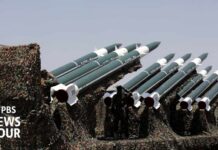
As Washington and Tehran trade blows over a “foolish violation” of a fragile ceasefire, many Americans see yet another distant crisis proving that the people in charge can endanger the world economy with a single drone.
Story Snapshot
- U.S. warplanes struck Iranian missile, drone, and radar sites after a cargo ship was hit in the Strait of Hormuz.
- President Trump called Iran’s move a “foolish violation” of the ceasefire, while Iran insists it was managing the deal, not breaking it.
- The clash threatens global oil flows and reinforces fears that elites play power games while regular people pay higher prices.
- Both sides claim to honor the ceasefire even as they fire weapons, showing how confused and fragile the peace really is.
What Happened In The Strait Of Hormuz
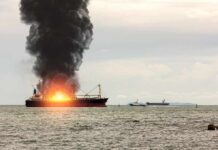
The United States military says an Iranian drone attacked the Singapore-flagged cargo ship Ever Lovely on Thursday in the Strait of Hormuz, near the coast of Oman.[2] The vessel was damaged but could keep sailing, and no casualties were reported, according to shipping officials.[1] On Friday, United States Central Command (CENTCOM) announced that American aircraft struck Iranian missile and drone storage sites and coastal radar installations linked to that attack.[1] This narrow waterway carries a huge share of the world’s oil, so even one strike can rattle global markets.[23]
President Donald Trump publicly accused Tehran of committing a “foolish violation” of the ceasefire agreement by launching at least four one-way attack drones at ships in the strait, including the Ever Lovely.[1] He said he “did not like” that Iran “took a shot,” but he did not clearly state whether the ceasefire is now over, leaving its status unclear.[1] United States officials described Iran’s action as “unwarranted aggression” against commercial shipping and framed the American strikes as a necessary defensive response.[4]
Dueling Stories: Violation Or “Ceasefire Management”?
Iran’s leaders flatly reject Washington’s claim that they broke the deal. A senior Iranian parliament official, Ebrahim Azizi, said the Strait of Hormuz is governed by Iran and called the drone incident “ceasefire management,” not a violation.[3] Iranian state media argue that ships must follow approved routes and suggest the Ever Lovely may have strayed, though they have not admitted targeting that specific vessel.[3] Tehran also points to a communication hotline with the United States to claim it is trying to manage tensions, not blow up the agreement.[7]
The Trump administration, meanwhile, insists the ceasefire remains in place even as American forces carry out what it calls “self-defense strikes” inside Iran.[9] Earlier in the crisis, CENTCOM described similar attacks on Iranian missile launch sites and mine-laying boats as needed to protect United States forces and global shipping “while using restraint during the ongoing ceasefire.”[9] This strange middle ground—shooting while saying there is peace—adds to public confusion and fuels suspicion that officials on both sides twist words to justify whatever they decide to do.
Why This Feels Like Another Elite-Driven Crisis
For many Americans, especially older conservatives and liberals who already doubt Washington, this episode fits a familiar pattern. Iran has used drones and small boats for years to pressure shipping in the Strait of Hormuz, while denying it breaks international rules.[19] The United States, in turn, presents itself as the guardian of “freedom of navigation” and answers with force when a ship is hit.[3] Each side claims the moral high ground, but neither seems focused on the daily impact on families who depend on stable energy prices and a calm world economy.
Oil and gas analysts warn that every new strike or threat to “close” the strait can push prices up and shake markets.[23] That means higher costs for fuel, food, and goods at home, at a time when many already struggle with inflation, weak wages, and a widening gap between rich and poor. When the federal government launches more military operations, and Iran fires back, ordinary citizens see billion-dollar assets moving overnight while their own savings barely move at all. This deepens the feeling that global games matter more to elites than the basic security of regular people.
A Fragile Ceasefire And A Wider Regional Storm
This clash does not happen in isolation. Reports describe repeated United States and Iranian strikes, plus Iranian attacks on United States-linked bases around the Gulf, even as diplomats shuttle between capitals to keep talks alive.[7] Iranian media have boasted about hitting facilities tied to the United States Fifth Fleet and about “closing” the strait to shipping, claims that raise fears of a larger war and further disruption.[7] At the same time, President Trump has said he is “in no hurry to make a deal,” signaling that military pressure may matter more than quick diplomacy.[21]
Major news outlets frame the new United States strikes as potentially “reigniting tensions” and making the ceasefire “practically meaningless,” while Iran accuses Washington of undermining the agreement.[7] This back-and-forth reinforces a broader worry shared by many on the left and right: that powerful players—governments, militaries, and energy interests—are steering events with little regard for the people caught in the middle. As ships inch back through the Strait of Hormuz and markets watch every headline, Americans see another reminder that when global flashpoints flare, it is often workers, drivers, and small business owners who pay the price.[21]
Sources:
[1] Web – U.S. strikes Iran after Trump says Tehran committed “foolish …
[2] Web – US strikes Iran after Strait of Hormuz cargo ship attack as ceasefire …
[3] Web – Live Updates: U.S. Military Strikes Missile and Drone Sites in Iran
[4] Web – US strikes Iran to respond to attack on ship that Trump says violated …
[7] YouTube – Iran & US trade strikes, officials fear deal collapse: Sources
[9] Web – US strikes Iran again, official says, after Trump denies deal on …
[19] YouTube – Iranian drone strikes ship in Strait of Hormuz | KTVU
[21] Web – Strait of Hormuz | International Crisis Group
[23] Web – Ships creeping back through Strait of Hormuz after Iran drone attack