Federal prosecutors say a Utah letter carrier threw away about 300 mail-in ballots, turning a routine primary into a trust test for the system.
Story Snapshot
- Justice Department unsealed an indictment alleging a postal worker discarded roughly 300 ballots in Utah.
- Prosecutors say the carrier set the ballots aside and did not deliver any from that batch.
- The defendant told investigators he acted out of “laziness” and had no political motive.
- The case spotlights how one breakdown can shake confidence in mail voting even if rare overall.
What Prosecutors Allege Happened in Utah
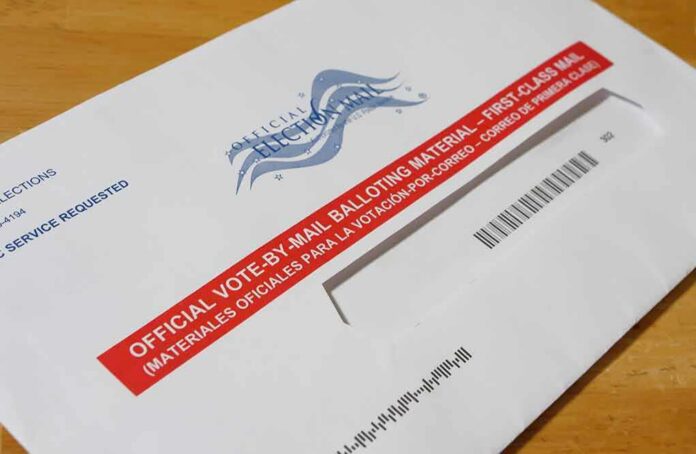
The Justice Department said a former United States Postal Service carrier was indicted for unlawfully hiding, destroying, and delaying mail that he was trusted to deliver, including about 300 mail-in ballots to registered voters in Utah’s June primary. Officials said he set the ballots aside early in his shift and did not deliver a single one from that stack before dumping mail in a church parking lot trash container, according to court filings summarized by reporters. He pleaded not guilty, and the case continues in federal court.
Federal law makes it a crime for any Postal Service employee to hide, destroy, or delay mail placed in the worker’s custody. Prosecutors often bring these cases to deter others and to protect the chain of mail delivery for ballots, prescription drugs, checks, and more. The United States Postal Service and the United States Postal Inspection Service publish election mail guidance and security tips, and they stress daily pickup and care with election mail to reduce risk.
What the Defendant Says About Motive
The U.S. attorney for Utah said the carrier indicated he had no political agenda. In interviews and a written statement cited in court records, he said he felt overwhelmed by the volume that day and wanted to “lighten his workload.” He said he aimed to toss advertisements and did not intend to discard ballots, calling his act “laziness” and “frustration,” according to government filings and press reports that summarized them. Those claims about motive do not change the charge but are part of the record.
Courts handle motive and intent at trial or in plea talks. Prosecutors must prove the charged crime beyond a reasonable doubt. A grand jury found enough evidence to indict, which starts the case but is not a conviction. The defense may point to the lack of a political goal. The government may argue that knowing possession and disposal of entrusted mail is the core harm, regardless of partisan intent. The judge and jury will weigh those facts.
Why One Route Failure Hits Trust So Hard
Mail voting works across many steps: printing, outbound delivery, voter return, intake, verification, storage, and counting. Each step adds a “chain of custody” point that must be documented and checked. When even one worker mishandles mail, voters on both the left and right see a system that feels too fragile and too distant from their control. That fear grows fast on social media and talk radio, even when the incident is limited in scope.
I just got this from the Son of 1776 – Utah Postal Worker Indicted for Dumping 300 Ballots in a Church Dumpster
A dumpster behind a church in Eagle Mountain, Utah. That's where more than 300 mail-in ballots ended up during the state's June primary — tossed in with the garbage by…
— Ambassador (@Ambassador853) September 28, 2026
Research shows confirmed mail ballot fraud is very rare across large elections. Analysts find extremely low rates over many cycles. Yet rare events still matter because a single route failure can silence hundreds of voters if not quickly caught and fixed. That is why watchdogs push for strict chain-of-custody logs, barcode tracking, and real-time alerts so voters can check that their ballot was sent, received, and counted as intended.
What Accountability and Fixes Could Look Like
Election officials can work with the Postal Service to add stronger handling rules during election windows. Steps include sealed containers for ballots, route-level signoff when ballots are present, two-person custody for ballot trays, and fast exception alerts when a tray goes missing. Public dashboards and text alerts let voters track ballots and flag delays early. Local leaders can also run stress tests before primaries to find gaps before real ballots hit the mail stream.
For many Americans, this case confirms a deeper worry: basic systems feel brittle, and accountability only comes after damage is done. Conservatives see proof that expanded mail voting invites mistakes. Liberals see an overworked public service stretched thin. Both sides agree that trust needs action, not slogans. Clear rules, visible tracking, rapid audits, and real penalties can protect voters and the honest workers who move our mail every day.
Sources:
ap.org, washingtonexaminer.com, justice.gov, thehill.com, abcnews4.com, pjmedia.com, abc15.com, politico.com