Los Angeles County officials told a federal court they cannot independently verify a voter’s citizenship beyond what the person attests on the registration form, even as federal lawyers flagged more than 20,000 suspected noncitizens statewide and asked that their ballots be set aside until checked.
Story Snapshot
- Justice Department delivered a list of over 20,000 suspected noncitizens and sought to hold related mail ballots.
- Los Angeles County said it has no separate system to confirm citizenship beyond sworn self-attestation.
- Officials refused to process a password-protected thumb drive, citing security and verification concerns.
- Federal prosecutors charged 28 people in related voting cases, showing the risk but not the full scale.
What the Justice Department Asked California to Do
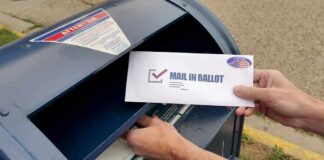
The Department of Justice said it identified more than 20,000 registered voters it described as likely noncitizens and asked California not to count their mail ballots until citizenship could be confirmed. Federal lawyers said they provided names, birth dates, and addresses to Los Angeles County on October 13 using a secure thumb drive. The department asked officials to hold or segregate, not cancel, ballots from flagged voters while checks occurred, framing the move as temporary.
The federal push escalated into a lawsuit days before ballots would be counted, raising the stakes for both sides. Prosecutors later announced charges against 28 people for unlawful registration or illegal voting to show real cases can occur. Those criminal cases, while concrete, do not by themselves prove the full size of the 20,000-person list or its impact on outcomes. The clash is now about both evidence and who controls election procedures in a tight window.
Why Los Angeles County Pushed Back
Los Angeles County Registrar-Recorder Dean Logan said the federal list included people from across California, not only Los Angeles County, and that the department did not provide its source data or matching method. He said the county cannot withhold or reject ballots based on unverified allegations and that removals must rely on verifiable evidence, not uncertain database matches. County officials also did not open the password-protected thumb drive, citing security and process concerns.
California Secretary of State Shirley Weber said earlier federal claims citing about 190,000 noncitizens on the rolls remained unsubstantiated and stressed that state law allows only citizens to register and requires removal of ineligible voters. Local leaders warned the federal actions could chill turnout, with Los Angeles County Supervisor Janice Hahn calling the arrests and lawsuit voter intimidation and urging people to vote anyway. These officials framed the fight as protecting due process and voter confidence, not avoiding list maintenance.
The Core Problem Both Sides Now Expose
The case spotlights a shared weakness: election offices often rely on a person’s sworn claim of citizenship on a form, while federal databases may be incomplete or lag naturalizations. That gap can flag lawful voters or miss true problems. Experts warn that large database matches can contain false positives that hurt eligible voters if used without person-by-person checks. At the same time, federal arrests show that unlawful registration and voting can occur, even if rarely.
Los Angeles County's registrar just told a federal court the county has nothing beyond a voter's own word to prove citizenship.
California Admits in Federal Court: We Have No Way to Verify Voter Citizenship Beyond What the Voter Claimshttps://t.co/kY6BkfhZwF#ElectionIntegrity…
— Profilo politics (@profilopolitics) October 21, 2026
The public record so far does not show how the federal list was built, what databases were used, or the expected error rate. It also does not show how many flagged people actually voted or would have ballots counted. That uncertainty creates a vacuum that partisans can fill with claims of fraud or suppression. The risk grows when disputes land in court days before counting, limiting time for calm verification and clear communication to voters.
What Would Restore Trust Right Now
Officials could settle the facts with three steps that respect both ballot security and voter rights. First, a neutral review panel should examine the federal list under a protective order and test each name against citizenship and voting records. Second, a rapid, auditable workflow should confirm current citizenship, including recent naturalizations, before any ballot is rejected. Third, the county and state should publish aggregated results and error rates so the public understands what was found without exposing private data.
Why This Matters Beyond Los Angeles
This dispute echoes past fights where large lists set off alarms before individual checks were done. The lesson is simple but hard: act fast, but verify faster. Count every lawful vote and only those votes. That means better data-sharing rules, clearer chain-of-custody for evidence, and standard timelines that avoid last-minute scrambles. Voters on the right and left want the same thing here: election rules that are firm, fair, and proven with facts, not headlines.
Sources:
twitchy.com, usatoday.com, dailynews.com, latimes.com, iowapublicradio.org, ctpublic.org, democracydocket.com, abcnews.com, straitstimes.com, hawaiitribune-herald.com