
A former U.S. Secretary of State openly supports regime change in Iran, sparking debates about foreign influence and internal resistance.
Story Highlights
- Mike Pompeo advocates for a “popular” regime change in Iran.
- Pompeo’s comments suggest U.S. and Israeli intelligence collaboration.
- Iranian officials use Pompeo’s remarks to claim foreign interference.
- Critics argue that Pompeo’s stance confirms long-standing regime-change agendas.
Pompeo’s Advocacy for Regime Change
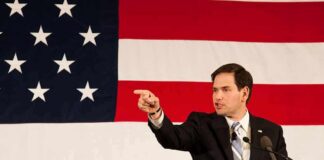
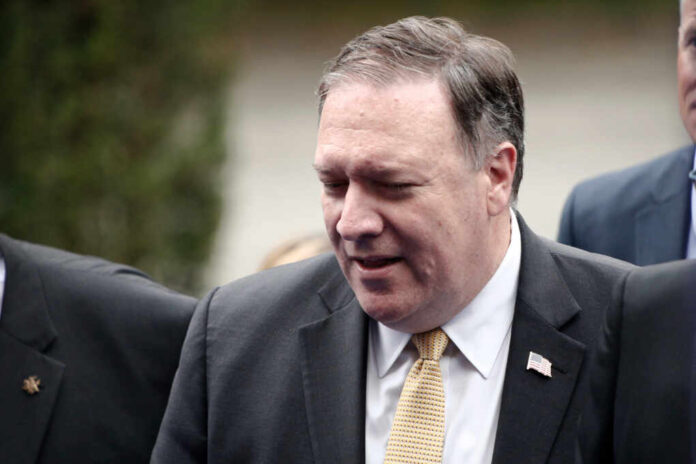
Mike Pompeo, former U.S. Secretary of State, has consistently endorsed the idea of a “popular” regime change in Iran. He argues that this change should be driven internally by the Iranian people, rather than through U.S. military intervention. This position has been highlighted in various speeches and op-eds, where Pompeo has advocated for sustained pressure and support for Iranian opposition groups. His stance aligns with the goals of many Western hawks and Iranian opposition figures, who see this as a commitment to a democratic future for Iran.
Pompeo’s remarks have sparked controversy, particularly due to his open discussion of intelligence collaboration between the U.S. and Israel. He has been quoted saying that when incidents occur in Tehran, the Mossad director calls him, suggesting covert operations. Critics and Iranian state media have seized upon these statements as evidence of foreign efforts to destabilize Iran, framing them as an admission of a long-standing regime-change agenda.
NEW from @antiwarcom @antiwarnews
Mike Pompeo Says the Quiet Part Out Loud About ‘Popular’ Regime Change in Iranhttps://t.co/N6Fqb9gFhz#IndieNewsNow— IndieNewsNow (@IndieNewsNow_) January 12, 2026
Iran’s Response and Internal Dynamics
The Islamic Republic of Iran has responded to Pompeo’s remarks by reinforcing its narrative of foreign interference. Iranian officials, including those from the IRGC Intelligence, have publicly condemned what they see as hostile designs orchestrated by the U.S. and Israel. This narrative is used to delegitimize ongoing protests and unrest within the country, attributing them to external plots rather than genuine domestic discontent.
Internally, Iran faces significant challenges, including economic hardships exacerbated by sanctions and demographic shifts among its youth, who are increasingly hostile to clerical rule. These factors contribute to the regime’s vulnerability and provide a backdrop for the ongoing protests, which groups like the NCRI/MEK claim to support from abroad.
Geopolitical Implications and Future Prospects
Pompeo’s stance on Iran has broader geopolitical implications, particularly regarding U.S.-Iran-Israel relations. His comments about Mossad’s involvement have intensified tensions and provided Tehran with propaganda tools against Western narratives. Analysts are divided on the likelihood of regime change in Iran. Some believe that the regime is resilient and that external pressure may strengthen hardliners, while others argue that cumulative crises could lead to a slow erosion of the regime’s power.
Meanwhile, the NCRI/MEK continues to lobby for international support, positioning themselves as a viable alternative to the current regime. However, critics question the true extent of their influence within Iran, pointing out their limited organizational reach.
Sources:
Free Iran Convention 2025: Defining the Roadmap for Iran’s Democratic Transition
Iran International: Latest News
Republic Celebrate Anniversary
Behind Riots: Israel-Pahlavi Nexus Delusion of Regime Change in Iran