
Iran’s new supreme leader is tying a “never-ending” revenge campaign to the choke point that moves roughly a fifth of the world’s oil—and Americans will feel the pressure fast.
Story Snapshot
- Iranian state TV broadcast a written message attributed to Mojtaba Khamenei vowing vengeance “until fully achieved” for deaths in the U.S.-Israel-Iran war.
- The message reaffirmed Iran’s blockade of the Strait of Hormuz, a critical artery for global energy shipments.
- Iran pointed Gulf neighbors toward an ultimatum: shut down U.S. bases or risk becoming targets, while claiming “friendship” with non-hostile neighbors.
- Reports say more than 165 people died in a Minab girls’ school strike linked to outdated U.S. intelligence, adding to the regime’s martyr narrative.
A Written Message, a New Leader, and a Very Old Strategy
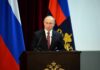
On March 12, 2026, Iranian state television aired a written statement attributed to Mojtaba Khamenei, who has been presented as Iran’s new supreme leader following the reported death of his father, Ayatollah Ali Khamenei, in U.S.-Israeli strikes. The message promised vengeance for “martyrs” and framed the conflict as a national and religious obligation. Several outlets noted Mojtaba did not appear on camera, keeping basic questions about his location and status unresolved.
Iran’s new supreme leader Mojtaba Khamenei, who is yet to appear in public, vowed on Thursday to avenge the deaths since the start of the war with the US and Israel, in a statement read out by a presenter on state TV.https://t.co/FRbnSUBUUS
— Channels Television (@channelstv) March 12, 2026
Iran’s messaging matters because the supreme leader sits atop the regime’s command structure and influences the Islamic Revolutionary Guard Corps and state media. In the same statement, Mojtaba Khamenei emphasized that retaliation is not limited to a single incident, describing vengeance as a continuing priority rather than a defined military objective. That framing can lower the political cost for Tehran to escalate, because “success” becomes a feeling and a slogan, not a measurable end state.
Hormuz as Leverage: Energy Shock by Design
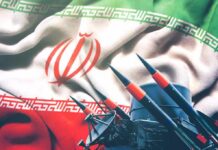
The statement also reaffirmed Iran’s intention to keep blocking the Strait of Hormuz, a narrow waterway that typically carries about 20–21% of global oil flows. In practical terms, that kind of disruption can punish U.S. allies, rattle consumer prices, and test Western political patience even when American domestic production is strong. Oil trading above $100 a barrel and governments coordinating releases from strategic reserves to blunt the impact.
U.S. actions described in suggest Washington is trying to reduce Tehran’s ability to physically enforce a blockade. Accounts referenced U.S. strikes that destroyed multiple Iranian mine-laying vessels, a direct response to the kind of asymmetric tactics Iran has used in past Hormuz crises. Even so, the simple geography of the strait favors harassment and disruption. A sustained closure forces reroutes, spikes insurance costs, and pressures global supply chains long before any formal diplomatic settlement is reached.
“Close the Bases”: Iran Pressures Gulf Neighbors
Mojtaba Khamenei’s message urged Gulf neighbors to close U.S. bases, pairing the demand with assurances of friendship toward neighbors not “hostile” to Iran. That is a classic wedge strategy: separate local governments from their security partners by implying they can buy peace through distance from Washington. For Bahrain and Oman—recent drone strikes on fuel facilities—this is not an abstract threat but a direct warning tied to infrastructure and civilian economic life.
From a constitutional, America-first perspective, the key is clarity about U.S. interests and lawful war aims, not rhetorical drift. It indicates President Trump has framed the conflict around stopping an Iranian nuclear weapons threat and confronting an “evil empire” posture from Tehran. That rationale is easier to evaluate than open-ended nation-building or global-policing missions Americans have rejected for years. Still, Iran’s attempt to intimidate host nations shows why forward basing and deterrence remain flashpoints that can pull the U.S. into broader regional consequences.
The Minab School Strike and the “Martyr” Narrative
One of the most emotionally charged elements was the missile strike on a girls’ school in Minab that killed more than 165 people, with reporting attributing the tragedy to outdated U.S. intelligence. Iran’s message folded that loss into a broader martyr narrative alongside the killing of Ali Khamenei, using civilian deaths to justify continued retaliation. The event is central to Iran’s public justification, but details remain limited in open coverage beyond casualty figures and attribution claims.
For Americans who are exhausted by years of foreign-policy ambiguity, the immediate takeaway is that Tehran is advertising its escalation ladder in plain language: revenge as policy, Hormuz as leverage, and U.S. basing as a target list. The Trump administration’s challenge is to protect Americans and allies while avoiding the kind of undefined commitments that fuel debt, inflation, and public distrust at home. What is clear is that Iran’s new leadership wants the conflict framed as permanent—and that is exactly the kind of posture that demands disciplined, interest-driven U.S. strategy.
Sources:
Message attributed to Iran’s Khamenei Jr vows revenge for ‘martyrs’
New Iranian leader Mojtaba Khamenei vows ‘never-ending’ revenge
Iran’s New Supreme Leader Vows to Keep Blocking Strait of Hormuz
Iran war: new Supreme Leader Mojtaba Khamenei issues first statement on Strait of Hormuz