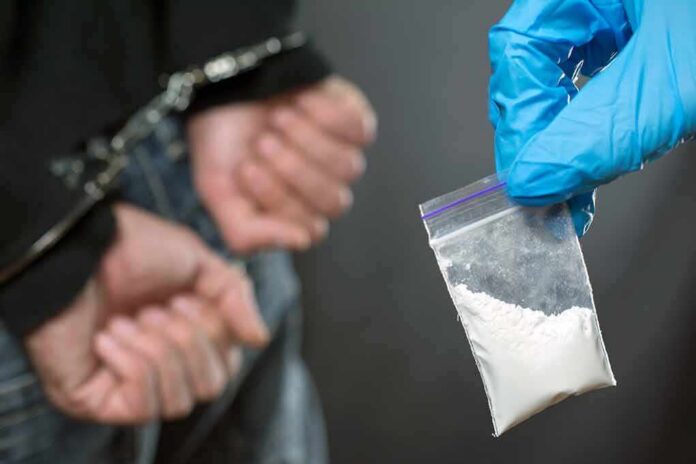
A federal grand jury says a Dinuba pizza shop was actually a cover for a wholesale methamphetamine operation, run by a man living in the country illegally.
Quick Take
- Kawal Preet Singh, 50, an Indian national unlawfully in the United States, faces federal drug and gun charges tied to his Round Table Pizza restaurant in Dinuba, California.
- Investigators say Singh sold wholesale amounts of methamphetamine from the restaurant while keeping illegal firearms nearby.
- Agents reportedly found meth in his car, his home, and the pizza shop parking lot, plus guns at both locations.
- Singh allegedly told agents he had not sold meth in about two months and claimed he was only holding it for a friend.
- The charges are allegations only; Singh is presumed innocent unless proven guilty in court.
Indictment Targets Pizza Shop Owner
A federal grand jury in Fresno indicted Kawal Preet Singh, 50, on charges tied to drug distribution and gun possession. The U.S. Attorney’s Office for the Eastern District of California says Singh sold wholesale amounts of methamphetamine from a Round Table Pizza restaurant he ran in Dinuba, a small city in Tulare County, while keeping illegal firearms on hand.
Prosecutors describe Singh as an Indian national living in the United States unlawfully. He faces charges of distributing methamphetamine, possessing methamphetamine with intent to distribute it, and possessing a firearm while committing a drug trafficking crime. Each charge carries separate federal penalties, and prosecutors have not yet set a trial date.
How Investigators Say They Built the Case
Federal agents began looking into Indian organized crime tied to drug trafficking back in February. By May, they had identified Singh as a suspect connected to the Dinuba pizza shop. Investigators say a photo on Singh’s phone showed drugs sitting on a floor that matched the restaurant’s flooring, helping tie him directly to the location.
During searches in August, agents reportedly found methamphetamine in Singh’s car and in the restaurant’s parking lot. At his home, they say they discovered 16 baggies that tested positive for meth. Investigators also reported finding two guns inside the pizza parlor and a third gun at Singh’s residence.
Singh reportedly told agents he had not sold methamphetamine in roughly two months. He also claimed he was holding the drugs “for a friend,” framing it as a personal favor rather than a business. The Justice Department stresses that the charges are allegations only, and Singh is presumed innocent unless a jury finds him guilty beyond a reasonable doubt.
A Familiar Pattern: Legit Businesses as Cover
Using an everyday storefront to hide illegal activity is not new. The Federal Bureau of Investigation has long warned that cash-heavy businesses like restaurants, bars, and beauty salons make easy fronts because they let criminals mix legal and illegal money without drawing attention. This blending makes it harder for investigators to trace where the money really comes from.
The most famous example is the 1980s “Pizza Connection” case, where Sicilian Mafia associates funneled more than a billion dollars worth of heroin through pizza parlors across several states. That case ended with 18 convictions after a trial lasting nearly a year and a half. The Dinuba case is far smaller in scale, but it echoes the same basic playbook: hide serious crime behind a business people trust every day.
Why This Case Resonates Beyond Tulare County
For readers worried about border security and drug trafficking, this case fits a familiar frustration: an illegal immigrant allegedly running a criminal operation while living in a small California community. For readers worried about due process, it’s worth remembering an indictment is not a conviction, and Singh has not had his day in court. Both concerns are valid without canceling each other out.
The case also highlights a broader worry shared across the political spectrum: that ordinary neighborhoods can hide serious criminal networks operating in plain sight. Whether the outcome confirms prosecutors’ case or not, the allegations alone raise questions about how closely small businesses in rural communities get monitored, and how organized crime networks find gaps to exploit.
Sources:
nypost.com, abc30.com, time.com, portal.311.nyc.gov