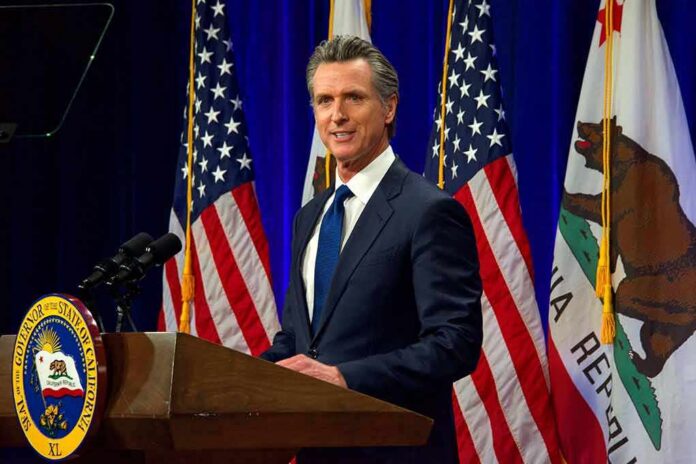
California Governor Gavin Newsom is fighting off accusations from his own party that he secretly forced the state’s attorney general to let a $110 billion media merger go through.
Story Snapshot
- Newsom denies pressuring Attorney General Rob Bonta, saying flatly, “I didn’t pressure anybody.”
- The settlement clears the way for Paramount to buy Warner Bros. Discovery after a 12-state antitrust fight.
- Paramount agreed to boost domestic film production by $300 million a year and keep making 30 to 32 movies annually.
- Progressive groups and unions call the deal a “massive betrayal” and say Bonta caved to billionaires.
- A Newsom aide describes his role as an “unofficial mediator,” not someone dictating terms.
Newsom Pushes Back on Coercion Claims
Newsom told reporters this week he never told Bonta what to do about the Paramount-Warner Bros. Discovery merger. “I didn’t pressure anybody,” he said, responding directly to speculation that he strong-armed the state’s independently elected attorney general into a settlement. He said he and other Democrats simply preferred a deal reached in the “boardroom, not the courtroom.”
That distinction matters legally. California’s attorney general answers to voters, not the governor. A governor pushing an AG toward a specific legal outcome could raise separation-of-powers questions, even if the underlying advice sounds like ordinary political advocacy rather than an order.
What the Settlement Actually Requires
The deal resolves a lawsuit filed by a dozen states challenging Paramount’s takeover of Warner Bros. Discovery. Under the terms, Paramount must increase domestic film production by at least $300 million a year and release 30 to 32 movies annually for five years. The company also agreed to set up an independent board of journalists to watch over editorial decisions at CNN and CBS News.
Bonta defended the agreement as a win on the merits, not a political favor. He said the deal “resolves the antitrust concerns” his office raised during the litigation. Newsom, meanwhile, called it “a win for California workers and our creative economy,” tying his support to jobs rather than any private arrangement with Paramount.
Democrats and Unions Cry Foul
Not everyone on the left is buying the explanation. Advocacy group Public Citizen’s Bill Bedoya accused Bonta and Newsom of privately pushing to settle instead of taking the case to trial, calling the outcome a “massive betrayal” of workers who spoke out against the merger. The Writers Guild of America said the deal would cut pay and worsen conditions for film and TV writers, a warning echoed by other unions worried about job losses.
The American Prospect went further, writing that Bonta “caved under pressure” after being abandoned by every major California politician, naming Newsom, Xavier Becerra, and Los Angeles Mayor Karen Bass. Protesters gathered outside Paramount’s gates accusing all three of caving to wealthy interests, particularly Paramount chief executive David Ellison, after the company reportedly threatened to move production out of state.
A Pattern That Fuels Public Distrust
A person close to the governor’s office told the Los Angeles Times that Newsom “communicated frequently with Bonta and Ellison, acted as an unofficial mediator and urged them to reach a resolution, but did not try to control the terms of the deal”. That account supports Newsom’s denial, but reporters have also described him as having “inserted himself” into talks and left his “fingerprints” on the final announcement, language that makes routine advocacy look like something heavier.
No emails, calendars, or sworn testimony have surfaced yet to settle the question either way. That gap leaves room for both sides to claim vindication. For voters already skeptical that powerful officials answer to anyone but themselves, an unresolved dispute between a governor and his own party’s attorney general over a corporate megamerger is unlikely to build confidence, no matter which version turns out to be true.
Sources:
foxnews.com, yahoo.com, nypost.com, freepress.net, gizmodo.com, reuters.com