Pope Leo XIV warned in Paris that artificial intelligence could create a “paradise of machines” that strips people of dignity if ethics do not lead the way.
Story Highlights
- Pope Leo XIV urged “ethical discernment” on artificial intelligence during a state visit to France.
- Speaking to President Emmanuel Macron, he called AI a major challenge for humanity.
- He warned that people risk being judged by efficiency and discarded when seen as “unproductive”.
- Macron said AI must remain a servant to humans, not a master.
Pope centers AI ethics in first stop of France visit
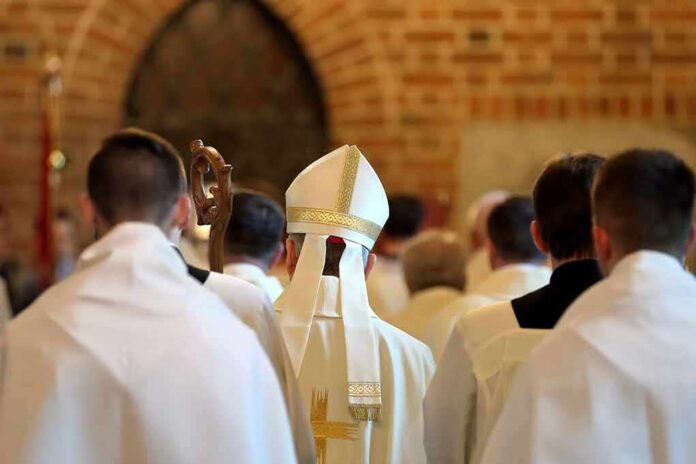
Pope Leo XIV opened his France trip at the Élysée Palace by tying artificial intelligence to a moral warning. He told President Emmanuel Macron and top officials that society faces an “urgent need for education in ethical discernment” so people do not lose their humanity in a “paradise of machines”. Major outlets present described the room and the remarks, placing the comments at his first scheduled stop in Paris on September 25, 2026.
Reporters said the pope framed artificial intelligence as a major human challenge, not a side issue. He set the tone for the four-day trip by calling leaders to guide technology with a focus on people, not profits or speed. That thread fits long-running church teaching, but the placement at his opening address raised its profile. It made clear that the visit’s themes include dignity, care for the vulnerable, and the proper place of machines.
Warnings about dignity, exclusion, and productivity tests
Coverage quoted the pope saying the paradox of our time is clear: we call software “intelligent,” yet we judge people by output. He warned that when efficiency rules, some are treated as waste and pushed aside. He linked this danger to rapid adoption of data-driven systems in work, health, and government. He said ethics must steer design and use so tools do not erase human judgment, mercy, or room for error that respects the person.
Journalists in Paris described how the pope pressed for rules that keep humans in charge of choices that affect rights and livelihoods. He argued that technology without a moral compass can harden bias, speed exclusion, and divide the “useful” from the “unproductive.” That message echoed his prior Vatican remarks before departure, where he urged leaders to govern the new technology wisely and raised questions about what it means to be human in the age of algorithms.
Macron’s response and the broader policy frame
President Emmanuel Macron publicly agreed on one key point: artificial intelligence must serve people. He said it should be a servant, not a master, and that the digital revolution should free, not chain, human beings. That line put the French leader on record aligning with the pope’s core test for policy: keep technology under human control, with guardrails that protect dignity and freedom in daily life and work.
Pope Leo XIV warned diplomats, academics and youth delegates that human dignity is being cast to the wayside in the name of efficiency and productivity in the era of AI.
Addressing representatives of the United Nations Educational, Scientific and Cultural Organization, or…
— Paulina Guzik (@Guzik_Paulina) September 25, 2026
The speech also sat inside a larger push by the church to shape artificial intelligence governance. Reports this year said Pope Leo XIV’s first encyclical focused on artificial intelligence and cast it as an “anthropological” challenge. Scholars and faith leaders alike have argued that “human dignity” should anchor laws and system design so tools help rather than harm. The Paris remarks tracked that shared focus on dignity, oversight, and the common good.
Why it matters for Americans across the aisle
Americans worry about power moving to unaccountable elites and black-box systems. The pope’s warning taps that concern. He did not attack innovation. He asked who holds the power, who is seen, and who gets left out when code sets the rules. For workers, patients, and families, the stakes are simple: people must stay at the center. Leaders in business and government should prove these tools respect rights, reward real work, and keep decisions understandable.
What is new and what remains to be nailed down
The Paris address advanced an ethics-first message at a major state venue, with both religious and civil leaders on stage. The strongest record comes from outlets that quoted key lines and placed them in time and place. Some reports blend his Paris remarks with his separate talk at UNESCO and prior Vatican comments, so readers should track which forum added which detail. The core warning, however, was clear and consistent across the day’s coverage.
Sources:
insiderpaper.com, abcnews.com, wionews.com, news.sbs.co.kr, lemonde.fr, amp.dw.com, france24.com