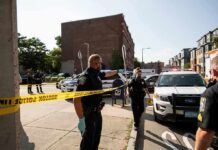


Madison police say they found about 30 partially clothed young men crammed into a hot, humid basement, some with visible injuries, after an anonymous tip led officers to an off-campus fraternity house.
Story Snapshot
- Madison police arrested two fraternity leaders on hazing and disorderly conduct allegations after responding to a tip.
- Officers found roughly 30 men covered in food and liquids in a basement set to 81 degrees.
- Several of the men had injuries that police say looked like they came from a physical assault.
- The University of Wisconsin–Madison says the fraternity is not recognized by the school.
- Neither man has been formally charged yet, and the case is still in its early stages.
What Officers Found in the Basement
Madison police responded to an anonymous tip about hazing at an off-campus fraternity house on September 23. Officers arrived to find around 30 young men packed into a basement, many shirtless or partially clothed and covered in food, condiments, and other liquids. Police described the room as hot and humid, with the thermostat set to 81 degrees.
Police said several of the men had visible injuries that matched what officers would expect to see after a physical assault. Officers have not said what caused every injury, but the description points to a scene far rougher than typical fraternity horseplay. The department is continuing to investigate exactly what happened inside the house before officers arrived.
Two men were arrested at the scene and taken to the Dane County Jail. Police identified them as Brayden Klein and Samuel Vane, the chapter’s president and vice president. Booking them as the group’s top leaders, rather than lower-ranking members, ties the allegations directly to the people running the organization.
Fraternity Already Cut Off From the University
The house belongs to Alpha Epsilon Pi, but the University of Wisconsin–Madison says the chapter is not recognized by the school. That means the fraternity operates independently, with less university oversight than officially sanctioned student groups. It remains active only because its national organization still recognizes it, even though the campus does not.
Alpha Epsilon Pi’s national headquarters has said it takes the allegations seriously and will cooperate fully with police. The organization has said anyone found responsible for hazing will be expelled and that it supports prosecuting those responsible to the fullest extent of the law. The university has issued a general statement about preventing hazing but has not offered case-specific details.
Case Still Early, No Charges Filed Yet
Reuters reported that both men were arrested and booked but that neither has been formally charged. That means the case is still in its early legal stages, well before prosecutors decide whether to file criminal charges or how serious those charges might be. Police have not released a criminal complaint laying out the specific evidence against each man.
Hazing Is a Known, Widespread Campus Problem
What happened in Madison fits a pattern researchers have tracked for years. A national study of more than 11,000 college students found 55% of those in clubs, teams, or organizations experienced hazing, with fraternity and sorority members among the most likely to face it. That same research found most students who go through hazing never even call it that.
Emergency medicine specialists say the true scope is probably even bigger than official numbers suggest. Dr. Alisa Hayes, an emergency medicine professor at the Medical College of Wisconsin, said survey data shows most college students have witnessed or experienced hazing, despite strict rules against it on paper. Cases often stay hidden because victims fear embarrassment or retaliation.
Researcher Elizabeth Allan, who has studied hazing for more than three decades, has said fraternities see some of the deadliest hazing incidents on college campuses. She has linked more than 100 deaths since 2000 to hazing-related incidents nationwide. That history gives the Madison case broader weight beyond a single house or campus.
What Happens Next
The Dane County District Attorney’s office will decide whether to file formal charges against Klein and Vane. Investigators are still working through the scene, and no timeline has been given for when charges, if any, might come. The roughly 30 men found in the basement have not yet spoken publicly about what they experienced.
For now, the case stands as a stark example of what anonymous tips and quick police response can uncover behind closed doors at unrecognized student organizations. Whether the university, the national fraternity, or local prosecutors respond with lasting changes will depend on how the investigation unfolds in the coming weeks.
Sources:
feedpress.me, cbsnews.com, abcnews.com, wpr.org, badgerherald.com, bringmethenews.com, channel3000.com, aepi.org