As more than 1,000 hours of raw police bodycam from January 6 finally see daylight, Americans are being forced to judge for themselves what happened when citizens and the government collided at the Capitol.
Story Snapshot
- A court forced Washington, DC, police to stop hiding January 6 bodycam footage behind broad privacy claims.
- Judicial Watch won access to about 1,000 hours of video in more than 1,600 files, calling it a major transparency victory.
- The footage shows harsh violence against officers, but key numbers about “1,000 assaults” are not independently verified.
- The fight over these videos reflects a deeper problem: both parties talk about truth, yet government still keeps crucial records from the public.
Court Says Public Has a Right to See January 6 Police Videos
A local court in Washington, DC ruled that the city’s police department cannot broadly blur faces and voices in its January 6 body-worn camera footage. Judge Veronica Sanchez rejected the Metropolitan Police Department’s claim that almost everyone in the videos had strong privacy rights that outweighed what the public should know. The department also argued it would cost more than $1.5 million to process and censor the footage, which they said ran to over one thousand hours. The judge said those privacy interests were “little more than de minimis,” meaning very small, compared to the public’s need for information.
This ruling came out of a Freedom of Information Act lawsuit filed by Judicial Watch, a legal watchdog group that often sues government agencies for records. The group asked for all audio and video recorded by Washington, DC Metropolitan Police officers responding to the Capitol protests on January 6, 2021, including footage from officer Michael Fanone. Police first denied the request, saying the videos were part of ongoing criminal cases and their release would invade personal privacy. Judicial Watch argued that police video is routinely released before cases end and that the public interest in seeing what officers and protesters did that day was more important than broad claims of secrecy.
Judicial Watch’s Bodycam Win and the Limits of What We Know
After years of resistance and a demand for over $1.5 million in fees, Washington, DC agreed to produce more than 1,000 hours of bodycam footage in roughly 1,627–1,630 separate videos. Judicial Watch president Tom Fitton called the ruling and release a “major victory for transparency and the rule of law,” saying Americans have a right to see this “secret” police footage from one of the most important days in recent history. The organization has hinted that its review of the videos shows around 1,000 assaults on officers, but that number has not yet been backed by an outside forensic study or court finding. No independent report with timestamps and clear criteria for counting assaults has been published so far.
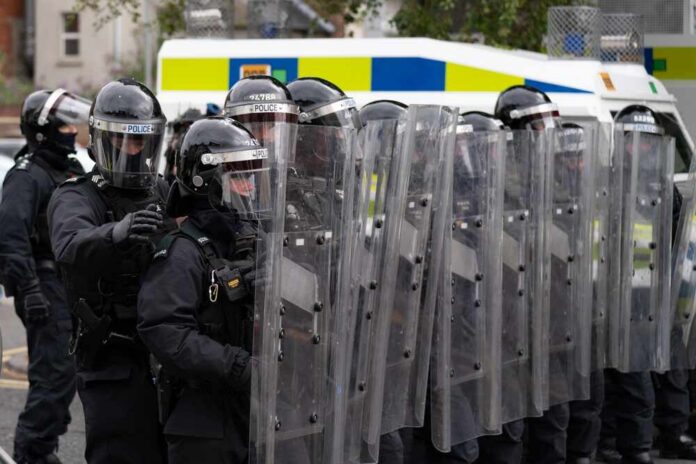
Other sources give much smaller numbers, showing how far apart different narratives are. An NPR report that drew on a bipartisan Senate review said about 140 police officers were injured defending the Capitol on January 6. NPR’s own visual archive, based on thousands of courtroom videos, shows rioters using pepper spray, bear spray, and other weapons against officers, including video of brutal attacks on officers like Michael Fanone and Daniel Hodges in the tunnel leading into the building. Those scenes of violence are not in serious dispute, even among critics of the broader January 6 story. What is disputed is the total scale of violent acts and how many people in the massive crowd actually engaged in them.
Competing Narratives and a Deepening Trust Gap
Critics on the right and some independent journalists say the focus on violence hides other truths. Journalist Steve Baker, who claims access to more than 40,000 hours of Capitol security footage, has argued that only around 80 individuals in a crowd of hundreds of thousands carried out violent acts. That view sharply contrasts with media framing that describes January 6 as “mass political violence” and a “violent mob” attack. At the same time, there is no public, step-by-step audit of the 1,627 DC bodycam videos that either proves or disproves Judicial Watch’s rough “1,000 assaults” claim. Both sides are leaning on big numbers and strong language, but neither has yet offered the kind of transparent, technical report many Americans would trust.
Judicial Watch Victory: DC Police Produces 1,627 January 6 Bodycam Videoshttps://t.co/b0jWoc3Dd4
— G_Kraig (@g_kraig) July 7, 2026
This clash over footage fits a wider pattern that frustrates people on both the right and the left. Groups like Judicial Watch often have to sue under freedom of information laws to pry loose records that taxpayers already paid for. Agencies cite privacy, safety, or huge processing costs to keep material hidden, even when courts later say the public interest clearly wins. When footage finally comes out, partisan media and political actors rush to frame it to suit their story. Conservatives see proof of heavy-handed policing, selective prosecutions, and a double standard compared with riots in 2020. Liberals see proof of a violent attack on democracy and a threat that still has not been fully punished.
Why This Release Matters Beyond January 6
For many Americans, the deeper issue is not just what happened on January 6, but why it takes years of court battles to see basic evidence. When a city police department tries to charge over $1.5 million to release bodycam video and then loses in court, it reinforces a belief that government transparency laws exist more on paper than in practice. Both working-class conservatives and liberals, who disagree on almost everything else, increasingly share a suspicion that the system protects insiders first. Police departments, federal agencies, and even Congress drip out information on their own timetable, leaving citizens to fight for records one lawsuit at a time.
The release of more than 1,000 hours of DC police bodycam footage will not settle the January 6 debate on its own. It does, however, give the public a chance to check powerful institutions against the video record rather than taking anyone’s word for it. The next steps that could narrow the truth gap include a neutral forensic review of all 1,627 videos, clear assault counting rules shared with the public, and fuller release of U.S. Capitol security camera footage to match against the police bodycams. Until that happens, people will continue to view the same day through very different lenses, and many will keep asking why those in charge seem more focused on controlling the story than simply showing the tapes.
Sources:
thegatewaypundit.com, judicialwatch.org, apps.npr.org, facebook.com, cha.house.gov, npr.org, justsecurity.org