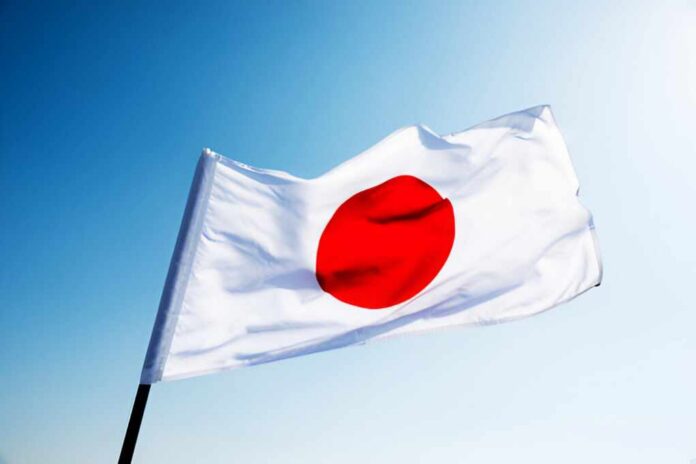
Japan is moving to criminalize certain public acts against its national flag, reigniting debate over where governments should draw the line between protecting national symbols and protecting free expression.
Story Snapshot
- The bill would criminalize certain public acts of flag desecration using a legal standard tied to causing serious public offense or disgust.
- The bill was pushed by Prime Minister Sanae Takaichi and the ruling coalition to appeal to conservatives and “correct” a legal gap.
- Lawyers’ groups and human rights advocates warn the vague “disgust” standard threatens free expression and could be abused to silence dissent.
- The fight mirrors global battles over flag laws, patriotism, and how much power the state should have over what citizens are allowed to do or say.
What Japan’s New Flag Bill Actually Does
Japan’s House of Representatives passed a bill that turns certain acts against the national flag into crimes, with prison terms of up to two years or fines up to 200,000 yen for people who publicly damage, remove, or deface the flag in a way that makes others feel “extremely uncomfortable or disgusted.” Supporters say the measure closes a long-standing legal inconsistency, noting that Japanese law already penalizes desecration of foreign national flags while offering no comparable protection for Japan’s own flag.[4]
Prime Minister Sanae Takaichi and the Liberal Democratic Party drove this measure as a core promise in their coalition deal with the Japan Innovation Party, which pledged to create a “crime of damaging the national emblem of Japan” during the 2026 Diet session. Takaichi has tried to pass similar laws in 2012 and 2021 and sees this as a long-term goal to show strength and patriotism at home, especially to conservative voters who want firmer respect for national symbols.[1][6]
Supporters Say It’s About Respect; Critics See a Crackdown
Ruling party leaders argue the bill simply protects ordinary people who value the flag and feel deeply hurt when they see it burned or defaced, framing it as a basic safeguard of public order and national pride. They also point out that the penalties match the existing law for foreign flags, which they claim keeps the legal system consistent and treats Japan’s own flag with the same level of care and respect already given to other nations’ symbols.[4][5][8]
Civil liberties groups argue that the bill’s language is broad enough to leave significant discretion to prosecutors, raising concerns that political protest or artistic expression could become the focus of criminal investigations. They warn that criminalizing expressive acts tied to the flag can violate Japan’s obligations under the International Covenant on Civil and Political Rights, which protects political expression even when it offends patriotic feelings. Japan’s Federation of Bar Associations has also formally opposed the bill, arguing that it clashes with constitutional rights and pacifist principles.[5][6]
Vague Language, Rare Offenses, and a Rushed Vote
Supporters acknowledge that flag desecration is uncommon, arguing the law is intended primarily as a deterrent rather than a response to a widespread public problem. Critics counter that laws based on subjective emotional standards can become difficult to apply consistently, particularly when political expression is involved.[1][4]
To ease fears, lawmakers carved out exceptions for common and creative uses of the flag, like messages cheering for athletes, scenes in live-action movies, anime, manga, video games, and even content generated by artificial intelligence. They also added language saying freedom of expression under the Constitution “should not be unjustifiably infringed” when authorities enforce the law. But the bill still went through lower house deliberations in only a few days, while opposition parties boycotted the final vote, calling it a heavy-handed move that polices thought and expression instead of solving everyday problems.[3][5][6]
Part of a Global Struggle Over Speech, Symbols, and Power
Japan’s debate fits a wider pattern: around 40 countries have criminal laws against desecrating national flags, often justified as necessary to protect unity and respect. Countries vary widely in how they treat flag desecration. Some impose criminal penalties, while others—including the United States—treat it as protected political expression under constitutional free speech principles. At the same time, courts in other democracies, like the United States, have ruled that burning the flag is protected political speech, even when most citizens find it offensive.[9][10][11][12][13]
@specialreports @Reuters Please take a closer look at several underreported legislative developments in Japan. Taken together, they may weaken parliamentary democracy, restrict dissent, concentrate executive power, and increase the risk of military escalation. All sources below…
— 生きてやる。 (@SYidesca7) June 27, 2026
For Americans watching from a distance—whether conservative, liberal, or somewhere in between—Japan’s bill may feel uncomfortably familiar. Leaders say they are simply defending the nation’s honor, but critics see another step toward a system where elites decide which emotions and opinions are allowed in public. Both sides in the United States already worry that powerful insiders use patriotic language to distract from deeper failures on wages, debt, borders, and trust. The legislation highlights a broader international debate over how democracies balance respect for national symbols with freedom of expression. As the bill moves through Japan’s legislative process, that debate is likely to continue well beyond its borders.[1][15]
Sources:
[1] Web – Japan’s lower house approves bill banning desecration of the national …
[3] Web – LDP’s flag desecration bill clears Lower House – The Japan Times
[4] Web – Takaichi Backs Flag-Desecration Bill : r/japannews – Reddit
[5] Web – Japan’s Flag Desecration Bill Threatens Rights – Human Rights Watch
[6] Web – A Lower House committee approved a bill Friday banning the …
[8] Web – Lower house OKs bill outlawing Japanese flag desecration
[9] Web – Japan Daily – Facebook
[10] Web – Japan has moved to criminalise the desecration of its national flag …
[11] Web – Ruling party OKs bill outlawing Japanese flag desecration
[12] Web – Japan Federation of Bar Associations opposes proposed Flag …
[13] Web – Japan’s flag desecration law reflects growing Right-wing pressure
[15] Web – Ruling party OKs bill outlawing Japanese flag desecration