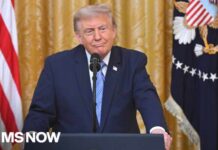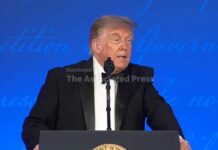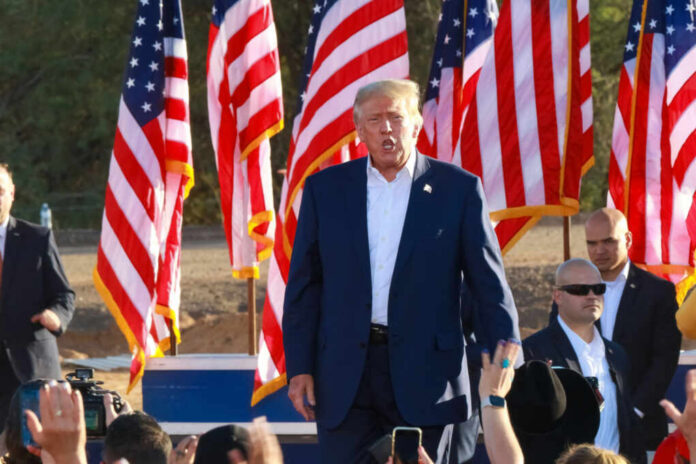
At Mount Rushmore, President Trump named communism the nation’s top threat and vowed to “vanquish” it, turning a birthday celebration into a hard warning about America’s direction.
Story Highlights
- Trump used a July 3 Mount Rushmore speech to call communism America’s greatest threat.
- He claimed communist regimes killed 100 million people and promised to defeat the ideology.
- He tied the threat to fights over U.S. history, gun rights, and economic pride points.
- Scholars note this rhetoric echoes long U.S. cycles of anti-communist politics.
Trump’s Core Claims From The Mountaintop
President Donald Trump told a Mount Rushmore crowd on July 3, 2026, that communism is the greatest threat facing the United States today. He said the ideology caused 100 million deaths in the last century and called it a system of theft, control, lies, and murder. He promised, “We will vanquish communism quickly” and said, “America will never be a communist country.” These lines framed the night as both a celebration and a call to resist internal enemies.
Trump linked the threat to current culture fights. He said radicals and extremists are attacking American history by teaching that Americans live on stolen land or that heroes were only oppressors. He tied this to his defense of gun rights, claiming he “almost single-handedly” saved the Second Amendment. He also cited economic gains, saying $19.2 trillion flowed into the U.S. under his watch, far more than under the prior administration.
What The Speech Proved — And What It Did Not
The speech made clear the president’s stance and goals. But it did not offer names, records, or agencies to prove a current communist network inside U.S. politics. His death toll figure, while often repeated in anti-communist statements, came without a cited source or method. His Second Amendment claim did not point to court rulings or laws. His $19.2 trillion figure did not include dates or a data source.
These gaps matter to readers across the spectrum. Conservatives who fear creeping left ideology want proof that links activists or officials to communist groups, not just labels. Liberals who reject communist smears want documentation too, to separate hard facts from campaign talk. Both groups share a core worry: leaders use big claims to rally supporters while avoiding the hard work on prices, wages, safety, and trust in institutions.
How This Fits America’s Long Anti-Communist Cycle
Trump’s message lines up with earlier moves by his administration, including a 2025 proclamation of Anti-Communism Week that cited “more than 100 million” lives lost under communist regimes. That White House statement framed communism as a global force that crushes faith and freedom. It set a moral stage for speeches like Mount Rushmore. The throughline is clear: define a unifying foe and present firm national resolve.
Historians point to past cycles when anti-communist talk surged. In the early 1950s, Senator Joseph McCarthy rose by warning of subversion, before the Senate condemned him in 1954. Scholars note how leaders have long used this language to rally voters and shape policy priorities. The pattern spikes in tense times and elections, when fear and pride can drown out policy detail and oversight.
Why Voters Should Care Now
The Mount Rushmore speech signals the issues that will dominate the months ahead. Expect more vows to root out “communists,” more praise for gun rights, and more claims of economic wins. That could push Congress and agencies to take steps that affect education, speech rules, security checks, and funding choices. Without clear evidence and timelines, though, it risks deepening distrust that Washington prefers slogans over solutions.
Mount Rushmore speech mixing celebration with warnings about internal enemies—a familiar Trump formula of patriotic messaging paired with divisive rhetoric. The contrast between "optimistic" and enemy talk tells… #Trump #MountRushmore #July4th #Politicshttps://t.co/2DHu8PEdgM
— @GlobalRightWatch (@AutonomusRepost) July 4, 2026
Citizens who want results can press for proof-based steps. Ask for agency reports that document any active communist operations. Demand public data for large economic claims, with dates and sources. Insist on naming groups when accusing them of rewriting history. This is not about silencing warnings. It is about turning big talk into verifiable action that defends freedom while respecting facts, due process, and the American promise to its people.
Sources:
youtube.com, terpconnect.umd.edu, whitehouse.gov, millercenter.org