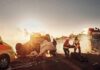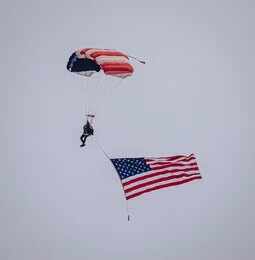
A skydiver carrying a giant American flag crashed into a tent at a packed Fourth of July rodeo — then walked back into the arena to a standing ovation and jumped again the next day.
Story Snapshot
- Skydiver Ross crashed into a small tent at the Folsom Pro Rodeo on July 3 after the American flag he was carrying appeared to snag a tree during his landing.
- Ross walked away with only minor scrapes and a small cut, then returned to the arena center and waved to the crowd.
- The Folsom Pro Rodeo confirmed Ross made a second jump on July 4 with a perfect landing.
- Witnesses say the tent likely saved him from a much worse injury — and skydiving data shows most accidents happen during the landing phase.
Flag Snags a Tree, Skydiver Goes Down Hard
On the opening night of the Folsom Pro Rodeo in Folsom, California, skydiver Ross was descending into the arena carrying a large U.S. flag when the flag appeared to catch on a tree. The snag pulled him off course. Video shows him crashing into a small tent near the edge of the arena rather than into the stands where hundreds of spectators were seated.
Witnesses at the scene said the tent may have made a critical difference. One bystander told CBS13, “If he would have just hit the ground, it would have been a lot different.” Ross walked away with only minor scrapes and a small cut. He got up, walked to the center of the arena, and waved to the crowd, which responded with a standing ovation. The Folsom Pro Rodeo confirmed his safety in an official statement shared with ABC News.
He Came Back and Nailed It
Ross did not stop there. The Folsom Pro Rodeo posted an update on July 4 confirming he jumped again — and this time he stuck the landing perfectly. The rodeo described it as a “perfect landing” and said he parachuted directly into the arena. The back-to-back performance turned what could have been a story about danger into one about determination and grit — the kind of story that tends to resonate at a patriotic Fourth of July celebration.
The rodeo has not released a formal safety investigation report. A spokesperson acknowledged that “recovery and investigation will take time,” but no timeline or findings have been made public. No independent agency such as the California Division of Occupational Safety and Health has released findings either. For now, the public account rests on the rodeo’s own statements and witness reports — not independent medical or safety documentation.
Landing Is Where Most Skydivers Get Hurt
The crash fits a well-documented pattern. A medical review of 2.1 million skydives found that roughly 80% of skydiving injuries happen during the landing phase. The most common causes are an incorrect flare — the technique used to slow a parachute just before touchdown — bad terrain, or a poor landing position. The most frequent injuries are fractures, bruises, and strains to the ankles, feet, and spine.
A fairgoer captured the terrifying moment a skydiver crashed while descending into a sold-out rodeo in Folsom, California, on Thursday, July 2.
Krista Nicole Hefner told Storyful she was in the stands with her friends watching the Folsom Pro Rodeo when the parachuter was… pic.twitter.com/R7ogH5ShzS
— Storyful (@Storyful) July 6, 2026
The United States Parachute Association (USPA) reports that most skydiving accidents come from human error, not equipment failure. In 2025, USPA members made 3.47 million jumps and recorded just 16 civilian deaths — a rate of 0.46 deaths per 100,000 jumps. That context matters here. What looked terrifying on video is, statistically, the kind of hard landing that experienced skydivers sometimes survive with minor injuries. Ross’s quick recovery lines up with what the data would predict in a non-fatal landing mishap.
Sources:
facebook.com, abc7news.com, people.com