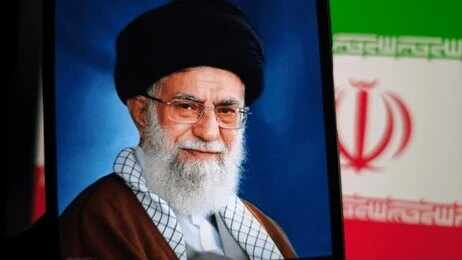
As world leaders line up to honor Ali Khamenei, millions of ordinary people see a funeral that grew out of a war they never asked for and a system that has failed them.
Story Snapshot
- Iran’s state media confirmed Ali Khamenei was killed in a US–Israeli airstrike and declared 40 days of mourning.
- His funeral and burial were delayed more than three months by the ongoing war, with major ceremonies now underway in Tehran, Qom, and Mashhad.
- International delegates are attending a heavily choreographed farewell, even as many Iranians and foreigners blame his rule for repression and economic pain.
- The fight over how to remember Khamenei shows how elites on all sides use war, religion, and media to protect their own power while regular people carry the cost.
How Khamenei Was Killed And Officially Mourned
Iranian state television announced that Supreme Leader Ali Khamenei was dead after what it called “martyrdom” in a joint United States–Israeli strike on his compound in late February. The Supreme National Security Council statement, read on air, ended days of confusing reports about his condition. Foreign outlets, including BBC, Al Jazeera, and major American networks, all reported his death as the result of a coordinated military operation, not natural causes. The government then declared a 40-day public mourning period, closing schools and many businesses nationwide.
Officials said the same strikes also killed several members of Khamenei’s family, underscoring how deep the attack cut into the ruling circle. The assault came amid an already brutal war in which earlier Israeli air raids on Iranian territory had killed more than 1,100 people and damaged prisons and civilian sites, events human rights groups say violated international law. Supporters inside Iran quickly framed Khamenei’s death as a sacred sacrifice, while President Donald Trump publicly called the operation a “liberation” and claimed success in removing the regime’s “head.”
Funeral Delays, Farewell Ceremonies, And Power Struggles
Although Khamenei died in February, his main funeral and burial were pushed back for more than 100 days because of ongoing fighting with the United States and Israel. State media now say the processions begin in Tehran on July 4, continue in the religious city of Qom on July 7, and end with burial at the Imam Reza shrine in Mashhad on July 9. A planned earlier farewell ceremony at Tehran’s Imam Khomeini prayer hall was suddenly postponed without explanation, showing how war and security worries disrupted even tightly controlled state rituals.
The current farewell events in Tehran feature long lines of people passing Khamenei’s coffin and those of family members, with delegations from countries such as Iraq, Lebanon, Turkey, and Pakistan taking part. At the same time, Iran’s power brokers have been working behind closed doors on succession. Reports indicate that his son, Mojtaba Khamenei, has emerged as the likely new supreme leader, after years of staying in the shadows while hardliners tightened control over the military, courts, and state media. This kind of family handoff, decided by elites, fits a pattern many Americans and Iranians recognize: a small group protects its power while regular citizens get little say.
Repression, Protests, And A Divided Public Memory
International coverage often shows crowds mourning in the streets, but the full picture inside Iran is more divided. Earlier protests in late 2025 and early 2026 were met with mass killings, large-scale arrests, and a near-total internet shutdown as the regime tried to crush dissent. Human rights reports describe hundreds or even thousands of deaths over Khamenei’s decades in power, along with widespread torture, censorship, and use of the death penalty to scare the public. Many Iranians who opposed him are staying home during the funeral, watching and waiting rather than risking another wave of crackdowns.
Iranian authorities have a long record of controlling information in moments like this. They have banned media from covering demonstrations, jailed journalists, and branded protests as “foreign-backed riots” to discredit genuine anger over corruption and economic collapse. That same playbook is visible around Khamenei’s farewell: emotional television anchors, strict messaging about “martyrdom,” and limits on open debate about his legacy. For citizens, both in Iran and abroad, this feels familiar in another way too. It mirrors how many Americans see their own “deep state” and political class using spin and security talk to dodge responsibility when policies fail.
What This Moment Means Beyond Iran
The fight over Khamenei’s death and funeral fits a broader pattern in modern politics. In many authoritarian systems, leaders and their enemies both rush to claim credit or blame when a ruler falls, using the moment to push their own stories. Iran’s state media benefits by painting Khamenei as a victim of foreign aggression, which can rally some support and justify tighter control at home. Meanwhile, foreign governments highlight his human rights record and support for armed groups to defend their strikes and shape global opinion.
Touch down 🛬 Tehran, for the farewell ceremony of Iranian Supreme leader Ayatollah Khamenei pic.twitter.com/rvZV86hQs6
— Mbuyiseni Ndlozi (@MbuyiseniNdlozi) July 3, 2026
For Americans watching this from afar, especially conservatives and liberals who agree Washington’s leaders often put careers ahead of the public good, the picture in Tehran is a warning and a mirror. On one side, you see a system that mixed religion, hard power, and censorship until ordinary people were trapped between war abroad and repression at home. On the other, you see foreign elites using high-tech strikes, bold speeches, and media blasts to claim a win, even though the risk of wider war and higher energy prices falls on everyday families across the world. In both cases, regular people carry the cost while powerful actors argue over the story.
Sources:
youtube.com, bbc.com, aljazeera.com, axios.com, facebook.com, nbcnews.com, isdglobal.org, us.dk, hudson.org