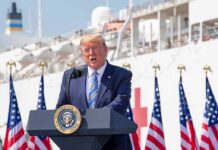
The Supreme Court just shut down President Trump’s effort to end birthright citizenship, and is now urging Congress to pursue changes to federal citizenship law despite the Court’s constitutional ruling.
Story Snapshot
- The Supreme Court, in Trump v. Barbara, struck down Trump’s executive order that tried to end birthright citizenship for many babies born in the United States.
- Chief Justice John Roberts’ majority opinion said the Fourteenth Amendment still guarantees citizenship to nearly all children born on U.S. soil.
- Trump called the ruling “too bad for our country” and urged Congress to move quickly to change the law on citizenship.
- Dissenting justices and many conservatives warn the decision will encourage more illegal immigration and “birth tourism.”
What the Supreme Court Decided About Birthright Citizenship
On June 30, 2026, the Supreme Court issued its ruling in Trump v. Barbara, a case testing President Trump’s 2025 executive order that tried to narrow who is a citizen at birth. The order said babies born here would not be citizens if their parents were in the country illegally or only here for a short time on visas, unless a parent was already a citizen or permanent resident. In a 6–3 decision, the Court struck down the order and held that these children are citizens under the Fourteenth Amendment’s Citizenship Clause.
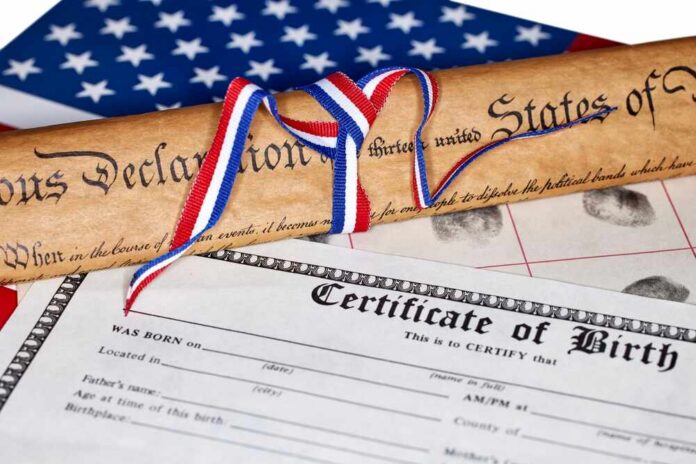
Chief Justice John Roberts wrote the majority opinion and tied the ruling back to the text of the Fourteenth Amendment, which says that all persons born or naturalized in the United States and subject to its jurisdiction are citizens. Roberts’ opinion said children born here to parents who are unlawfully or temporarily present are still “subject to the jurisdiction” of the United States and thus citizens at birth. He described the decision as a “promise” kept to the framers of the Amendment, affirming a broad, long-standing rule that has made American citizenship based on birth on U.S. soil for more than a century.
Why Trump’s Order Failed and What His Allies Argued
Trump’s team tried to give “subject to the jurisdiction” a much narrower meaning, claiming it requires “direct and immediate allegiance” that undocumented immigrants and short-term visitors do not have. The administration argued that the Fourteenth Amendment was intended primarily to secure citizenship for formerly enslaved people and did not require automatic citizenship for children of parents unlawfully present in the country. He said the framers did not intend to grant citizenship to children of people here only briefly or in violation of immigration law.
Justices across the ideological spectrum pressed hard on these points, asking how rare exceptions like children of foreign diplomats or enemy soldiers could be stretched to deny citizenship to large groups of babies born here to immigrant parents. Roberts called the administration’s examples “quirky” and questioned how they could justify blocking citizenship for so many people. The majority instead leaned on the 1898 case United States v. Wong Kim Ark, which held that a man born in San Francisco to Chinese parents was a citizen, even though Chinese immigrants then faced harsh legal limits. That case has long been read to mean almost everyone born in the United States is a citizen, with only narrow exceptions.
Trump’s Reaction and the Push for Congressional Action
After the ruling, Trump publicly said he would accept the Court’s decision but called it “too bad for our country” and a major setback for his immigration agenda. He quickly turned from the courts to Congress, urging lawmakers to “start today” on reforms to end what he sees as “expensive and unfair” birthright citizenship. He framed the issue as one of national cost and fairness, arguing that the current system invites illegal immigration and allows foreigners to gain American passports for their children with only brief stays on U.S. soil.
Conservative critics, including dissenting justices Samuel Alito and Clarence Thomas, warned that the ruling will “incentivize illegal immigration” and allow children of mothers from hostile countries to gain full travel rights as citizens. Thomas argued in his dissent that the Fourteenth Amendment was “specifically designed” to secure rights for formerly enslaved people, not for children of illegal immigrants or birth tourists, accusing the majority of “repurposing” the Amendment. However, these concerns were not backed by data showing widespread national security problems from birthright citizenship, and they did not carry enough weight to sway the majority.
What the Ruling Means for Ordinary Americans and the Deep Divide
For families, the practical result is clear: if a child is born on U.S. soil, that child remains a citizen, except in rare cases like children of foreign diplomats. Critics argued the order could have left some children facing uncertainty over their citizenship status, depending on the laws of their parents’ countries of nationality. Lower federal courts that first blocked the order called it a “blatant violation” of the Constitution and said citizenship is a right by birth, not a privilege given by politicians.
From the perspective of a country like Japan—which is furthest removed from a system based on birthright citizenship—it is difficult to understand why President Trump would want to abandon that principle. pic.twitter.com/gEvQ1MC9s2
— 斉藤一博 (@fns124) July 1, 2026
The fight, though, taps into deeper anger that many Americans on the right and left share. Many conservatives see the ruling as another example of judges ignoring border chaos and rewarding people who break immigration laws. Many liberals fear that Trump’s order was part of a broader effort to strip rights from vulnerable families and turn citizenship into a political weapon. The ruling leaves the constitutional question settled for now while the broader political debate over immigration and citizenship is likely to continue in Congress and future elections.
Sources:
cbsnews.com, ogletree.com, americanimmigrationcouncil.org, brennancenter.org, aclu-nh.org, youtube.com, fam.state.gov, camden.rutgers.edu, constitutioncenter.org, lettersandsciencemag.ucdavis.edu, aclu.org