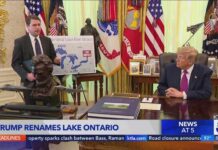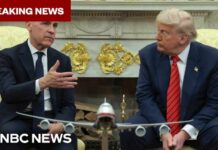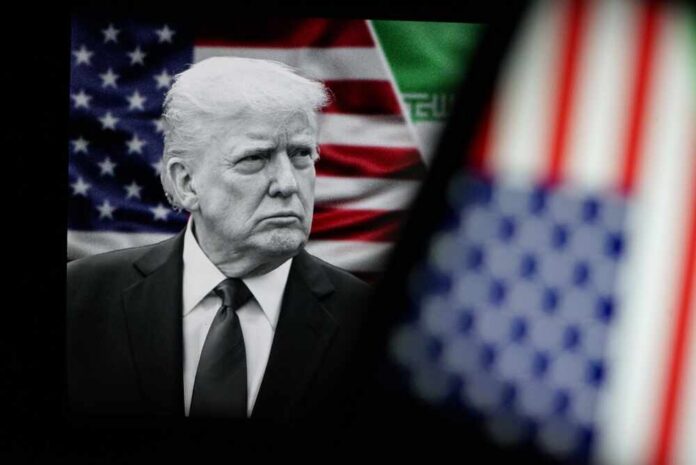
President Trump said U.S. strikes on Iran will continue “until I say it’s enough,” as the military hit more than 90 Iranian coastal targets to keep the Strait of Hormuz open.
Story Highlights
- U.S. Central Command struck 90+ coastal targets tied to air defense, missiles, drones, and naval assets.
- Trump vowed a 20-to-1 response to Iranian attacks and said he alone will decide when strikes stop.
- Officials said Iran’s nuclear program was “severely damaged,” but not destroyed, despite White House claims.
- Strikes aim to protect shipping in the Strait of Hormuz as operations continue to degrade Iranian forces.
White House Sets Open-Ended Timeline for Strikes
President Trump told reporters the strikes would continue on his terms and promised a 20-to-1 retaliation for any Iranian attack. He framed the campaign as simple math: hit the United States once, get hit twenty times in return. The message set a clear tone. The end date is not set by a treaty or a vote. It is set by the Oval Office. That approach speaks to many who want strength, but it also alarms people who fear endless war and weak oversight.
Trump also repeated sweeping claims of damage to Iran’s forces, including large losses to ships, planes, and missile production. Fact-checkers and some officials have pushed back on the scale of those claims. They say parts of Iran’s military and nuclear program remain in place. The gap between presidential rhetoric and official assessments fuels the sense that Washington often oversells success. That gap also feeds a broader worry that leaders do not level with the public about costs and risks.
Military Says Targets Protect Hormuz Shipping
United States Central Command said the latest missions focused on Iran’s air defenses, missile and drone storage, and naval units that can threaten vessels near the Strait of Hormuz. The goal is to keep the world’s energy lifeline open and to reduce Iran’s ability to strike ships or bases. Commanders said more operations will follow to keep degrading those forces. The target list points to a strategy built around the waterway, where even short disruptions can ripple into higher prices.
Analysts across the spectrum agree the strait is a pressure point. When conflict rises there, oil and gas flows can slow, and prices can jump. Recent reporting tied bombings and standoffs to higher oil and gas prices that hit family budgets at home. Many Americans, left and right, see a pattern. They pay more while insiders and contractors stay well funded. That view deepens distrust of a federal system seen as serving itself first.
Intelligence Says “Severely Damaged,” Not Obliterated
Central Intelligence Agency Director John Ratcliffe said there is credible intelligence that key nuclear sites were destroyed and may take years to rebuild, and that Iran’s program was “severely damaged”. Independent reporting and officials, however, have not confirmed full destruction. A Pentagon spokesperson said earlier strikes “seemingly degraded” Iran’s program and delayed it by about two years, not wiped it out. That difference matters because it shapes how long the conflict might last and what victory means.
Other outlets cited a leaked early report saying Iran’s enriched uranium and underground systems were largely intact, with most damage above ground. Those claims clash with the idea of a clean knockout and suggest Iran may rebuild or adapt. The fight over facts is not just academic. It affects whether Congress, allies, and the public support more strikes, a new round of talks, or some mix of both. It also raises the cost of any mistake in judgment.
Claims Under Scrutiny and Public Costs Rising
Trump’s sharp warnings included claims about specific Iranian weapons, such as Tomahawk missiles. Experts say there is no evidence Iran has Tomahawks, which are made for the United States and are tightly controlled. When key claims do not hold up, it fuels the belief that leaders bend facts to sell war. That belief crosses party lines. Many conservatives recall past “forever wars.” Many liberals point to civilian risks and blowback. Both see elite incentives that reward action over results.
⚠️ The geopolitical textbook is officially broken.
US and Iran are trading heavy strikes for five days straight.
Missiles are landing on the US 5th Fleet HQ in Bahrain and the tape just doesnt care.The consensus bull case for crude right now is perfectly logical.
Trump is… pic.twitter.com/jOzkKjeAdu— Macro Alpha (@MacroAlphaHQ) July 15, 2026
The long fight with Iran follows a familiar arc. Leaders cite nuclear risk, promise quick effects, and then face pushback when hard proof lags. The Iraq and Libya episodes still frame today’s debate for many Americans. This time, the focus on the Strait of Hormuz links security aims with kitchen-table pain. If shipping stays safe, energy prices may ease. If not, families and small firms will feel it first, while the war talk continues in Washington and on cable news.
What To Watch Next
Watch for public release of intelligence that shows what was hit, what survived, and why more strikes are needed. Look for independent inspections at nuclear sites that can confirm or challenge official lines. Track oil and gas prices as a real-world scorecard for policy success. Finally, follow whether Congress demands commander testimony on alleged imminent threats. Clear facts, not slogans, should decide how long this lasts and how it ends.
Sources:
youtube.com, nytimes.com, politico.com, cnn.com, apnews.com, bbc.com, cfr.org