In a Michigan Senate race soaked in big money, Bernie Sanders says voters are really choosing between Abdul El-Sayed and the “billionaire class” buying the airwaves.
Story Snapshot
- Sanders told a Detroit rally the Democratic primary is “not an election between [Haley Stevens] and Abdul… it is an election between Abdul and the billionaire class.”
- Outside groups backing Stevens have a roughly 12-to-1 television spending edge over El-Sayed in the final weeks of the race.
- Much of that money is coming from super political action committees linked to powerful national interests, including the American Israel Public Affairs Committee.
- El-Sayed is running on cutting corporate money out of politics and taxing billionaires, putting campaign cash itself at the center of the debate.
Sanders Reframes Michigan Primary as Battle with Billionaire Class
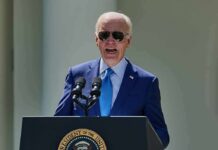
At a “People vs. the Powerful” rally in Detroit, Senator Bernie Sanders told supporters the key fight in Michigan’s Democratic Senate primary is not between Representative Haley Stevens and Abdul El-Sayed, but between El-Sayed and the “billionaire class.” Sanders said, “everybody knows that this is not an election between her and Abdul. This is an election between Abdul and the billionaire class.” His language tapped into anger on both left and right about wealthy elites steering government away from ordinary people.
Sanders also warned about the scale of outside money pouring into the race, claiming that billionaire-backed super political action committees have already spent around $50 million to support Stevens and defeat El-Sayed, with weeks left before the August 4 primary. He argued that this kind of spending shows why many Americans feel elections are controlled by donors and insiders. Whether voters lean conservative or liberal, many share a belief that political cash now speaks louder than citizens’ voices.
Super PAC Spending Gives Stevens a Massive Edge
Independent tracking firm AdImpact found super political action committees backing Stevens are spending about $26.9 million on television ads in the final five weeks of the primary, compared to roughly $2.1 million for El-Sayed, a more than 12-to-1 edge. The Detroit News reported that, looking at a longer window of ad reservations, outside groups supporting Stevens had lined up about $52.6 million in ad time versus $4.1 million for El-Sayed’s backers. That imbalance makes Michigan a clear case study of money’s power inside one party’s primary.
A major share of the pro-Stevens spending comes from the United Democracy Project, a super political action committee partly funded by the American Israel Public Affairs Committee, which has reserved tens of millions in Michigan broadcast ads. Another group called A Stronger Michigan has also committed millions but has not disclosed its donors to the Federal Election Commission. For many voters, this mix of undisclosed money and national issue groups backing one candidate looks a lot like what people describe as the “deep state” or entrenched establishment protecting its own interests.
El-Sayed’s Platform Targets Corporate Money and Billionaires
Abdul El-Sayed has built his campaign around cutting corporate money out of politics, strengthening unions, and raising taxes on billionaires. At an “Organizing to Win” event, United Auto Workers president Shawn Fain praised El-Sayed for rejecting corporate donations and standing with working-class people against corporate political spending and stock buybacks. That stance fits with Sanders’ argument that the primary is really a clash between organized wealth and ordinary workers trying to regain control of their democracy.
Sanders has carried this theme for years, often warning on the Senate floor that the “billionaire class” and modern oligarchs use their money to bend both parties toward their economic interests. Reports from Americans for Tax Fairness and other groups show billionaire political spending on outside organizations passed $1 billion in the 2022 midterms and has kept rising since. Those numbers help explain why many Americans, regardless of party, now see federal politics as a system “of, by, and for billionaires” rather than a government that serves people who work for a living.
Facts, Gaps, and Why This Fight Matters Beyond Michigan
Sanders’ broad claim that outside groups outspent El-Sayed by 12-to-1 on ads is backed by AdImpact data, but his specific $50 million figure goes beyond confirmed television spending and folds in other types of political activity that have not been fully documented. Independent reporters note there is no public list yet that cleanly ties individual billionaire donors to every pro-Stevens super political action committee. There is also no evidence in current filings that Stevens’ campaign illegally coordinated with these outside groups, even as she clearly benefits from their efforts.
𝐅𝐄𝐓𝐓𝐄𝐑𝐌𝐀𝐍 𝐑𝐈𝐏𝐒 𝐁𝐄𝐑𝐍𝐈𝐄 𝐀𝐍𝐃 𝐀𝐎𝐂 𝐅𝐎𝐑 𝐁𝐀𝐂𝐊𝐈𝐍𝐆 𝐒𝐄𝐍𝐀𝐓𝐄 𝐂𝐀𝐍𝐃𝐈𝐃𝐀𝐓𝐄 𝐎𝐕𝐄𝐑 𝐇∗𝐌𝐀𝐒-𝐅𝐀𝐕𝐎𝐑𝐀𝐁𝐈𝐋𝐈𝐓𝐘 𝐏𝐎𝐋𝐋𝐈𝐍𝐆
Sen. John Fetterman went after his own party's progressive wing for campaigning with Michigan Senate candidate… pic.twitter.com/bctAIc7Wh0
— M.A. Rothman (@MichaelARothman) July 19, 2026
Polls show Stevens leading El-Sayed, which may encourage national Democrats and wealthy donors to keep investing in her race, even as grassroots progressives rally behind El-Sayed’s message. For frustrated conservatives, the Michigan story reinforces their belief that Democratic elites and big donors sideline outsider voices. For frustrated liberals, it highlights how corporate and billionaire money still dominates their own primaries, drowning out candidates who challenge the status quo. For both, the deeper worry is the same: when tens of millions of dollars can shape a single party’s Senate primary, many wonder whether any regular citizen, no matter how hard they work or how strong their ideas, can ever again compete on equal ground.
Sources:
foxnews.com, sanders.senate.gov, huffpost.com, bridgemi.com, brookings.edu, cnn.com, americansfortaxfairness.org, washingtonpost.com