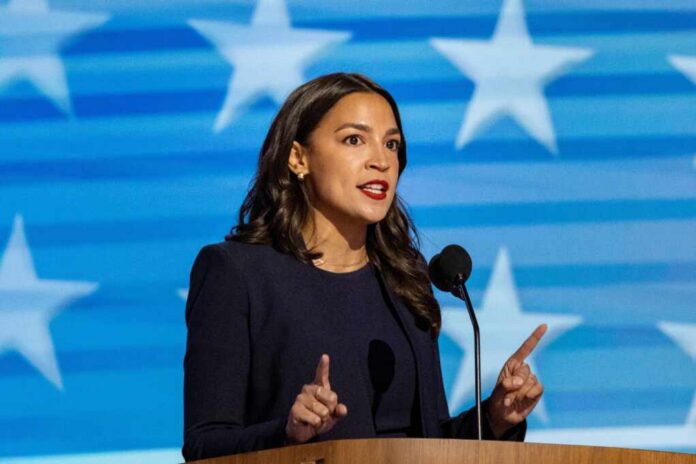
Democratic strategist James Carville says Representative Alexandria Ocasio-Cortez has “no chance” to win the party’s 2028 presidential nomination, underscoring a rift inside the left over ideology and electability.
Story Snapshot
- James Carville says Alexandria Ocasio-Cortez cannot win the 2028 Democratic nomination.
- Carville argues Southern Black voters dominate Democratic primaries and are not aligned with the far left.
- Carville excludes Ocasio-Cortez from viable contenders and touts other names instead.
- Carville adds he would back Ocasio-Cortez if she actually became the nominee.
Carville’s Core Claim: ‘No Chance’ for AOC in 2028
James Carville said Democrats will not pick their most liberal figure as the nominee and that Alexandria Ocasio-Cortez has “no shot” at the 2028 nod. He stated her views are too far left for the party’s primary voters. He argued this has held true across modern contests and said she would not be the nominee or president. His blunt line, “she’s not gonna have any chance,” drove headlines and set the tone for fresh infighting on the left.
Carville also dismissed Ocasio-Cortez’s broader appeal when asked on television about Democrats’ 2028 bench. He said the party needs a candidate who can win, and he did not include her among top choices. He has pointed to other names he believes can fundraise well and connect with key voters. He framed viability as more than social media reach or fame. He framed it as a test of who can build a broad coalition and carry swing states.
Primary Math: Why Southern Black Voters Matter
Carville said Southern Black voters often decide the Democratic nominee because of their large role in early and delegate-rich primaries. He claimed they are not as liberal as Ocasio-Cortez on core issues. He used that to argue her lane is too narrow to win. He did not cite new polling in his remarks. His comment rested on his long-time reading of Democratic coalitions and past primary outcomes across Southern contests.
Carville’s focus on the South aligns with how recent Democratic primaries unfolded. Early Southern states often clarify the field by boosting candidates who show strength with Black voters. Strategists watch South Carolina and other states for this reason. Carville’s argument is that this group favors practical, proven figures over loud ideological brands. He links that pattern to why a progressive firebrand would struggle to convert early wins into a delegate lead.
Tension on the Left: Viability Versus Ideology
Carville has criticized the party’s left wing before, and his latest comments add to that friction. He says Democrats “need somebody who can win,” which puts message discipline and fundraising ahead of movement aims. He later said he would support Ocasio-Cortez if she somehow won the nomination, showing party loyalty if voters choose her. That caveat softens his certainty but does not change his bottom line that she is not viable now.
The split highlights a recurring fight inside the party. Some leaders prize purity tests and big promises. Others stress broad appeal to beat Republicans in key states. Carville stands with the second camp. He argues that base enthusiasm alone will not flip states that decide the White House. His remarks also answer rising chatter that Ocasio-Cortez could dominate a young, online-driven primary. He warns that real turnout patterns are different.
What We Know and What We Do Not
Carville’s statements are clear and on the record. He says Ocasio-Cortez will not win the nomination and excludes her from his shortlist. He ties his case to the weight of Southern Black voters in primaries. However, he does not provide fresh data or named surveys to back the claim. That leaves a gap between seasoned judgment and measurable proof, which he fills with experience from past cycles rather than new numbers.
For conservative readers, the takeaway is simple. The Democratic civil war over ideology and electability is still raging. Carville is waving a red flag at his own side, saying their loudest progressive star cannot carry the map. He insists Democrats must find a nominee who connects with everyday voters, not just online activists. If he is right, the party may again sideline its far-left brand in favor of a more conventional pick in 2028.