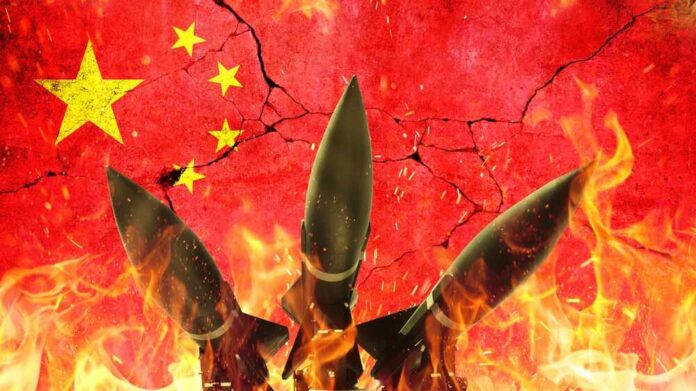
China has gone from roughly 200 nuclear warheads to more than 600 in just five years — the fastest nuclear buildup on Earth — and the Pentagon says it won’t stop there.
At a Glance
- China’s nuclear arsenal jumped from about 200 warheads in 2020 to more than 600 by mid-2024, according to the Pentagon.
- U.S. intelligence expects China to surpass 1,000 warheads by 2030, with no arms control treaty now in place to slow either side.
- The last major nuclear limits treaty, New START, expired in February 2026, leaving the world without binding nuclear caps for the first time in decades.
- The U.S. is ramping up nuclear weapons production in response, with costs projected at nearly $1 trillion over the next decade.
The Fastest Nuclear Buildup on the Planet
China’s nuclear stockpile has more than doubled in five years. The Pentagon reported that China likely had more than 600 operational warheads as of mid-2024. That’s up from roughly 200 in 2020. The Defense Intelligence Agency says China has already passed 500 warheads and will top 1,000 by 2030. Experts at the Center for Strategic and International Studies call it China’s “largest nuclear buildup ever.”
To put that in context, the United States holds around 3,700 warheads and Russia has about 4,300, according to the Stockholm International Peace Research Institute. China is still well behind both powers. But the speed of its growth is what has U.S. defense officials alarmed. No other nuclear nation is expanding this fast.
Secret Tests and New Technology
The buildup isn’t just about numbers. U.S. intelligence agencies believe China has conducted at least one secret explosive nuclear test in recent years. The goal, according to CNN, is to build an entirely new generation of nuclear weapons. China is also building early warning systems that can detect incoming missiles and fire back before they hit — a major shift in how China plans to fight a nuclear war.
China is also constructing new missile silo fields and developing road-mobile missiles that can strike targets across Asia and beyond. The Pentagon says this gives China a more flexible and survivable nuclear force — one that is harder to track and harder to stop.
No Treaty, No Guardrails
The timing makes this more urgent. The New START treaty — the last major agreement limiting U.S. and Russian nuclear weapons — expired on February 5, 2026. That marks the first time in decades the world has no binding treaty capping nuclear arsenals. The U.S. Secretary of Arms Control stated the old treaty “failed to consider the unprecedented, intentional, rapid, and opaque expansion of nuclear weapons by China.”
In response, the U.S. is pushing nuclear weapons production back to levels not seen since the Cold War. The cost is steep — nearly $946 billion over the next ten years, which is about 25% higher than earlier estimates. Officials say the spending is needed to restore U.S. strategic strength. Critics argue that kind of money, at a time when Americans are already stretched thin by inflation, raises hard questions about priorities.
What This Means for Americans
Here’s what both sides of the political aisle should understand: this is not a partisan issue. China’s nuclear expansion is a documented fact confirmed by the Pentagon, the Defense Intelligence Agency, and independent researchers. The debate is about how the U.S. should respond — and who pays for it. Academic researchers note that even at 1,500 warheads by 2035, China’s arsenal would still be less than half the size of America’s current stockpile.
That doesn’t mean the threat isn’t real. It means the response needs to be smart, not just expensive. With no arms control framework in place and both sides building fast, the risk of miscalculation grows. Ordinary Americans — left and right — have every reason to demand that their leaders pursue clear-eyed strategy, not just bigger budgets driven by defense contractor profits and political posturing.
Sources:
foxnews.com, tandfonline.com, theguardian.com, cnn.com, armscontrol.org, washingtonpost.com