

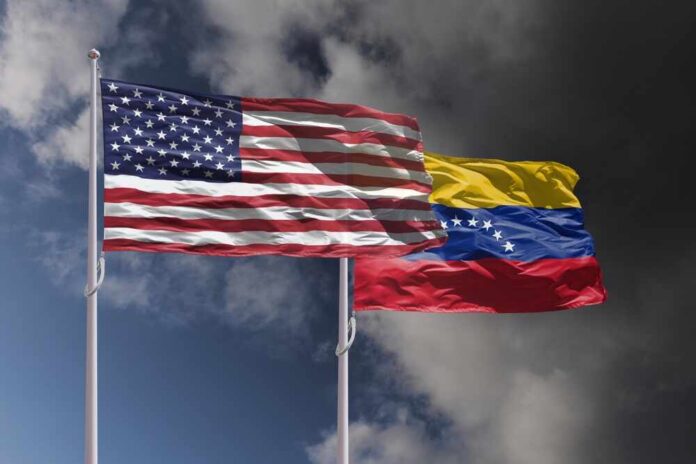
President Trump’s new Venezuela oil arrangement puts billions in energy revenue under U.S. oversight—after years of sanctions chaos and globalist “managed decline” that left Americans paying more at the pump.
Quick Take
- U.S.-brokered Venezuelan crude exports resumed after Nicolás Maduro’s capture on Jan. 3, 2026, with proceeds routed to U.S.-controlled accounts.
- Officials projected 30–50 million barrels could be sold, with sales reaching roughly $2 billion by late February at around $50 per barrel.
- PDVSA signed new contracts on March 4 as Chevron increased exports to roughly 300,000 barrels per day.
- OFAC licensing framework allows Western operations while restricting favorable access for China, Russia, and Iran.
How the “PLATT-inum Deal” Works—Control First, Sales Second
U.S. officials describe the “PLATT-inum Deal” as a restart of Venezuelan crude exports under American supervision following the Jan. 3, 2026 capture of Nicolás Maduro. Reported targets range from 30 to 50 million barrels sold into global markets, with proceeds directed to U.S.-controlled accounts rather than Maduro-era channels. Early February sales reportedly reached about $500 million, with additional cargoes marketed to the U.S. Gulf Coast and overseas buyers.
Energy markets care about reliability, not slogans, and Venezuela’s sector has been anything but reliable. Years of sanctions, internal mismanagement, and infrastructure decay helped create floating storage stockpiles and choked off normal export flows. Under the new arrangement, the stated goal is to clear stored barrels, move crude legally into open markets, and steer revenue into monitored structures. For Americans tired of inflation-era energy shocks, more lawful supply matters.
February’s Numbers: 40 Million Barrels and the $2 Billion Benchmark
By late February 2026, U.S. officials said Venezuelan oil sales under the arrangement were on track to reach roughly $2 billion for the month, pegging volumes around 40 million barrels at about $50 per barrel. That volume signals an aggressive pace compared with Venezuela’s recent constrained output and export capacity. Energy Secretary Chris Wright also pointed to continued demand across regions, framing the approach as fair-market pricing rather than preferential deals.
Reuters-style reporting also highlighted international trading houses marketing Venezuelan cargoes and ongoing buyer negotiations in Asia and Europe, alongside U.S. Gulf Coast refining demand for heavy crude. In practical terms, heavier Venezuelan grades can fit certain refinery configurations that struggled when sanctioned supply disappeared.
March 4 Contracts, Chevron’s Role, and the Licensing Gatekeeper
On March 4, PDVSA signed new contracts aimed at steady supplies of crude and refined products, according to recent reports that also noted Interior Secretary Doug Burgum’s visit for energy talks. Chevron’s exports were cited at roughly 300,000 barrels per day, reinforcing that U.S.-linked operators remain central to near-term throughput. The framework relies heavily on U.S. Treasury licensing, which determines who can operate, buy, and ship without running afoul of sanctions rules.
That licensing structure matters geopolitically. Sources describe the U.S. approach as enabling Western firms and approved traders while limiting favorable pathways for adversarial governments such as China, Russia, and Iran. Supporters argue this is the point: keep strategic resources in the Western Hemisphere from becoming a piggy bank for hostile regimes. Critics may object to the mechanism, but the publicly described facts show a compliance-first model driven by U.S. permissions and monitored revenue flows.
What It Means for U.S. Energy Security—and What We Still Don’t Know
Near term, additional barrels can ease pressure on certain refineries and add supply options for U.S. and allied buyers, while a monitored revenue structure aims to reduce corruption risk compared with the Maduro era. Long term, officials and industry voices have floated major infrastructure repair and investment, potentially unlocking more of Venezuela’s enormous proven reserves.
PLATT-inum Deal: We're Getting Oil and GOLD From Venezuela Now
https://t.co/QFXAu3RKZi— Townhall Updates (@TownhallUpdates) March 5, 2026
The popular tagline around the “PLATT-inum Deal” includes talk of “oil and gold,” is overwhelmingly oil-centric, with little verifiable detail about gold flows. Based on the available evidence, the solid takeaway is oil: volumes, buyers, licensing, and where proceeds are routed. Readers should separate viral framing from documented facts, especially when national security and constitutional concerns demand clarity over hype.
Sources:
https://www.heygotrade.com/en/news/us-venezuela-oil-deal-on-track-to-hit-2-billion-this-month