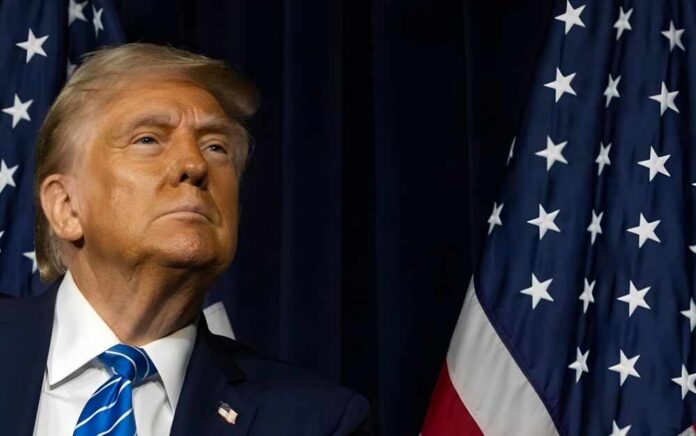
President Trump faces a barrage of “staged shooting” conspiracy theories after a thwarted attack at the White House Correspondents’ Dinner, exposing deep public distrust in official narratives amid a fractured media landscape.
Story Snapshot
- A gunman was thwarted in an attack at the White House Correspondents’ Dinner, prompting rapid conspiracy claims of staging across social media.
- Trump dismissed the theories sarcastically in a CBS 60 Minutes interview, calling them “sick” and comparing them to debunked hoaxes.
- Press Secretary Karoline Leavitt labeled the claims “crazy nonsense” and pledged maximum transparency with DOJ and FBI facts.
- Social media fueled speculation using innocent details like Leavitt’s pre-event comment and video clips as “proof.”
Thwarted Attack Sparks Conspiracy Frenzy
A gunman attempted to attack the White House Correspondents’ Dinner on Saturday, leading to evacuations of President Trump and top officials from the Washington Hilton ballroom. Social media platforms flooded with claims the incident was staged, with users alleging fabrication to distract from poor approval ratings or promote White House plans. These theories gained millions of views on X, echoing patterns from the 2024 rally attempt. Innocent remarks and clips fueled the fire, highlighting social media’s role in rapid misinformation spread. This erodes trust in government at a time when Americans across the spectrum demand accountability from elites.
Trump’s Sarcastic Dismissal
During a CBS News 60 Minutes interview, correspondent Norah O’Donnell questioned President Trump on the staging theories. Trump responded sarcastically, listing absurdities like denying October 7th or World War II to mock the claims. He deemed the theories “sick” without substantive engagement. This approach underscores frustration with baseless narratives that undermine real security threats. Conservatives see it as a win against deep state-fueled division, while shared bipartisan anger grows over officials prioritizing power over truth. Rapid online spread, with 52-53% learning via social media, amplifies the challenge.
Leavitt Addresses Speculation Head-On
Press Secretary Karoline Leavitt’s pre-dinner remark about “shots fired tonight” ignited claims of pre-planning, though context showed routine briefing language. A dropped call during media was blamed on poor reception, and J.D. Vance’s early evacuation matched Secret Service protocols blocking Trump. Leavitt called theories “crazy nonsense,” committing to transparency via DOJ and FBI facts. This incident reveals how mundane details twist into conspiracies, deepening divides. Both left and right resent elite gatekeepers who fail to deliver the American Dream through honest governance.
Academic research links such beliefs to conspiratorial thinking, political interest, and social networks, crossing partisan lines. The DOJ emphasizes factual counters, yet polarization persists.
Broader Implications for Trust and Unity
Short-term, these theories erode faith in official accounts, complicating law enforcement’s work amid heightened scrutiny. Long-term, they normalize reflexive doubt in major events, fragmenting shared reality. Platforms face pressure to curb spread, while media grapples with dual coverage of facts and falsehoods. Affected groups span political supporters consuming social media news. In Trump’s second term with GOP control, Democrats obstruct, yet mutual frustration unites citizens against a government more focused on reelection than solving immigration, inflation, and energy woes. True liberty demands rejecting elite manipulations for principle-based leadership.
Sources:
Academic Research (NIH/PMC): Peer-reviewed study examining conspiracy theory spread